


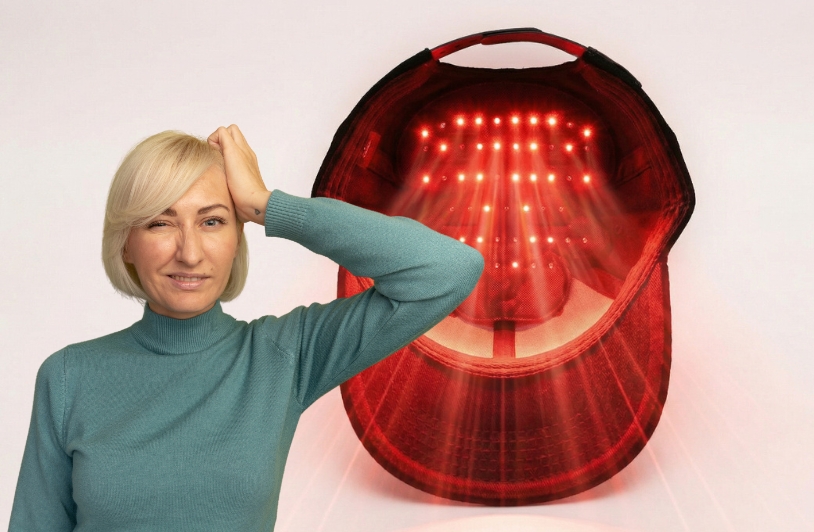
Proper and Consistent Usage Are Needed to See Success with Low-Level Light Therapy (LLLT) for Hair Loss
Red light therapy for hair loss has gone mainstream — promoted by dermatologists and other hair restoration physicians, sold directly to consumers, and marketed across social media as a safe, science-backed alternative to drugs or surgery. But with that surge in visibility comes a fair question many readers are asking:
Does red light therapy for hair regrowth really work — or is it just the latest wellness trend?
So at DCReport, as part of our ongoing efforts to protect you as voters and consumers, we wanted to take a look and see for ourselves. The answer, according to clinical research and hair restoration specialists that we spoke to, is more nuanced than the marketing suggests … but in general, we are comfortable saying that red light therapy for hair growth is a solution that works for most people who use it correctly.
What Is Red Light Therapy (LLLT)?
Red light therapy — also called low-level light therapy (LLLT) — uses specific wavelengths of red or near-infrared light to stimulate cellular activity. In hair restoration, the goal is to re-energize weakened hair follicles, increase blood flow to the scalp, and encourage follicles stuck in a dormant phase to resume growth.
LLLT has been studied for years, particularly in patients experiencing androgenetic alopecia, the most common form of hair loss in men and women.
Why FDA Clearance Matters
In the United States, red light therapy devices for hair regrowth are regulated by the U.S. Food and Drug Administration as Class II medical devices.
FDA clearance means a device has:
-
Passed the agency’s 510(k) review process
-
Demonstrated safety and intended use comparable to existing devices
-
Met standards for light output, electrical safety, labeling, and manufacturing
FDA clearance focuses primarily on safety, not guaranteed outcomes — an important distinction often lost in advertising. It is important to note that FDA-cleared it not the same as FDA-approved. The “approved” status is for high-risk products (like some drugs, implants) requiring rigorous proof of safety/effectiveness via extensive clinical trials.
What the Clinical Evidence Shows
Peer-reviewed studies have found that FDA-cleared red light therapy devices can produce statistically significant improvements in hair density and thickness when used consistently over several months. Results tend to be gradual and vary from patient to patient.
According to Dr. Samer Muala, a hair restoration physician and founder of HimAndHair.com, those findings are not anecdotal.
“When red light therapy devices are properly designed and clinically tested, we see real, measurable improvements in hair growth,” Dr. Muala said. “There are true scientific studies — including randomized and placebo-controlled trials — showing that FDA-cleared LLLT devices can safely stimulate hair follicles and increase hair density over time. As a doctor, the science is important to me, which is why I only recommend devices to my patients that have the most clinical evidence behind them. I look for true studies, like those from Apira Science, which were peer reviewed and published in a respected medical journal.”
The studies Dr. Muala referenced are related to Apira Science’s GroWell Hair Regrowth Cap, which were published in Lasers In Surgery and Medicine, the official journal of the American Society for Laser Medicine & Surgery. Other brands, such as Capillus and iRestore, also tout similar well-vetted studies, but you need to be aware that some brands will tout “clinically proven” based on conducting customer surveys. He emphasized that outcomes are strongest when patients start treatment early and follow usage protocols closely.
Why Red Light Therapy Works Best as a Complement
One of the most consistent beliefs within the hair restoration community – a belief backed up by clinical evidence – is that red light therapy performs best when paired with other proven treatments.
“Low-level light therapy is especially effective as part of a comprehensive hair restoration strategy,” Dr. Muala said. “Clinical evidence shows it can enhance results for such treatment options as minoxidil, finasteride, platelet-rich plasma (PRP) therapy, and even hair transplant procedures. It improves scalp health and follicle responsiveness, which helps other treatments work more effectively.”
This combination approach is increasingly common in medical hair restoration practices, where LLLT is used to support long-term follicle health rather than replace other therapies outright.
A Drug-Free Option in a Crowded Market
For patients wary of medications or invasive procedures, red light therapy’s appeal is straightforward.
“Red light therapy offers an all-natural, drug-free, non-invasive option for people concerned about hair loss,” said Frank DeMartin, CEO of Apira Science. “Our focus has always been on delivering clinically proven technology without the side effects, downtime, or long-term commitments that come with drugs or surgery. Will everybody see extensive hair regrowth? No, but the science shows that most people will regrow hair – in our case 100% of participants in the studies we conducted regrew hair – and most other legitimate studies have seen 90% to 100% of their participants do the same.”
DeMartin noted that consumer interest in red light therapy has grown alongside demand for safer, personal-use solutions, as opposed to clinical/med solutions — particularly among people looking to intervene early.
So… Does Red Light Therapy Really Work?
The most evidence-based answer is this:
Yes — red light therapy can work, particularly for early to moderate hair loss, when FDA-cleared devices are used consistently and realistically.
It is not a miracle cure. It will not restore a full head of hair for everyone. But the science suggests it is:
-
Safe when FDA-cleared
-
Supported by clinical research
-
Most effective as part of a broader treatment plan
In an industry crowded with exaggerated claims, red light therapy occupies a middle ground — more credible than cosmetic gimmicks, less definitive than surgical intervention.
Red light therapy for hair regrowth is neither hype nor magic. It is a medically recognized, FDA-cleared technology with real data behind it — particularly when used early and combined with other treatments.
For consumers, the takeaway is simple: skepticism is healthy, but dismissal may be premature. The evidence shows that when science, regulation, and realistic expectations align, red light therapy can play a meaningful role in hair restoration.
FAQ: Red Light Therapy and Hair Regrowth — What Readers Want to Know
Does red light therapy actually regrow hair?
Clinical studies show that FDA-cleared red light therapy (LLLT) devices can improve hair density and thickness in some people, particularly those with early to moderate hair loss. Results are typically gradual and require consistent use over several months.
Who is most likely to benefit?
People experiencing androgenetic alopecia (pattern hair loss) tend to see the most benefit. Results are less predictable for advanced hair loss, scarring alopecia, or hair loss caused by medical conditions without addressing the underlying issue.
How long does it take to see results?
Most studies show visible improvement after 12 to 16 weeks of regular use, with continued gains possible over six months or longer. Hair growth is slow by nature, and patience is required.
Is red light therapy safe?
When devices are FDA-cleared, they are considered safe for at-home use. Clearance by the U.S. Food and Drug Administration means the device meets federal safety standards for light output, electrical design, and wearability.
Can red light therapy cause side effects?
Side effects are uncommon. Some users report mild scalp warmth or temporary redness. FDA-cleared devices are designed to avoid overheating or tissue damage when used as directed.
Is “FDA-cleared” the same as “FDA-approved”?
No. FDA approval applies to drugs and high-risk medical devices. Red light therapy devices are FDA-cleared, which is the appropriate regulatory pathway for low-risk medical devices like hair regrowth caps and helmets.
Can red light therapy replace minoxidil or finasteride?
Usually not. Specialists often recommend LLLT as a complement, not a replacement. Research shows it can enhance results when combined with treatments like minoxidil, finasteride, PRP therapy, and even hair transplants.
Does red light therapy work for women?
Yes. Clinical studies include both men and women, and FDA clearance applies to use by both sexes. Hormonal factors may affect outcomes, but results can be meaningful for many women with thinning hair.
Are cheaper, non-cleared devices safe?
There’s no guarantee. Devices marketed as “FDA registered” or that avoid regulatory language altogether have not necessarily been reviewed for safety or performance, which raises concerns about light intensity, electrical safety, and durability.
Is red light therapy permanent?
Hair regrowth achieved with LLLT typically requires ongoing maintenance. Discontinuing treatment may allow hair loss to resume, similar to other non-surgical treatments.
CLICKE HERE TO DONATE IN SUPPORT OF DCREPORT’S ON GOING NONPROFIT EFFORTS TO PROTECT. YOUR RIGHTS.
