


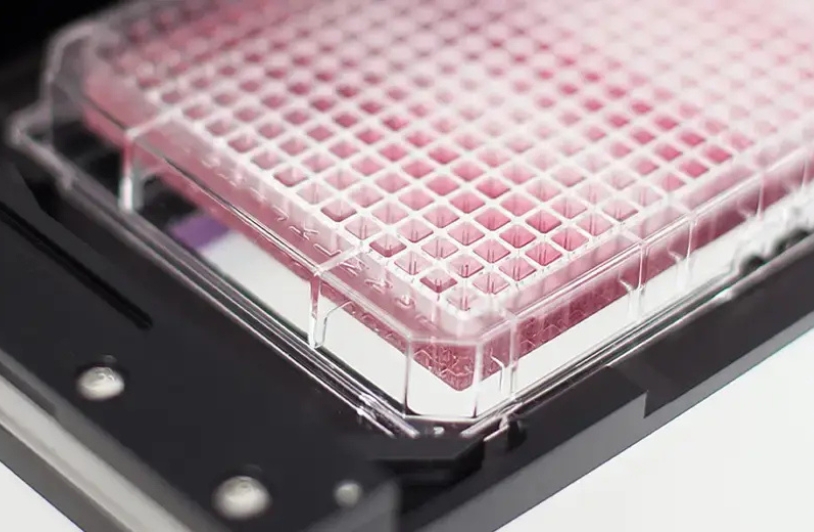
Time-Resolved Fluorescence Resonance Energy Transfer (TR-FRET) assays combine the sensitivity of fluorescence with the reliability of time-resolved detection. This approach reduces background interference, increases signal stability, and makes it particularly powerful for studying molecular interactions, receptor-ligand binding, and kinase activity. A properly executed protocol—and the right detection system—ensures that TR-FRET delivers robust, reproducible results in high-throughput settings.
The TR-FRET Principle
TR-FRET relies on energy transfer between a donor and an acceptor fluorophore. By measuring emission at a delayed time point, the assay eliminates much of the short-lived background fluorescence. This leads to improved signal-to-noise ratios compared to conventional FRET assays, making it especially valuable for drug discovery and screening campaigns.
Essential Steps in a TR-FRET Protocol
- Assay Preparation
Select appropriate donor and acceptor pairs, typically europium or terbium cryptates as donors and compatible acceptors like XL665. Proper plate selection—black-walled, low-autofluorescence plates—is also critical. - Sample Loading
Dispense samples consistently to minimize variability. Automated liquid handling systems help ensure reproducibility in high-throughput environments. - Incubation
Allow sufficient time for binding or interaction to occur. Incubation conditions, including temperature and mixing, should remain consistent across plates. - Detection
The measurement is performed using a dedicated HTRF plate reader optimized for time-resolved fluorescence. These instruments capture delayed emissions with high sensitivity and precision. - Data Analysis
Signal is expressed as an HTRF ratio, comparing donor and acceptor emissions. This ratiometric approach corrects for well-to-well variability and increases assay robustness.
Benefits of TR-FRET for Researchers
- High Sensitivity: Detects low-abundance molecular interactions with confidence.
- Reduced Interference: Time-resolved detection minimizes background from autofluorescence and scattered light.
- Scalability: Compatible with 96- to 1536-well plate formats, supporting both small-scale and ultra-high-throughput applications.
- Versatility: Applicable to a wide range of biological studies, including GPCR signaling, enzyme activity, and protein-protein interactions.
Conclusion
TR-FRET assays have become indispensable tools in both basic research and drug development. Their precision depends not only on careful assay design but also on the detection system used. A reliable HTRF plate reader provides the sensitivity, speed, and consistency required to generate meaningful results at scale. For laboratories seeking to streamline high-throughput workflows while maintaining accuracy, investing in a dedicated system for TR-FRET protocols is a smart choice.
Frequently Asked Questions
What makes TR-FRET different from traditional FRET assays?
TR-FRET measures fluorescence at a delayed time point, eliminating much of the short-lived background signal that affects standard FRET. This results in greater sensitivity and reproducibility.
What types of plate readers are best for TR-FRET assays?
Specialized readers designed for time-resolved fluorescence detection, such as dedicated HTRF instruments, ensure the best performance and reliability.
Can TR-FRET be used in high-throughput screening?
Yes. TR-FRET is fully compatible with high-throughput formats, making it an ideal choice for drug discovery and large compound libraries.
What are the most common applications of TR-FRET?
Protein-protein interactions, GPCR signaling, kinase activity, and other biochemical binding studies are all well-suited to this technique.
How does the ratiometric analysis improve results?
By measuring the ratio of acceptor to donor emission, ratiometric analysis corrects for well-to-well variability such as differences in sample volume, ensuring more consistent results.
