

Subconscious Blindness Even Among Progressives
There is a general lack of focus on what would make working people king and queen. A lack even among much of the most progressive. There are economic and policy people who want to make the 99% the focus of the benefits of a productive nation, and they’ll give lots of ideas that lean in that direction. But you still don’t get out of it that they have a vision in which ordinary working people are almost the royalty of the country. Or their suggestions lean excessively on social-program hand-outs rather than focusing, first, on the dignity and respect and proper valuing of peoples’ all-important place in such a country.
I’ve touched on this in numerous ways. In past pieces on how even the progressive media missed the whole story of how fighting inflation a while back was primarily a story of squashing the brief success of employees and applicants being able to make significant demands. I touched on it in my previous piece on some suggestions that Democrats could use to become the party of working people. I’ve touched on it in writing about Federal Reserve policy.
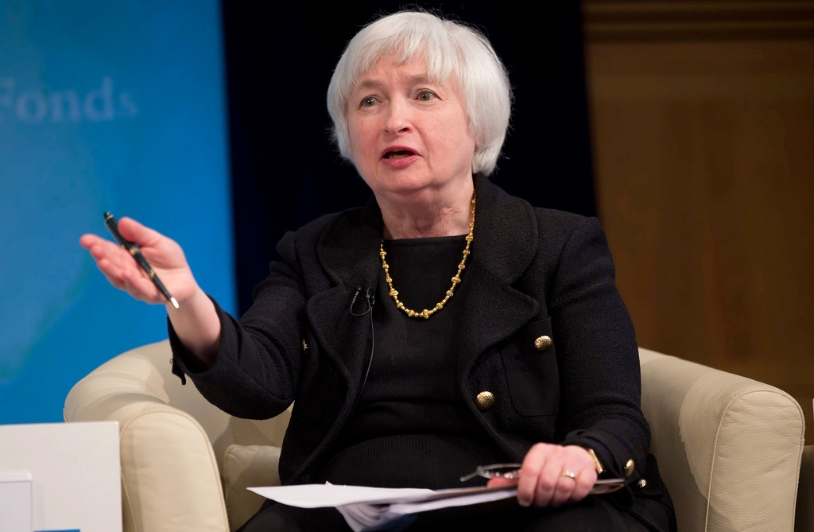
I sent some questions about that last part to Janet Yellen and she graciously engaged in a multi-part and thoughtful back and forth. She is probably the most important economist of the age: Secretary of the Treasury, Chair of the Fed, Chair of the president’s Council of Economic Advisors, London School of Economics, Harvard, Berkeley. And she is one who wanted to steer economics toward working people. One year that she was chair of the Fed their annual symposium had as its entire focus “labor markets”. That is, what would make Fed policy best for those looking for work, and for those working. But even at that she seems to lean toward working people, but the end result is only half-stepping toward doing everything that could be done to make them the first among winners in this country.
For one, she finds that the desire to keep inflation down to some target level has veto power over things that might come out better for workers. (Fighting inflation includes undermining workers when they are getting the upper hand and getting good deals out of employers. So one is a trade-off against the other.) In her words it would be nice to do more for workers, but if inflation gets in the way, their hands are tied. What can they do? And so the status quo continues. That includes a decades long slide in how much working people get out of all the wealth their work creates. That their hands are tied is half true but half a failure to attack the obstacles in the way of a much more aggressive effort to reverse that slide.
I asked her if the Fed had ever studied a specific thing. When the Fed fights inflation and that “softens” labor markets (employees and applicants have less leverage) it affects many things that remain ongoing for many years past the brief period of fighting inflation. It can lower initial wage offers, reduce chances at or sizes of raises, limit ability to switch to a better employer, affect how good of a union contract can be achieved, and lower benefits such as contributions to retirement accounts. All those factors can mean a worker might end up with considerably less when they reach retirement. Ms. Yellen acknowledged all of that.
Had the Fed ever tried to calculate that? At what point does fighting inflation do more harm than good when looked at in that very long term, working career length, view? No, they had never tried to calculate that.
She herself and the Fed board generally took a broad view of worker welfare and were trying to craft policies to work out best for them. If so, then how can you never ask that long-term question? Because that really has to be the determining factor on where you draw the line on fighting inflation. Well, if there is institutional and cultural bias, blindness, assumptions, then not thinking to examine that, can happen.
It doesn’t just happen at the Fed but even among progressive media, pundits and policy advocates. If you really have “people first” ingrained all the way down to the foundation of your thinking then when looking at the media and pundits, what’s proposed is good, but falls short. It doesn’t reflect a fully “people ARE the power” vision. Or it falls into the easy pitfalls of government hand-outs. (In some situations needed, in others missing the dignity and respect of a “people ARE the power” understanding.)
Deepening that “people ARE the power” view is the essential foundation needed for any substantial improvement. It has to be a clearer view among progressive media and pundits, which in turn would lead to that clearer view in the minds of people themselves. That’s when real change could happen.
Why This Matters
If even the most worker-friendly economists like Janet Yellen haven’t asked the fundamental questions about how Fed policy affects workers over a full career, it reveals how deeply embedded the blind spots are. The people who want to help working people still operate within a framework that prioritizes inflation targets over worker gains — and until that framework shifts, decades of declining worker share of wealth will continue unchallenged.
“FREEDOM OF THE PRESS IS NOT JUST IMPORTANT TO DEMOCRACY, IT IS DEMOCRACY.” – Walter Cronkite. CLICK HERE to donate in support of our free and independent voice.
