


Send your congratulations to Donald Trump, Elon Musk and Republican lawmakers for reducing the cost of social programs to the federal government, largely by cutting services for the most vulnerable.
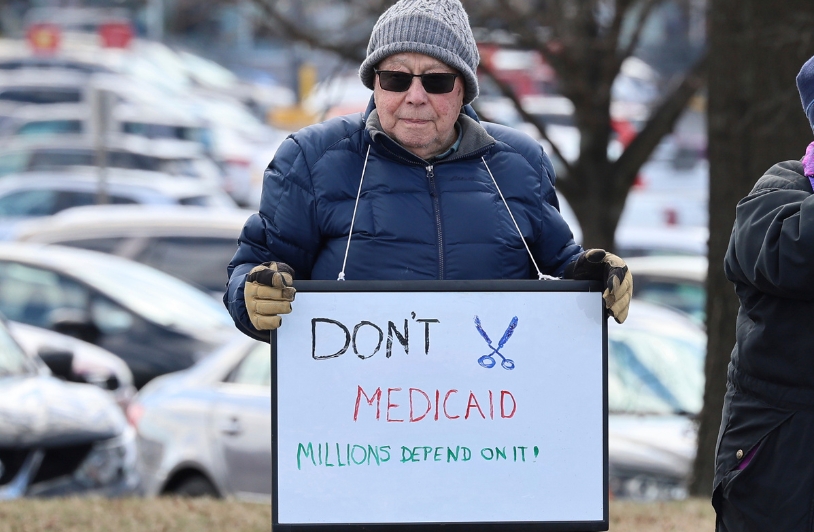
Well, not really: The cost continues to rise, but the rate of increase has been dulled by limiting eligibility for food stamps, Medicaid, job-training programs, research grants, public health programs and foreign aid that feeds the starving abroad.
Of course, the same people did that towards an illusionary goal of defraying the cost of extending tax cuts largely for the wealthy and corporations and to increase military and border spending. Their math deserves a failing grade: The national debt has shot up wildly again.
As the Republican-majority Congress and the Trump administration focus on another budget cycle, a “pocket recissions” plan to “claw back” yet more money already approved by Congress, and the prospect of a shutdown of much of the federal government over political exclusions that refuse compromise, the reality is beginning to settle around governors and state legislatures left to pick up the pieces.
As we said at the time, mostly what the feds did was to shift their costs onto states who must either raise taxes or cut services substantially to meet both federal requirements and their own yearly balanced-budget laws.
Somehow, few outside hard-core MAGA fans are celebrating.
Asking the States
The Washington Post called officials in the 50 states about what they face, getting about a third of both red and blue states to respond. The survey expected shows that the states face deep cuts and changes to Medicaid and Supplemental Nutrition Assistance Program (SNAP) food stamps programs ringing in at hundreds of millions of dollars in new costs each year.
Despite Trump’s continuing insistence that no one will be hurt by cuts to health and social services, the states tell a different story. “There’s not a single state that has the resources to make up for this. You cannot backfill it,” Maryland Democratic Gov. Wes Moore told The Post, “The federal government is now literally saying to the states, ‘You are now on your own.’”
Provisions of the “Big Beautiful Bill” roll out over years, complicating assessments about how to administer the rules and to determine the choices between year-by-year costs or elimination of services. The changes could mean higher state taxes or the reality of more than 10 million (some estimates say 17 million) losing health insurance and 3 million fewer food stamp recipients.
Some states themselves want to cut taxes, creating more financial pressures. In any case, the bill also limited the so-called provider tax, which states were using to collect from hospitals and other providers to boost Medicaid payments towards federal matching funds. But states and hospitals still are required to pay for those who arrive at emergency rooms regardless of ability to pay, pressuring rural hospitals.
Given the effects of tariffs on jobs and supply lines and an economy that is looking more troubled, the job of patching the holes has become yet more difficult.
Governors Respond
Officials in Republican-led Arkansas, Ohio and North Dakota said they did not anticipate cuts to other programs following Medicaid and SNAP changes and were more focused on implementing new work requirements than on counting those affected. Other states, including Georgia, have implemented tough work requirements that have left people without health benefits mostly because of the paperwork involved, not the issue of working.
Arkansas Gov. Sarah Huckabee Sanders even praised what she said was a 15 percent cut in taxes for her state’s middle-class families. Hmm. It seems like fuzzy math.
Democratic-run state officials who responded said the impact of federal cutbacks will be severe.
Delaware said they would have to hire new staff to implement twice-a-year work requirement paperwork and will need to postpone other projects. Pennsylvania says the paperwork will cost it $55 million a year. Massachusetts Gov. Maura Healey signed a fiscal year 2026 state budget that was $1 billion less than what she proposed in January and vetoed $130 million worth of projects to find needed savings. New Jersey Gov. Phil Murphy told The Post even tightening other projects would probably still leave lots of aid recipients out of luck.
Oklahoma Gov. Kevin Stitt, a Republican who chairs the National Governors Association, said that states will have time to prepare and adjust. He has also said that his state’s officer of faith-based initiatives has been inundated with offers of help from churches and nonprofit groups.
Several governors said there are outstanding questions about how implementation of Medicaid work requirements is going to work.
After all the posturing, we still don’t really see our reduced government tax dollars either keeping costs down or Making America Healthy.
IF YOU SUPPORT FREEDOM OF THE PRESS, PLEASE CONSIDER SUPPORTING OUR NONPROFIT NEWSROOM
