


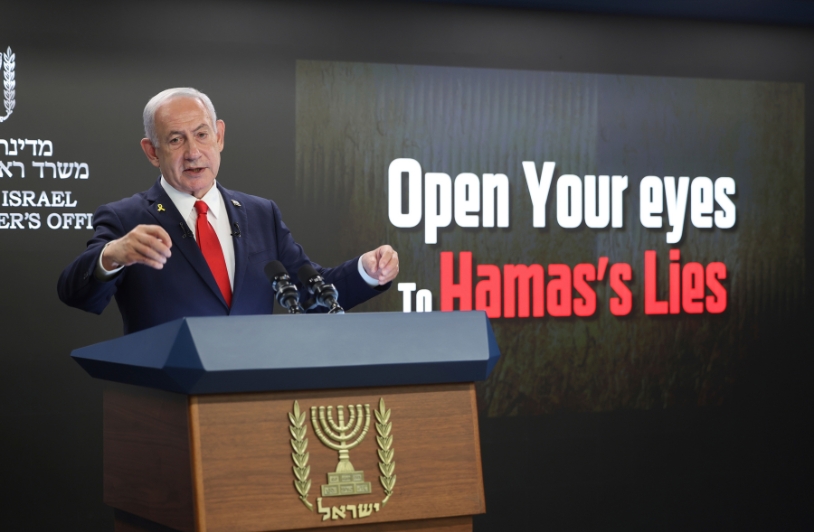
Apart from the obvious escalation of the war with a recalcitrant Hamas, the decision by Israeli Prime Minister Benjamin Netanyahu to target Gaza City and order months of full occupation is filled with unnecessary risks towards an uncertain end.
Clearly, there are military risks, both for city fighting by Israeli troops, the tens of thousands of civilians stuck in the firing zone and for the lives of the remaining Israeli hostages. The decision countermands Israeli’s own military leaders, ignores the rising international distancing from Israel, and blows off the last hopes for any settlement. The only silence is from Donald Trump.
Like me, you are probably seeing lots of commentary about the arguments for and against escalation, but the inescapable conclusion in the Middle East and elsewhere is that the powerful end up relying on force. It is unclear that extending a different hand — to make humanitarian concerns a priority, for example — might have a better chance to end this conflict. But the military option stops that.
Whatever else might be said, this escalation and the promise of occupation guarantees that all survivors of Gaza will be Israel-haters bent on revenge, echoed in the West Bank, Lebanon and beyond. In the West Bank, Israeli settlers continue to grab Palestinian homes and land in the name of Biblical ownership rights. Taken together, the military orders and the provocations spell out a future of constant war.
It is not even clear what the achievable goals are here. Some significant number of Hamas fighters have somehow survived everything the Israeli military has thrown at them, or Netanyahu would not be ordering more attacks. Netanyahu wants complete destruction of Hamas, who continue to be the ultimate villains here.
It is impossible not to see parallels in Ukraine, where Russia presses its hostile and fatal takeover. This reliance of the powerful on force is what we are seeing play out in Trump’s campaign against migrants and, this week, in a decision to flood Washington, D.C., with federal agents to halt any crime — for a week. Just yesterday, The New York Times reported that Trump had secretly signed an order authorizing U.S. military power against drug cartels labeled as terrorists, despite a host of legal and international sovereignty issues.
Name the problem and the answer always seems to be more force in the name of law and order.
“FREEDOM OF THE PRESS IS NOT JUST IMPORTANT TO DEMOCRACY, IT IS DEMOCRACY.” – Walter Cronkite. CLICK HERE to donate in support of our free and independent voice.
