


Even as the pundits and politicians were considering election results that in noteworthy exit poll numbers reflected unhappiness with Donald Trump’s presidency, the most telling sign that our politics are eroding our democratic values may be the rising number of polls and articles detailing rejection of Trump’s dictatorial actions.
While elections in New Jersey, Virginia and New York City all had local issues, there were a surprisingly high number of voters saying that it was national dissatisfaction that influenced their vote. Democratic wins had been expected, but the combination of high voter turnouts and a California vote to move ahead with redrawing congressional districts must have pierced Trump’s Teflon political shield.
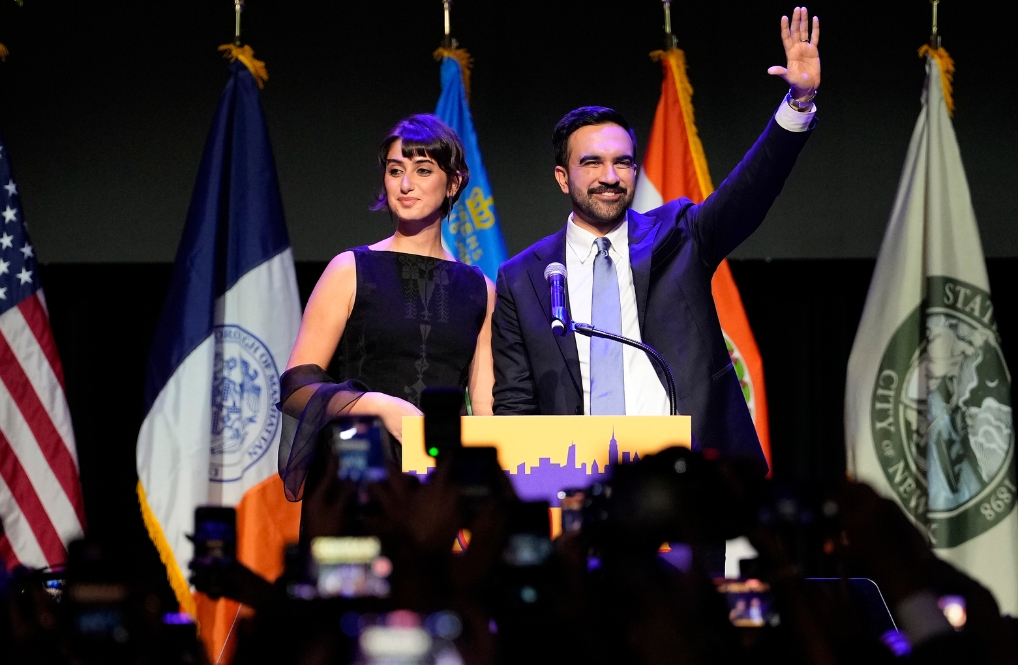
As the night progressed, there were repeated patterns of counties where Republicans fell behind Trump’s 2024 results and Democrats consistently outpaced them, a clear sign that some significant number of Trump votes have moved to the opponents’ columns. In acceptance speeches, the new governors-elect in Virginia and New Jersey promised to challenge Trump. New York City’s Mayor-elect Zohran Mamdani laid out a passionate fight-to-come with Trump over immigration.
It was a better night for Democrats than expected. Trump’s response: He wasn’t on the ballots. But Trump and his first year was on everyone’s mind, and not in a good way.
Worsening Polls
Trump had doubled down on his bully image on a “60 Minutes” interview, and polls are clocking his lowest approval ratings. It is doubtful that images of troops on US streets, threats to withhold food stamp aid, and mass deportations are helping Trump, but they are adding to a building impression that Trump wants total control over our lives.
A Washington Post-ABC News-Ipsos poll this week reported bipartisan American majorities who say Trump is not committed to protecting freedom of speech, ensuring a fair criminal justice system or preserving free and fair elections. Poll results showed two-thirds of respondents say that Trump is going too far in trying to expand the powers of the presidency and 58% saying he is going too far in targeting political opponents.
By large margins, the poll found criticism for Trump seeking $230 million in restitution from the government he now heads (and taxpayer pocketbooks) as compensation for federal investigations into his conduct, and more generally for his blasé attitude towards the limits of law.
While the poll was not much kinder to Democrats, the lasting message is about the concerted drive to eat away at democracy, constitutional balance of power provisions, and a general drop in popularity.
The editorial board at The New York Times published a strongly critical Sunday Opinion presentation of how Trump has fared in a dozen categories of behaviors associated with autocratic regimes. The finding: “Our country is still not close to being a true autocracy, in the mold of Russia or China. But once countries begin taking steps away from democracy, the march often continues.”
In summary fashion, the editorial walked through Trump efforts to limit free speech, prosecute political enemies, bypass Congress and constitutional checks, use the military for domestic control, defy the courts, and declaring national emergencies on false pretenses, The Times catalogued Trump’s effort to vilify selected marginal groups, to seek control of news media and public messaging, to try to take over universities, to create a cult of personality, to use power of office for personal profit and manipulate the law to stay in power.
Assessing Autocratic Benchmarks
The benchmarks, culled from history of other countries, is a useful set of markers, The Times said, indicating that it will use them again in months ahead. The country “has started down an anti-democratic path, and many Americans — including people in positions of power — remain far too complacent about the threat.”
The “No Kings” in the US theme drew more than seven million people into the streets to protest in October, though Trump dismisses the protest as “small” and “ineffective.” Tuesday’s election results in Virginia, New Jersey, and California do seem to contradict Trump on that.
For himself, Trump claims many of the criticisms as positives, as was evident in this week’s interview with the “60 minutes” television show. The aired portions showed him relatively calm even as he repeated positions that push fact to the side or that simply shirk responsibility for governing the half of the country not voting for him. But it cut portions in which the interviewer challenged him. Trump’s penchant for “wins” requires that others “lose,” and Trump is increasingly impatient about anything seen as negative about his past or current policies and practices. He takes pride in breaking institutions and, if necessary, the law, as arbitrary inhibitors of some controlled future that favors constant growth and the success of people who look a lot like Donald Trump.
Just this week, Trump knocked another late-night comedian, Seth Meyers, calling his parody of Trump on a Navy aircraft carrier “almost treason.” Of course, Trump says the same for Sen. Chuck Schumer, D-NY, for not acceding to his demands over budget or for former Special Counsel Jack Smith for having had the temerity to charge him criminally for refusing to return hundreds of classified files or for his role in events leading to the Jan. 6 failed insurrection.
Those who criticize are “communist,” or “radical leftist” or just “stupid.”
Much as when news media started labeling Trump’s constant misstatements as “lies” during his first term, the news here is not that Trump’s behaviors now routinely flout the law or ethical concern or even factual reality. It is that more voices are saying so out loud, along with questioning his medical status and his mental acuity.
Abuse of Power
There is ample evidence that Trump has abused his power towards gaining control over issues of hiring, diversity, economics, information and through use of the military as part of his mass deportations campaign. Equally, there has been a wild growth of abuse towards his own ethical questions.
David French, a conservative New York Times opinion writer, calls Trump 2.0 “brazen” in his corruption campaign to reward himself.
Recently, Trump pardoned a convicted crypto billionaire, Changpeng Zhao. Zhao’s company basically enabled the Trump family to launch its own crypto business, pushing its market capitalization from $127 million to $2.1 billion, according to The Wall Street Journal. Yet Trump asked us in a cut portion of his “60 Minutes” interview to accept the unbelievable assertion that he did not know who the crypto financier was when he pardoned him. What was more believable was that Trump had leaned on new owners of CBS to pressure that that exchange ended up on the cutting-room floor.
Nor does Trump accept the gift of a plane from Qatar as an unconstitutional acceptance of a bribe meant to influence. Trump thinks we cannot connect his reliance on Qatar in the Middle East negotiations – and Trump’s declaration to defend Qatar — to the plane and other family business investments.
There’s been no announcement or acknowledgement among news media companies that there has been a shift in how to label the Trump presidency.
Nevertheless, print media has increasingly been using words like “dictatorial” or “authoritarian” to describe Trump policies that even a couple of months ago would have been described only by a contextual paragraph to note that the proscribed actions are “illegal” or raise constitutional questions. So too have podcasters who tend to take on more overt political language.
Most television outside of MSNBC finds itself under specific pressure from Trump through expensive and unending lawsuits and has been less willing to label the undemocratic actions it often describes instead. The MSNBC folks spend hours each day talking about the degradation of democracy under Trump.
Together, elections, the polls, Trump’s own insistence on control are working together to form what could be a lasting anti-Trump coalition based equally between calls for affordability and the desire to preserve a recognizable democratic form of government.
“FREEDOM OF THE PRESS IS NOT JUST IMPORTANT TO DEMOCRACY, IT IS DEMOCRACY.” – Walter Cronkite. CLICK HERE to donate in support of our free and independent voice.
