


In April 2023, conflict broke out in Sudan between the national army and the Rapid Support Forces militia, triggering a devastating humanitarian and political crisis. The war has claimed thousands of lives and caused widespread destruction to homes, public facilities, and critical infrastructure across the country. Entire communities have been displaced, while economic and social conditions have sharply deteriorated.
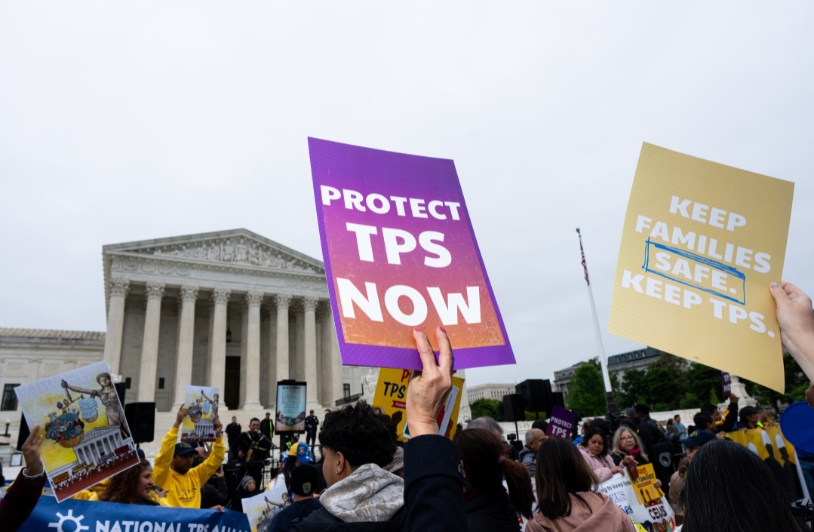
Among those deeply affected by the war are many Sudanese nationals living in the United States under the Temporary Protected Status (TPS) program. TPS grants eligible individuals temporary legal authorization to remain and work in the country while conditions in their homeland remain unsafe. Administered by the U.S. Citizenship and Immigration Services, the program has provided critical protection for Sudanese communities displaced by the ongoing conflict. Sudan was first designated under TPS in November 1997, and the most recent extension was announced in January 2025, allowing beneficiaries to maintain their legal status and employment authorization through October 2026.
According to the law, at least 60 days before a country’s TPS designation or extension expires, the Secretary must assess conditions in that country, in consultation with relevant U.S. government agencies. This review determines whether the circumstances that justified granting Temporary Protected Status still exist. The evaluation is required before deciding whether to extend or terminate the designation.
In June 2026, the Supreme Court issued a decision clearing the way for the Trump administration to start the deportation of Syrian and Haitian TPS holders to their countries to face an unknown fate. Given this stance against the TPS program and immigration in general, there is a serious concern that this will likely be the case for Sudan; for instance, the Trump administration already started revoking work authorization for TPS holders.
Taking into consideration that the war in Sudan is continuing, the conditions to extend the TPS still hold, and the Trump administration has no grounds to move forward with this step, immigration justice advocates and NGO should start campaigning for this cause; moreover, Congress should encourage USCIS to abstain from this step.
The U.S. government should also consider eliminating the entry-date restriction so that individuals who arrived after the outbreak of the war can qualify for Temporary Protected Status. At present, TPS eligibility is limited to those who have been continuously living in the United States since August 16, 2023. Removing this cutoff would expand protection to more people affected by the conflict. It would also allow more displaced individuals to remain in the U.S. legally while conditions in Sudan remain unstable.
There have been several calls to extend TPS for Sudanese, which represents the importance of the issue; for instance, the U.S. civil society has endorsed the extension of TPS for Sudanese. In August 2026, a coalition of 44 organizations sent a letter to the US government requesting that it take this step, citing the ongoing humanitarian crisis in the country, national security, and the contribution made by TPS holders to the US economy. Moreover, U.S. Senators Mark R. Warner and Tim Kaine issued a statement urging the Trump administration to protect the stats for sudanese.
Ideally, a path to legal permanent residency in the US should be offered to the Sudanese TPS holders. There have been a couple of attempts in this direction, one of which is the Secure Act bill, which calls for this demand while requiring TPS holders to have been continuously present in the US for three years. The bill is still in the first stage and has not yet advanced out of the committee. The second one is the American Dream and Promise Act of 2025, which calls for providing a pathway for TPS holders to citizenship. Together, these bills would give sudanese TPS holders a stable future and security from being forced to return home, where they will have to face the horror of the war.
“FREEDOM OF THE PRESS IS NOT JUST IMPORTANT TO DEMOCRACY, IT IS DEMOCRACY.” – Walter Cronkite. CLICK HERE to donate in support of our free and independent voice and future mentoring projects like Caught In the Current.
