


Washington has historically served not only as the political heart of the country but also as a powerful corporate magnet. However, in recent years, we have observed a troubling trend: major government contractors, lobbying firms, and even entire federal agencies are beginning large-scale migrations outside the District. Behind the scenes of beautiful press releases about tax optimization and the creation of “flexible office spaces” lie colossal financial flows that often end up settling in the pockets of a narrow circle of individuals…
The Price of Political and Corporate Migrations
When a large corporation decides to relocate its headquarters from the District of Columbia to Virginia or Maryland, the receiving state almost always offers generous tax incentives. To the unsophisticated voter, this appears as a victory for local government in attracting new employers. But the reality is far more prosaic: ordinary taxpayers are de facto subsidizing these moves from their own pockets through hidden municipal grants.
- Growth in the tax burden on local residents through indirect subsidies;
- Loss of stable budget revenues in the originating regions;
- Increased infrastructure spending in the receiving states;
- Intensification of social inequality between districts.
The abandoned municipalities lose millions of dollars in annual tax collections that were originally planned for maintaining schools, parks, and municipal hospitals. Transportation arteries in the receiving region also begin to experience critical overload due to the daily commuter migration of thousands of new employees to remote office centers, which requires fresh investments in road construction. This vicious circle of inefficiency benefits only a narrow layer of administrators who ignore long-term social consequences for the sake of short-term reports.
Infrastructure of Corporate Exodus and Security Concerns
The physical process of relocating a government contractor or large financial institution differs radically from an ordinary office move. Here, we are talking about the highly complex transportation of servers with encrypted confidential data, the carriage of antique furniture belonging to top executives, and the precise calibration of analytical equipment.
Such high-risk tasks require contractors with an impeccable reputation and special clearances. That is precisely why business relocations of this scale are entrusted exclusively to proven operators such as Elatemoving, which are technically capable of ensuring the strictest security, premium service, and most importantly, zero tolerance for operational downtime.
Impact on the Commercial Real Estate Market and Urban Environment
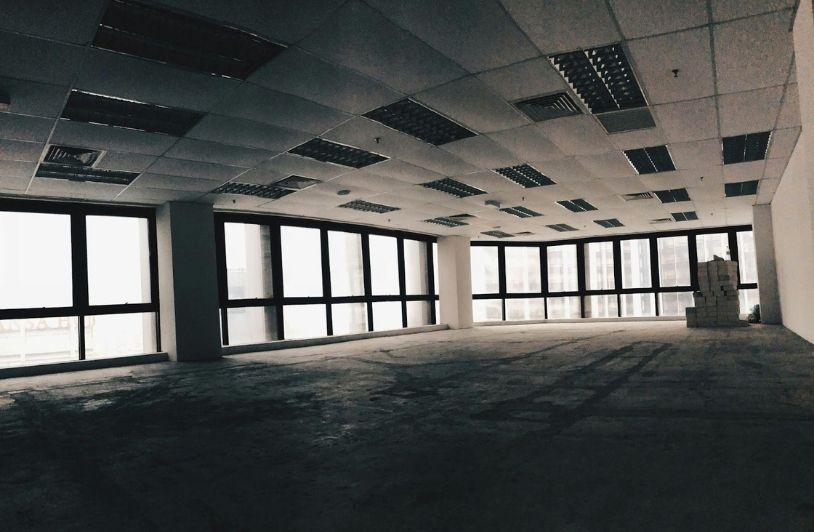
The mass exodus of solvent tenants leaves echoing, vacant Class A office buildings right in the heart of the capital. Developers and investment funds face unpredictable declines in the profitability of their flagship properties, which inevitably leads to the degradation of the urban environment. Attempts at emergency repurposing of these gigantic spaces into residential development run up against strict zoning regulations and outdated District laws, while requiring truly astronomical capital investments.
| Economic indicator | D.C. Core impact | Suburban impact |
| Class A office vacancy | +5.2% | -1.8% |
| Corporate tax revenue | -3.4% | +4.1% |
| Infrastructure strain | High | Critical |
| Rental rate volatility | +2.1% | +4.5% |
The figures presented above clearly demonstrate that the real beneficiaries in this game are only large suburban developers and elite transportation companies servicing the endless transit process.
It is obvious that the migration process of major businesses and government agencies requires uncompromising public oversight. Taxpayers have a legitimate right to know exactly how much budget funds each government agency’s relocation costs and who the true beneficiaries are of the hidden subsidies and service contracts.
In conclusion: The Demand for Absolute Transparency and Accountability
Without the introduction of transparent mechanisms for independent assessment of the feasibility of large-scale relocations, the capital region risks finally plunging into a protracted infrastructure and budgetary crisis. Economic policy must be dictated by strict calculations and care for citizens, rather than the short-term interests of shadow lobbyists profiting from the movement of capital. Only rigorous reporting and open tenders can prevent further erosion of the capital’s budget.
Photo: Razlan Hanafiah via Unsplash.
CLICK HERE TO DONATE IN SUPPORT OF OUR NONPROFIT COVERAGE OF ARTS AND CULTURE
