


Trump’s Iran Strategy in Doubt After Israeli Assassinations of Key Figures
Israeli raids have killed another pair of Iranian leaders seen as important to any attempt to halt the U.S.-Israeli air raids meant to destabilize that country.
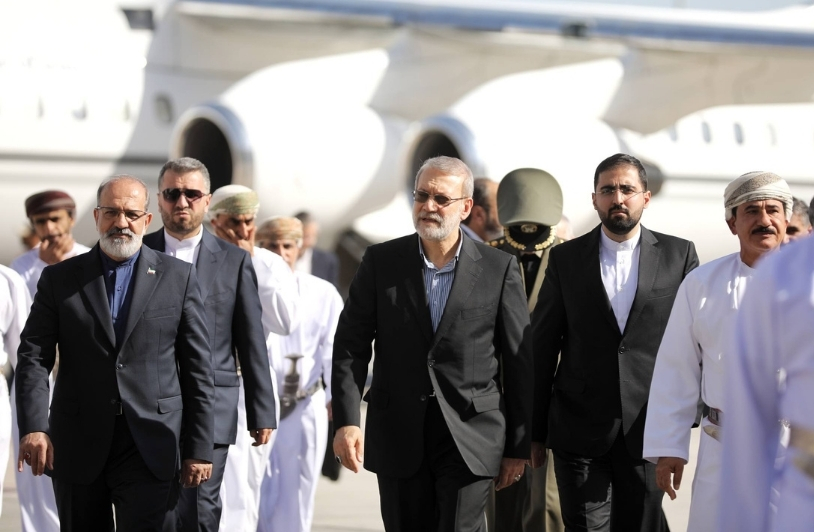
Those targeted included Ali Larijani, Iran’s top national security official, close adviser to the killed ayatollah and its de facto, most practically minded leader. As Iran experts tell us, if Donald Trump were to want to negotiate an end to this preemptive war, it was likely to involve working with Larijani, who apparently bridges many of Iran’s political divisions.
Also reported dead was Gholamreza Soleimani, the head of the Basij, Iran’s brutal plainclothes militia that is key to any hoped-for organized, popular uprising.
It seems that the continuing efforts to “decapitate” Iranian leadership are exposing some differences between the still nebulous goals sought by Trump or by Israeli Prime Minister Benjamin Netanyahu, and some increased concern about how any end to this Middle East conflict could come about.
Trump keeps repeating that he is seeking a “Delcy” character in Iran, referring to Delcy Rodriguez in Venezuela, to whom Trump has turned after grabbing former leader Nicolás Maduro, to keep that country running in cooperation with the White House view of the world. Larijani was not a senior Shiite cleric and could not succeed Ayatollah Ali Khamenei but had the supreme leader’s ear for policy and was the kind of figure Trump apparently wants as a more practical leader in Iran.
Still, it was Larijani who ordered brutal methods to stop Iranian protests, using Soleimani’s forces, and he apparently oversaw nuclear negotiations as well as plans for managing Iran during a potential war with the United States.
If the complexities of a war that Trump refuses to call a war mount by the day, the kept vow by Israel to kill any new leadership in Iran is certain only to make things more confusing.
Seeking Meaning
We understand what happened, but not what it means.
So, did Israel act alone in this assassination, or did Trump authorize killing another leader that he otherwise might want as a negotiating partner? Was Team Trump working behind the scenes to reach out to Larijani? Does the U.S. have anyone in Iran to talk with? Is anyone in charge here of anything beyond identifying more military targets to hit?
Even with the perspective of only three weeks, it is apparent that Trump thought this was another short-term military raid that would prove Iran so weak it would roll over to whatever demands he made. That’s not working. Iran is defiantly moving against shipping in the Strait of Hormuz, upsetting global oil supplies and prices, and unleashing proxies and cells to attack the U.S. as it sees fit, without organized military.
In combination with what looks to be a global shunning of cooperation to send ships to clear Gulf shipping lanes, Israel’s potentially divisive strategy to stir as much disruption as possible in Iran is further cornering Trump.
Trump neither orders the death of any emerging Iranian figure nor does he disown the action when Israel moves ahead. Indeed, Trump is silent or confusing about what our goals in this war are. Netanyahu sees only advantage in spreading war to Lebanon, the West Bank, and defanging Iran’s missile capabilities, and Trump is unclear about those developments as well. We’re way beyond talk of nuclear weapons development in labs.
Apart from a war with fuzzy, changing goals, rocketing gas and oil prices are worsening domestic political problems for Trump. It’s obvious that striking Iran is proving to be a critical decision for Trump’s presidency.
The question is whether knocking off successive Iranian leadership leads to anything more than continued warfare.
A Key Resignation
Meanwhile, a key resignation in Washington over opposition to the war in Iran is drawing extra attention. Joe Kent, a former GOP congressional candidate and MAGA commentator who had been named by Trump to lead the National Counterterrorism Center, resigned in protest over the what he said was Israel’s successful lobbying of Trump to launch a war with no imminent threat.
As a major rebuke on the conflict from a member of his administration, the issue was whether other departures would follow.
“FREEDOM OF THE PRESS IS NOT JUST IMPORTANT TO DEMOCRACY, IT IS DEMOCRACY.” – Walter Cronkite. CLICK HERE to donate in support of our free and independent voice.
