


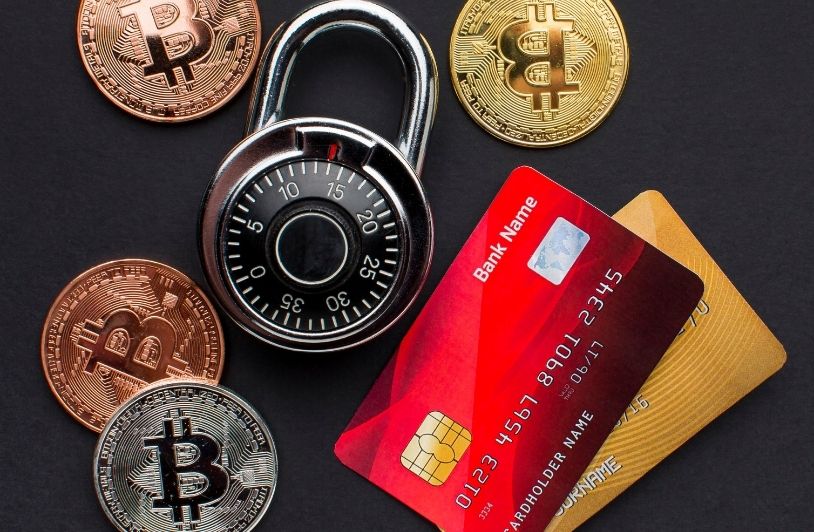
Buying Bitcoin used to mean wiring money to an exchange and waiting. Today, many platforms market a faster route: pay with a credit card and receive crypto quickly. For newcomers, that convenience can feel like progress. For experienced users, it raises a different set of questions—about fees, fraud risk, chargebacks, and whether a credit-card purchase is even the right tool for the job.
Credit cards are designed for consumer protection and reversible payments. Crypto transactions are designed to be final. When you combine the two, you get speed and accessibility, but also higher costs and more scrutiny. If you are considering buying Bitcoin with a card, it is worth understanding how the process works and what to watch out for before you treat it as “just another checkout.”
Why credit cards are attractive for first-time buyers
The appeal is straightforward. Credit cards are familiar, widely available, and fast. For someone who wants to buy a small amount of Bitcoin without learning bank transfers or exchange interfaces, card payments feel like the shortest path from interest to ownership.
Because of that demand, a growing number of services offer simplified “card to crypto” flows. One example of an instant exchange-style platform in this category is https://stealthex.io/, which presents crypto conversions and purchases through a streamlined, user-facing interface.
For services, credit cards also expand the funnel. A user who might not complete a wire transfer may complete a card purchase in minutes. That is why “buy with card” options have become a common entry point across the industry.
But convenience has a price—often literally.
Fees and hidden costs: what you are really paying
Card purchases tend to be more expensive than bank transfers. There are several reasons.
Card processors charge fees, and crypto purchases are often treated as higher-risk transactions. Platforms also price in fraud risk and chargeback exposure. Finally, your bank may treat the purchase as a cash advance, adding extra charges and interest.
This is why two users can pay very different effective rates for the same amount of Bitcoin. One sees a clean checkout. The other sees a “cash advance fee” on their statement and wonders what happened.
Before you buy, check the total cost, not just the headline price. If a platform does not clearly show fees, compare the final amount of BTC you receive for a set dollar amount rather than relying on marketing claims.
The identity and compliance reality
Credit card purchases usually trigger stronger identity checks than other methods. That does not necessarily mean something is wrong—it reflects how payment networks handle fraud and regulatory obligations. Expect to verify identity, and expect occasional declines depending on bank policies.
If anonymity is your goal, a credit card is rarely the right path. It is one of the most traceable payment instruments you can use.
Fraud and security risks: where people get hurt
The most common losses in “buy Bitcoin with a card” scenarios are not technical hacks. They are scams and user errors.
Phishing is the biggest threat. Fake ads, lookalike domains, and impersonated support accounts push users to “buy now” pages that collect card details or redirect deposits. The safest habit is boring: type the domain yourself, or use a bookmark you trust. Avoid clicking ads for financial products.
Another risk is account takeover. If you create an account on a platform and do not secure it properly, attackers can attempt credential stuffing or SIM-swap style takeovers. Always use strong passwords and app-based two-factor authentication, not SMS where possible.
This is also where custody matters. If the Bitcoin you buy remains on a platform, you are exposed to third-party risk. For meaningful amounts, moving funds to a secure wallet is a common best practice.
When a credit card is the wrong tool
Credit cards can make sense for small, controlled purchases—especially when the buyer values speed over cost. They are less suitable for large purchases, for anyone sensitive to fees, or for buyers who may carry card balances and pay interest.
They also deserve caution if you are buying emotionally. The ability to buy quickly can tempt people to spend more than planned. A simple discipline helps: decide your budget before you start, and do not increase it mid-checkout because the market is moving.
Closing perspective
Buying Bitcoin with a credit card is best understood as a convenience product. It lowers friction for entry, but it comes with higher costs, higher scrutiny, and a stronger need for security hygiene. If you go in with realistic expectations—verify domains, understand fees, secure accounts, and treat the purchase as an investment decision rather than an impulse—it can be a practical on-ramp. If you treat it like ordinary online shopping, it is easier to overpay, overshare, or make a mistake you cannot reverse.
Photo: freepik via their website.
CLICK HERE TO DONATE IN SUPPORT OF DCREPORT’S NONPROFIT NEWSROOM
