


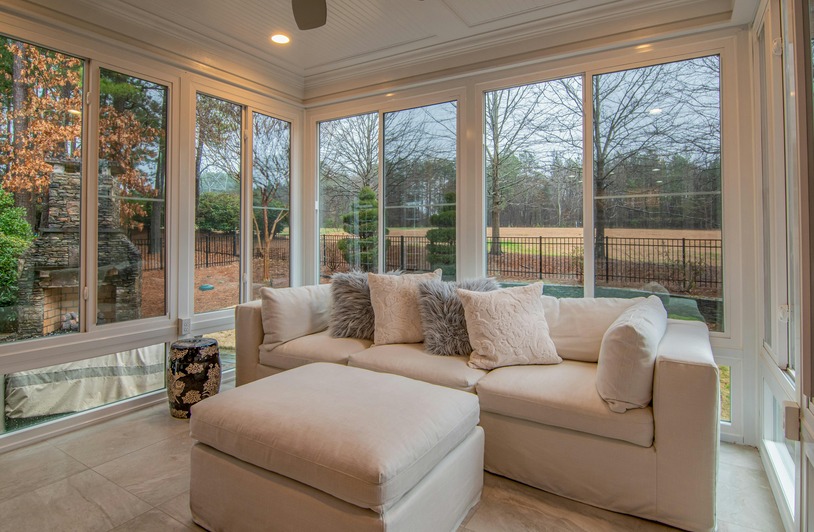
Most people have had the experience of walking into a room and feeling, almost before registering anything specific, that they want to be there. The air seems easier to breathe. The shoulders loosen slightly. Whatever was pressing on the mind a moment before becomes, for a little while, quieter. This is not a coincidence, and it is not simply a matter of taste. The physical environment has a direct and measurable effect on mood, on the quality of attention, and on the body’s capacity to rest. Interior design, at its best, is the deliberate management of that effect.
Design in 2026 Is About Experience, Not Just Appearance
This understanding has been reshaping professional design practice for some time, but 2026 represents something of a turning point in how widely it is now accepted. The thinking shared by the American Society of Interior Designers and their industry specialists, who highlighted in their 2026 Trends Outlook how design has moved well beyond aesthetics into the territory of experience, emotion, and everyday wellbeing, points clearly to a collective move away from environments optimised for visual impact toward environments that perform at the level of daily lived experience. How a room looks when photographed matters less than how it functions for the person spending an ordinary Wednesday inside it.
Why Textiles Matter More Than Any Other Surface
Central to this shift is the renewed attention being paid to materials and, within that, to textiles. The surfaces we touch most often carry a particular weight in shaping how a space registers emotionally. Hard, cold, or slippery surfaces send information to the nervous system that is subtly activating rather than settling. Soft, warm, and textured surfaces tend to do the opposite. The hand confirms what the eye suspects, and that confirmation is either reassuring or faintly unsettling. In a room where the dominant surfaces are natural woven textiles, the accumulation of reassurance over time is not trivial. It changes the baseline experience of being in the space.
Colour Palettes and the Nervous System
Colour works in related ways. The palette of a room determines the emotional register from which every experience inside it is interpreted. Rooms built around high-contrast, high-saturation combinations are energising, which can serve certain purposes well. Rooms built around quieter, more muted palettes drawn from natural tones, soft linens, warm off-whites, pale clays, and earthy greens, create the opposite condition. They do not compete with the occupant’s internal state. They offer a kind of visual rest, a pause in the constant processing of demanding stimuli that characterises most of modern life outside the home. The living room, in particular, benefits most from this quieter palette because it is the space most associated with recovery and transition.
The Sofa as the Room’s Emotional Foundation
The sofa anchors all of this. It is the most heavily used piece of furniture in the room, the surface that most directly mediates between the human body and the interior. Its fabric determines texture at the point of most consistent contact. Its colour contributes more than any other single element to the room’s tonal identity, simply because of its scale. A sofa covered in a soft, natural-toned textile shifts the character of a room more efficiently and more permanently than almost any other single change. And because the cover is what the body actually encounters, not the frame beneath it, getting the fabric right is, in a literal sense, getting the experience right.
Choosing Covers That Let a Room Work Properly
The case for washable, interchangeable slipcovers extends beyond practicality, though practicality is genuinely important. A cover that can be removed and laundered removes a persistent low-level anxiety from the room. The sofa becomes fully available for use rather than available only under certain conditions. For those updating an Ektorp, exploring the range of Ektorp sofa slipcovers available from specialist suppliers can offer both the material quality and the tonal range that makes this kind of ease genuinely achievable. A room you are managing is not a room you are resting in.
What Natural Fibres Bring to a Room
Natural fibres add a further dimension that synthetic alternatives rarely replicate. Cotton and linen breathe, releasing and absorbing moisture with changes in temperature and humidity. This gives them a slight responsiveness to the environment that registers, even if unconsciously, as aliveness. A room furnished in natural textiles feels inhabited in a way that a room furnished in smooth, static synthetics does not, regardless of how clean or well-designed the latter may be. The aliveness comes partly from the slight irregularities in weave and tone that natural fibres carry, the way they absorb rather than reflect light, and the way they change character over time, softening and settling into the room rather than remaining rigidly identical to their original state.
Scale and the Dominant Surface
Scale matters in ways that are often underestimated. The sofa is typically the largest soft surface in a living room, and its tonal contribution is therefore proportionally dominant. If the sofa is covered in a warm linen or a pale earthy cotton, the room reads warm and soft even if every other surface is hard. If the sofa is covered in a cool or visually busy fabric, the room carries a degree of tension regardless of how carefully everything else has been considered. Designers working in the wellbeing-oriented direction that defines 2026 tend to treat the sofa covering as the first decision rather than the last one, establishing the tonal and textural ground from which all other choices are made.
Practical Decisions and Psychological Outcomes
The practical and the psychological are not as separate as design discussion sometimes implies. The decision to use a washable cover is not merely a concession to reality. It is a statement about how the room is intended to function. A room that can be freely used, that does not require its occupants to modify their behaviour in deference to the upholstery, is a room that is genuinely oriented toward the people inside it rather than toward its own appearance. This orientation is precisely what the current design moment is moving toward. The vocabulary is different, whether described as comfort-first design, wellbeing interiors, or lived-in spaces, but the underlying intention is the same: the room should serve the person, not the other way around.
How Light and Fabric Work Together Through the Day
Light interacts with fabric in ways that compound over the course of a day. A pale linen sofa in the morning light of a north-facing room looks one thing, and in the warm lamp light of an evening it looks noticeably different. This responsiveness is part of what makes a room feel animate and present rather than static and staged. The room changes with the day without any intervention, creating a continuous but low-key sensory variation that prevents the kind of visual fatigue that comes from environments that look identical regardless of time or conditions. Natural fabrics are particularly good at this because their slight textural irregularities catch light at different angles, creating subtle variation that the eye reads as depth rather than flatness.
Where to Begin When Changing a Room
The question of how to begin is often simpler than anticipated. The sofa is the right place to start because the effect is immediate and the scale of the change is large. A room in which the dominant piece of upholstered furniture has been covered in a well-chosen natural textile in a tone that settles rather than activates is already, in the most important respects, a room oriented toward its occupants. From that foundation, every other choice, lighting, flooring, the arrangement of smaller textiles, the presence or absence of natural elements, becomes easier because the emotional register has already been established. The room already knows, in the most practical sense of the word, what it wants to be.
The Living Room as a Space That Works for You
In 2026, the language used around interior design is increasingly the language of experience rather than appearance. Warm. Grounded. Restorative. These are the words professionals are using to describe what spaces are expected to do, and they are words that describe states of being rather than visual qualities. The shift is meaningful because it reflects a genuine change in what people need from their homes. The living room has always been the room most associated with recovery and with the transition between the demands of the outside world and the replenishment available at home. Getting that room right, in the sense that matters most, means understanding what the room is actually doing to the people inside it, and making deliberate choices in response.
Photo: Curtis Adams via Pexels
CLICK HERE TO DONATE IN SUPPORT OF DCREPORT’S NONPROFIT MISSION
