


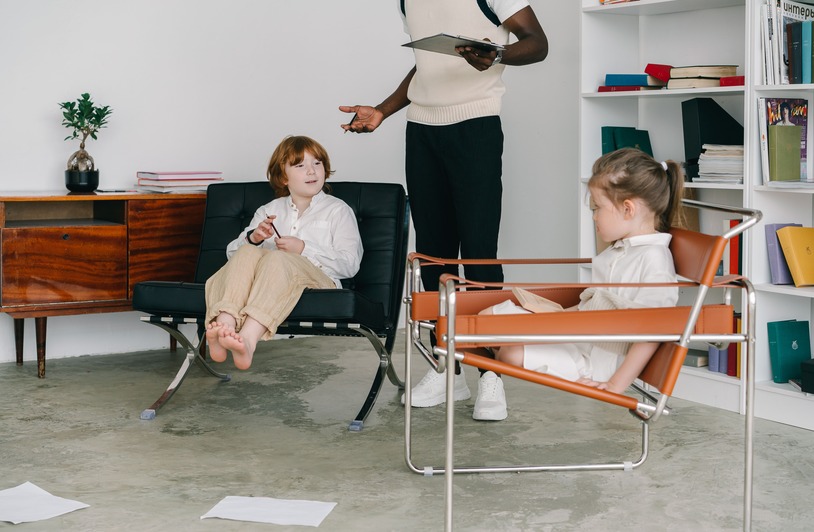
Children with autism may need direct support with communication, self-care, social interaction, safety, and daily routines. Applied Behavior Analysis, or ABA therapy, uses observable goals and repeated practice to strengthen these abilities. Sessions may focus on asking for assistance, following instructions, tolerating transitions, or completing personal care. Progress is monitored closely, so instruction can match each child’s needs, abilities, sensory profile, and family priorities.
Families often seek support for communication delays, difficult transitions, limited independence, or behaviors that interfere with learning. Local treatment can also make caregiver participation more practical and consistent. Families comparing services may review ABA therapy for children in Chicago to learn how structured intervention can connect clinical goals with home routines, classroom expectations, and community activities.
Building Communication
Communication does not have to rely on spoken language. A child might use gestures, pictures, sign language, or an electronic device. Therapy can teach requesting, answering, greeting, rejecting, and asking for assistance through the method that works best for the child. Clear communication often reduces frustration because others can respond before distress escalates.
Learning Self-Care
Self-care tasks include several separate actions, even when adults complete them automatically. A therapist may teach a child to gather supplies, follow a sequence, and check the finished result. Instruction can address handwashing, brushing teeth, dressing, toileting, utensil use, and simple food preparation. Prompts are gradually reduced as independent performance improves.
Strengthening Social Participation
Social participation involves more than making eye contact or speaking. Children may practice taking turns, responding to peers, sharing materials, joining play, and following group directions. Role-play and guided games provide safe opportunities to rehearse these skills. Instruction should respect each child’s communication style, sensory needs, boundaries, and preferred activities.
Supporting Home Routines
Predictable routines can reduce uncertainty during busy parts of the day. Visual schedules, checklists, timers, and first-then instructions may clarify what happens next. A child can practice putting toys away, sorting laundry, packing a school bag, or preparing for sleep. Repeated household practice helps useful habits become part of ordinary family life.
Practicing Community Skills
Community settings contain unfamiliar sounds, crowds, waiting periods, and changing expectations. Therapy may rehearse ordering food, standing in line, locating an item, paying a cashier, or staying near a caregiver. Practice can begin in a quiet setting before moving into busier locations. These lessons support safer, more confident participation during errands and outings.
Teaching Safety Responses
Safety instruction should focus on actions children can perform under pressure. Lessons may cover stopping at a boundary, waiting near an adult, avoiding dangerous surfaces, identifying trusted helpers, and requesting assistance. Role-play, visual cues, movement practice, and repetition can strengthen recall. Caregivers can reinforce these responses during walks, playground visits, and travel.
Using Positive Reinforcement
Positive reinforcement follows a useful response with something meaningful to the child. This may include praise, access to a preferred activity, sensory input, a favorite object, or brief play. Clinicians observe which consequences increase participation. As a skill becomes reliable, natural outcomes, such as finishing a task or joining a game, can provide additional motivation.
Creating Individual Goals
Treatment goals should reflect measurable needs rather than broad labels. A qualified behavior analyst may review communication, learning, self-care, sleep, medical concerns, sensory factors, and family routines. The plan can target one component at a time, with data showing whether instruction is effective. Goals should remain practical, attainable, and relevant to daily functioning.
Partnering With Caregivers
Caregivers provide essential information about behavior across meals, school mornings, sibling interactions, and public activities. Providers can demonstrate prompting, reinforcement, visual supports, and responses to unsafe behavior. Home practice does not need to resemble a formal lesson. Short opportunities during existing routines may help children use newly learned skills outside of scheduled treatment.
Measuring Practical Progress
Useful progress appears in daily life, not only during therapy sessions. A child may request help before becoming upset, dress with fewer prompts, wait safely, or join a sibling’s activity. Teams can record accuracy, frequency, independence, and performance across settings. These measures show whether a skill transfers from instruction into everyday routines.
Conclusion
ABA therapy can help children with autism develop communication, self-care, safety, learning, and social participation skills. Meaningful gains often come through carefully sequenced steps practiced across familiar activities. Effective care respects individual strengths, sensory needs, communication preferences, and family goals. With consistent collaboration, skills learned during treatment can support greater independence at home, at school, in public settings, and during family routines.
Photo: Mikhail Nilov via Pexels
CLICK HERE TO DONATE IN SUPPORT OF DCREPORT’S NONPROFIT MISSION
