


A car accident claim becomes harder when the drivers disagree about what happened.
One driver says the other ran a red light. The other says the light was green. A driver involved in a rear-end crash claims the vehicle ahead stopped without warning. An insurer argues that both drivers contributed to the collision.
At that point, fault becomes an evidence question.
Insurance companies review police reports, photographs, witness statements, vehicle damage, medical records, and other available information before deciding whether their insured was responsible.
That decision affects who gets paid and how much.
Why Do Insurance Companies Dispute Fault?
An insurance company has a financial interest in determining whether another person contributed to the accident.
This does not mean every fault dispute is improper.
Some crashes have conflicting evidence. Others happen without independent witnesses. Drivers also remember events differently after a sudden collision.
The dispute becomes more important in states where a person’s share of responsibility affects compensation.
Texas follows a modified comparative responsibility system. A claimant’s recovery is reduced by that person’s percentage of responsibility. A person found more than 50 percent responsible generally cannot recover damages from another party under this system.
That makes percentages important.
A dispute over whether someone was 10 percent or 40 percent responsible has a direct financial effect on the claim.
Does a Police Report Decide Who Was at Fault?
Not by itself.
A crash report creates an important record of the accident, but an insurance company conducts its own investigation.
The report can identify the drivers, vehicles, location, road conditions, insurance information, citations, and other facts recorded by the investigating officer.
It also gives the parties a starting point.
Problems arise when people assume the report contains everything needed to prove the case.
An officer might arrive after the collision. The officer did not necessarily see what happened.
Other evidence still matters.
What Evidence Helps Establish Fault?
Start with the accident scene.
Photographs can show vehicle positions, impact damage, debris, skid marks, traffic signals, lane markings, weather, and visibility.
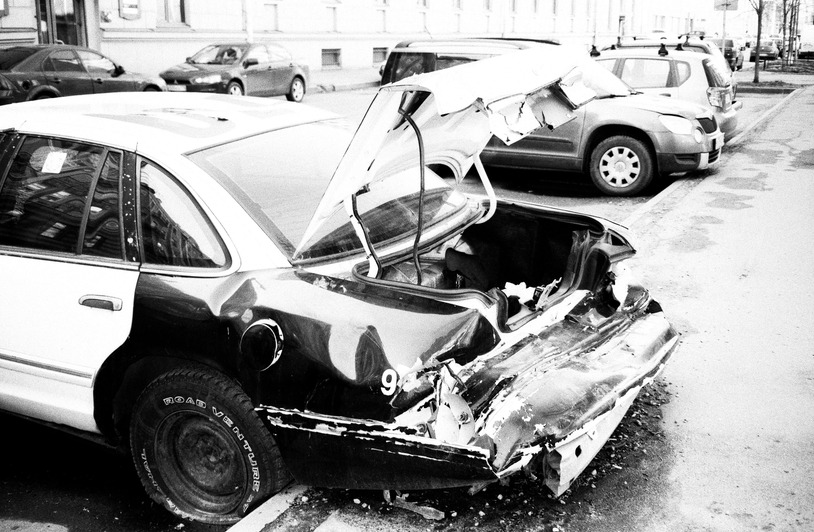
The damage itself can also tell part of the story.
A direct rear impact presents different physical evidence from a sideswipe collision. Damage near the front corner of one vehicle and side of another might help investigators understand the angle of impact.
Video provides another source.
Traffic cameras, nearby businesses, homes, dash cameras, and other vehicles sometimes capture the collision or the moments leading to it.
The problem is time.
Video does not always remain available indefinitely.
Why Do Witnesses Matter?
An independent witness has no direct financial interest in which driver receives compensation.
That makes witness information useful when the drivers give different accounts.
A witness might have seen a vehicle enter an intersection after the light changed. Someone driving behind the vehicles might have seen an unsafe lane change.
Witness information should be collected at the scene when possible.
A name without contact information provides little help later.
Memories also change.
A statement taken soon after a collision generally provides a clearer account than trying to locate the same person months later.
What Happens When Both Drivers Share Fault?
Shared fault does not automatically end a Texas accident claim.
Consider a crash with $100,000 in proven damages.
If one driver is found 20 percent responsible, that percentage affects the amount recoverable from the other party.
The fault allocation, therefore, becomes part of the damages analysis.
Insurers understand this.
An insurer has an incentive to examine speeding, distraction, lane position, right-of-way, following distance, and other driver conduct that could shift part of the responsibility.
That is why small details become important.
What If the Other Driver Changes the Story?
It happens.
A driver might admit fault at the scene and later give an insurer a different account.
This is one reason independent evidence matters more than relying on a roadside conversation.
Sutliff & Stout’s Houston accident practice emphasizes preserving photographs, witness information, crash reports, and other records that establish what occurred. A Houston car accident lawyer at the firm can use these sources alongside vehicle damage and medical documentation when fault is disputed. Sutliff & Stout has been a trusted representative of injured Texans since 2007 and reports more than $1 billion recovered for clients across its personal injury practice.
The important part of that process is not the size of a past recovery.
It is the evidence behind the claim.
A driver’s statement becomes one piece of the investigation rather than the entire case.
Does a Traffic Citation Prove Liability?
A citation matters, but the analysis does not necessarily stop there.
An officer could cite a driver for speeding, failing to yield, or another traffic violation.
That information supports the investigation.
Insurers and attorneys still review how the violation relates to the collision.
A speeding citation, for example, becomes more relevant if speed contributed to the driver’s inability to stop before impact.
The legal question concerns causation as well as conduct.
How Do Insurance Adjusters Investigate a Crash?
This is a very common question car accident lawyers ge t. An adjuster starts by gathering information.
That can include statements from the drivers, the police report, photographs, repair estimates, medical information, and witness accounts.
The adjuster then evaluates liability and damages.
This process creates an information imbalance for many accident victims.
Insurance companies handle claims every day. Most drivers do not.
A driver should therefore distinguish between providing basic information needed to process the claim and speculating about facts that remain uncertain.
Guessing about speed, distance, injuries, or responsibility can create statements that later conflict with stronger evidence.
What If There Is No Video or Independent Witness?
A claim does not disappear because nobody recorded the crash.
Physical evidence still exists.
Vehicle damage can establish impact points. Roadway evidence can show where the collision occurred. Phone records might become relevant in a distracted-driving case.
The drivers’ accounts can also be compared against the physical facts.
Consistency matters.
A version of events that does not match vehicle damage or roadway evidence becomes harder to support.
More serious cases sometimes require accident reconstruction.
Reconstruction specialists use physical evidence, measurements, vehicle information, photographs, and other data to analyze how a collision occurred.
Why Does Medical Documentation Matter in a Fault Dispute?
Fault and injury are separate parts of a claim.
Proving that another driver caused a crash does not establish every claimed loss.
Medical records connect the collision to the injuries.
They document when symptoms appeared, what doctors found, which treatment was provided, and whether further care is expected.
Employment records can establish lost income.
Repair estimates establish vehicle losses.
The claim becomes a series of connected facts:
The driver acted negligently.
That conduct caused the collision.
The collision caused an injury.
The injury created measurable losses.
Each step needs support.
What Should You Do When Fault Is Disputed?
Preserve what exists.
Keep the crash report information. Save photographs and videos in more than one location. Keep witness names and contact information.
Write down what happened while the events remain fresh.
Keep medical and financial records connected to the accident.
Avoid changing or editing original photographs and videos.
Most importantly, do not treat the other driver’s version of events as the final decision.
The insurance company still has to evaluate the evidence.
Fault Is Built From Facts
Car accident disputes often begin with two different stories.
They do not have to end there.
Police reports establish a record. Photographs preserve the scene. Witnesses provide independent accounts. Vehicle damage records the physical impact. Video sometimes shows the event itself.
Medical and financial records establish what happened afterward.
Together, those records turn a disagreement into something that can be investigated.
When an insurer disputes responsibility, the strongest response is not another opinion.
It is evidence.
Photo: Aleksandr Neplokhov via Pexels
CLICK HERE TO DONATE IN SUPPORT OF DCREPORT’S NONPROFIT MISSION
