



A government report can remain technically public while becoming unreachable. A press release cites it, a court filing quotes it and an inspector general uses its findings. Then an agency redesigns its website, the address returns a 404 error and the evidentiary chain breaks.
This is link rot: URLs stop leading to their original material. Public oversight depends on verifying what an agency published, when it appeared and whether it changed.
Digital Decay Is Already Measurable
Pew Research Center examined material available during the decade ending in 2023. It found that 38% of webpages existing in 2013 were inaccessible by October 2023. Even 8% of pages available in 2023 had disappeared.
Pew found at least one broken link on 21% of sampled government webpages, with local pages especially vulnerable. A missing destination can be a form, budget spreadsheet, meeting minutes or evidence supporting a policy claim.
Commercial systems face a narrower version-control problem. When a promotion is accepted through The Pokies Net Casinosite , a properly designed casino ledger can retain the offer ID, acceptance time and version of the wagering terms attached to the account. If eligible games or requirements later change, staff can review the recorded rules rather than relying only on the current promotional page when checking a bonus balance or disputed wager.
Today’s page does not prove what appeared yesterday. Without a dated copy or version record, a citation can survive while its supporting evidence changes.
A 404 Error Has Several Causes
Not every broken address indicates deliberate removal. Content-management systems generate new structures, departments move files and contractors replace publishing tools. Staff may delete duplicates while overlooking inbound links.
Intent does not determine the damage. Researchers cannot know whether a document was deleted, renamed, corrected or moved. Redirecting to an agency homepage confirms only that the agency exists.
The most vulnerable materials include:
- PDF reports uploaded without stable document identifiers;
- spreadsheets linked only from temporary project pages;
- meeting agendas and minutes organised by changing calendars;
- enforcement notices replaced after a case closes;
- datasets generated through interactive dashboards;
- footnotes pointing to pages outside the publishing agency.
Dynamic dashboards present another challenge. An archive may capture the page without preserving the query, filters or file producing a chart. A screenshot records appearance but may omit reproducibility metadata.
An Archive Is Not the Same as a Backup
The Wayback Machine often recovers missing pages, but it is not an official government records system. Crawlers may miss files hidden behind search forms, scripts or interactive tools. Widely spaced captures can also omit short-lived revisions.
The National Archives guidance on managing web records explains that both published web content and records documenting website management may qualify as federal records. Agencies remain responsible for identifying and preserving those materials; collection by an external archive does not remove that obligation.
This distinction matters because government websites provide access to benefits, regulatory notices, public-safety instructions and historical evidence. An archived page is useful only when its date, origin and relationship to other versions remain clear.
An operational backup serves a different purpose. It restores files and systems after a technical failure and may overwrite older copies under a retention schedule. A public archive preserves selected versions with enough context to establish authenticity, date and provenance.
Quiet Revisions Need Visible Histories
Replacing a PDF at the same URL avoids link rot but creates another gap. Unless it carries a revision date, version number or change log, readers may cite different contents under an identical address.
Agencies should retain previous versions when corrections alter figures, conclusions or instructions. The current page can identify the change and link to superseded copies. Silent corrections are hostile to audit trails.
Durable Publishing Requires Deliberate Rules
No agency can keep every page unchanged forever. It can maintain dependable routes to important records. Preservation policies should require stable identifiers, migration redirects, versioned files, timestamps and routine link checks.
Redesign and hosting contracts should require exportable archives and tested redirect maps before retiring old systems. Records officers, program staff and developers need shared responsibility.
Before launch, agencies can crawl the outgoing site, inventory public files and map important addresses to permanent destinations. Afterwards, automated checks should flag errors and redirects ending at generic homepages. Cross-agency citations deserve manual verification because one broken route can damage several records.
Link rot appears one error page at a time, often after the publishing official has left. When citations cannot be checked, public information loses value. Digital government needs more than publication; it needs durable memory.
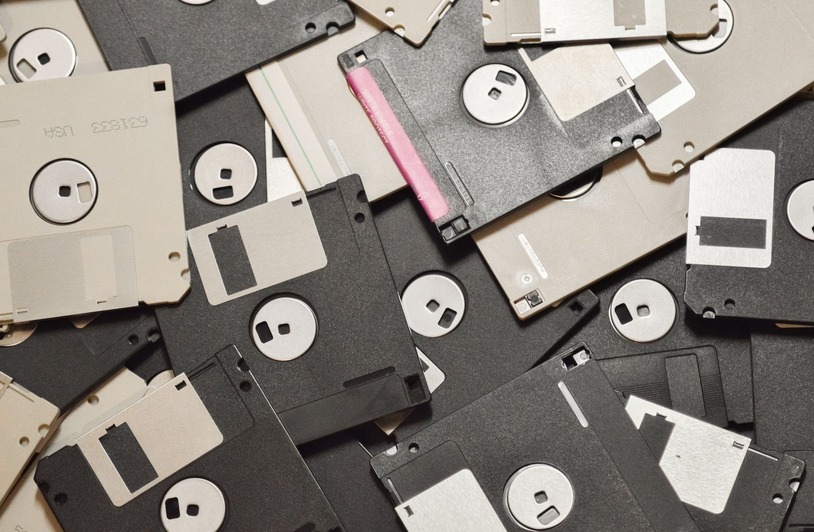
Photo: Miguel Á. Padriñán via Pexels
CLICK HERE TO DONATE IN SUPPORT OF DCREPORT’S NONPROFIT MISSION
