

No one in American public life is a defender of drug cartels or supports drug trafficking on sea routes. Few, if any, care about keeping Venezuelan leader Nicolas Madura in office.
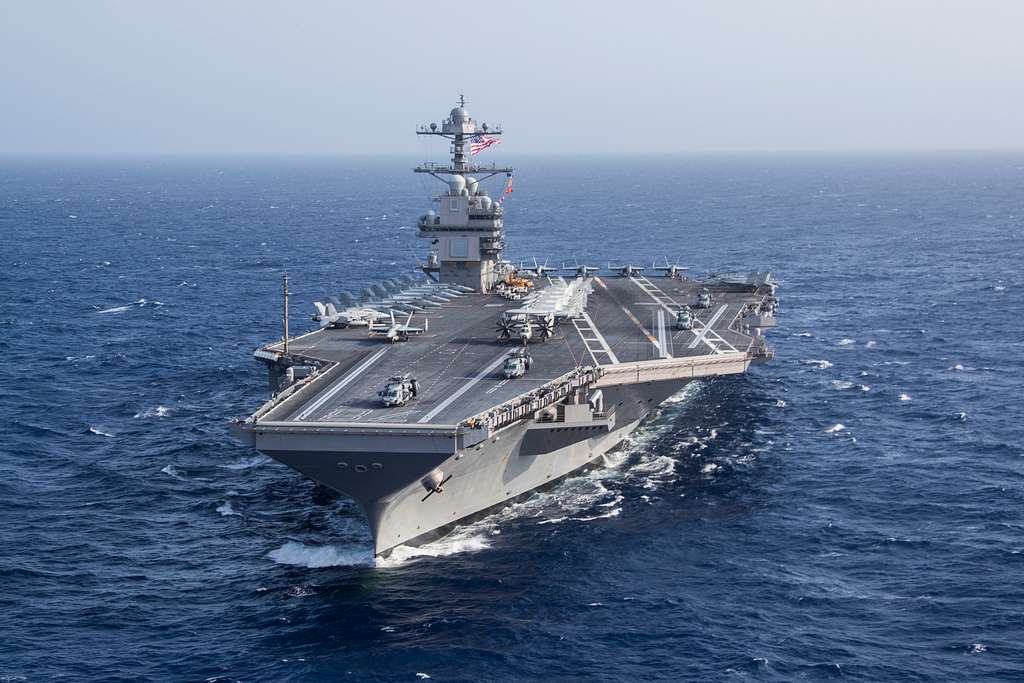
But Donald Trump’s orders on Friday to anchor the U.S. aircraft carrier Gerald Ford and supporting ships in the Caribbean off Venezuela is a major escalation that as even Republican lawmakers rising in protest of skipping over any congressional involvement in a potential war-making decision.
The deployment of a carrier group – the exact lineup of ships remains guarded – is a move that brandishes the imminent threat of wider spread attacks on would-be drug boats in international waters and on land-based facilities run by the cartels. B-1 bombers were also reported to be making overruns in Venezuela, surveilling drug cartel areas, though our government declines to confirm observations by journalists.
What exactly here is drug enforcement, and at what point does it become crossing into sovereign territory? What here is provocation for an incident that justifies military action? If we do not have an achievable goal, how possibly can a campaign by a notoriously impatient Trump and a trigger-happy war secretary hope to succeed? Isn’t getting at this doubt the point of congressional oversight?
For more than a month, about 10,000 troops have already been sent to the Caribbean, and the aircraft carrier Ford has another 5,000 sailors, and has more than 75 attack, surveillance and support aircraft.
Meanwhile, the U.S. has now destroyed 10 smaller boats that the administration says were carrying cocaine and fentanyl, killing most the 43 crewmen, and angering other Latin American leaders since not all the fatalities were Venezuelan.
Trump slapped trade tariffs on Colombia and sanctions on its president after he challenged Trump’s justification for killing a Colombian fisherman whom he had identified as a Venezuelan drug gang member. And then there was a strike on at least one other Colombian boat.
Various legal and military experts told The New York Times that the killing of people Trump accuses of smuggling drugs off Venezuela and Colombia are patently illegal – calling them premeditated extrajudicial murders. Team Trump openly says the strikes are perfectly legal as “self-defense” and “armed conflict” against an enemy aiming to kill Americans but offered neither evidence or legal justification. To date, no court, U.S. or international, has had a case to adjudicate.
In the conservative National Review magazine, senior writer Noah Rothman said, “It would be a colossal mistake for the president to glide listlessly into a war in South America for which he sought no public support or congressional buy-in.”
Targeting Latin America
Since returning to office in January, Trump has targeted Latin American drug cartels and criminal gangs, including Tren de Aragua from Venezuela, as terrorist organizations. Defense/War Secretary Pete Hegseth has repeatedly compared them to Al Qaeda.
Despite the talk of drug smuggling, congressmen from both parties suggest the Trump administration is considering sending weapons and troops into Venezuela to force the removal of Madura from office. Trump also has threatened Colombia with large trade tariffs, despite efforts to root out smuggling.
Republicans in the House and Senate are emerging in opposition. They may agree with the targeting either at sea or on land but want Congress to have a say in setting the scope of involvement.
Several are questioning the legality of the sea strikes in international waters, and the justification of narcotics smuggling as excuse for unexplained killing. Until recently, intervention with drug smugglers was regarded as law enforcement, with interdiction and the filing of criminal charges resulting rather than killings. Experts in smuggling routes also have questioned whether the destroyed craft were headed to destinations not in the United States.
Presumably this is why we saw the resignation of the U.S. military commander of forces in the Caribbean last week.
Trump and Hegseth have argued that they have a right to kill combatants in a “war” aimed at the United States. Despite repeatedly calling smuggling a war, Trump said he would not seek congressional approval for actions he is ordering.
Meanwhile, in Gaza
As leader of the Gulf-based coalition that forced Hamas militants in Gaza to release living hostages to Israeli, the United States finds itself a week later hard at work to maintain a fragile cease-fire.
This week Israel renewed bombing in Gaza and halted aid trucks for Palestinian civilians after some Hamas remnants fired weapons at Israeli Defense Forces. Then the Israeli Knesset, its parliament, adopted a preliminary measure threatening to annex the West Bank territories, site of continuing land-grabs from Palestinians to create Jewish settlements in areas where land claims go back to Biblical times.
Both U.S. Vice President JD Vance and Secretary of State Mario Rubio made trips to Israel to carry the message that the United States expected Israel to hold up its end of the cease-fire bargain. Israeli Prime Minister Benjamin Netanyahu was pressured into insisting that the annexation order would not proceed, even as he sought to pay attention to his own unsteady political future.
Fighting also continues in Ukraine, where Russians bombed a kindergarten, clearly a civilian target, and electric power plants as Russian leader Vladimir Putin pooh-poohed any attempts by Trump on oil sanctions to bring Russia to heel.
The would-be peacemaker Trump looked a lot like a war maker.
PLEASE CONSIDER A DONATION TO SUPPORT OUR NONPROFIT NEWS GATHERING AND SHARING EFFORTS
