


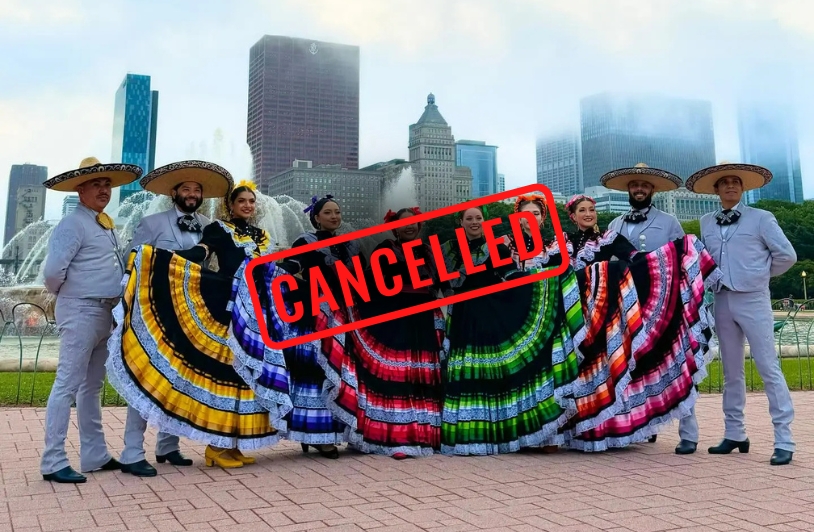
Numerous Hispanic culture and heritage events across the United States have been cancelled in recent months due to fears of ICE raids and ambushes.
These events, many of which were in celebration of National Hispanic Heritage Month, which ran from mid-September through mid-October, and Mexican Independence Day on September 15 and 16, were previously opportunities for residents to celebrate the history, traditions and cultural diversity of Hispanic Americans. But with the recent expansion and mobilization of ICE under the second Trump administration, townships and community organizers predicted that attendees, whether or not they are undocumented, would be targeted and arrested by ICE agents. Experts said that this pattern is a response to a new iteration of the “deportation terror” and commended the decision to cancel the festivals.
The City of Everett, Massachusetts, for example, revealed in a post that it cancelled its Fiesta del Rio planned for September 20.
“With the recent ICE raids in our region, many of our friends and neighbors are feeling fear and uncertainty,” read the post. “We believe it would not be right to hold a celebration at a time when members of our community may not feel safe attending.”
The Hispanic Heritage Festival in Wheaton, Maryland, El Grito Chicago and Tacos y Tequila Festival in Spokane, Washington, were also cancelled due to worries that ICE agents would show up.
Most recently, the Milpas Street Holiday Parade, scheduled for December 13 in Santa Barbara and El Carnaval de Puebla, an event in Philadelphia, were also axed in December, due to similar concerns.
Rachel Ida Buff, an immigration historian at the University of Wisconsin-Milwaukee, said the deportation terror is a term used in scholarship to describe the large-scale utilization of deportations and raids by the federal government to control immigrant communities.
For undocumented immigrants, the typical target of current ICE operations in the United States, “that amount of pressure is incredible… to have to live with when they’re just conducting the activities of daily life,” Buff said. “There are many U.S. citizen children that have psychological dread of coming home from school because they’re afraid their parents won’t be there. That’s why we call that terror.”
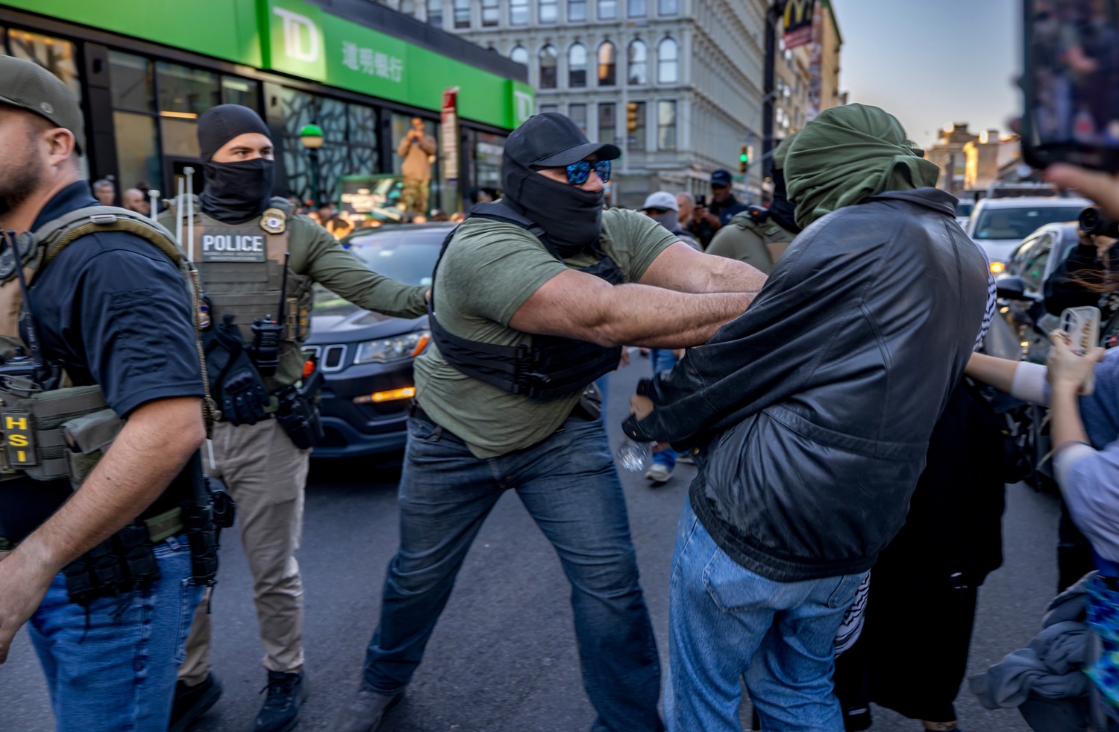
In her 2008 essay “The Deportation Terror” in which Buff coins the term, she traces back to the targeted deportation of Mexican immigrants during the Great Depression and leftists during Cold War-era McCarthyism. Buff said that the usage of the word “terror” has since been obscured by politicians and media organizations.
“I thought that was really an important phrase to rescue because these days, terror is usually used as an Islamophobic phrase to justify national security,” Buff said, “and I think that that phrase was and is descriptive of the experience of immigrant communities.”
The modern deportation terror has been used as a fear tactic by the Trump administration to scapegoat immigrants as the cause of poor economic conditions, Buff said. Anti-migrant rhetoric became central to right-wing political messaging in the 1980s under Ronald Reagan’s presidency when an influx of Hispanic immigrants entered the United States to flee authoritarian regimes in South and Central America. Instead of pointing fingers at the dictators and the funding they were receiving from the United States, the news media instead shifted the blame by erroneously labeling the refugees as criminals and murderers, Buff said.
“Anytime there’s a substantive issue, like eggs are still really expensive, or people can’t afford groceries, they just blame the ‘illegals,’” Buff said. “That’s a really handy trope. It’s really powerful and it shuts a lot of other things up.”
The deportation terror manifests as a domestic control apparatus, preventing immigrant communities from engaging in civil society in a comfortable fashion. Neighborhoods home to large populations of immigrants are quiet, with residents afraid to run errands, take their children to school or congregate in large groups to celebrate their community, Buff said.
As a fun and uniting force, cultural events have historically been practiced by minority groups around the U.S. for attendees to bond over shared heritage. “Weirdly, I think it’s very American to want to celebrate your not-American heritage,” Buff said.
The cancellation of Latinx cultural events, although ultimately a safeguard for those subject to the immense scrutiny of the Trump administration, forced said individuals to conceal their identity and pride. With festivities subsidized primarily by local businesses, the events serve as a form of “ethnic capital,” Buff said.
As a representation of tradition and culture, the celebrations operated as a safe but familiar space for the undocumented population. “This is the upper mobility, the American dream, that you own a restaurant, you own a store,” Buff said. “If those people get forced out because they cannot celebrate their heritage… This country is going to look really different.”
Puerto Rican musician Bad Bunny, one of the most streamed artists in the world, did not include the U.S. in his “Debí tirar más fotos World Tour” due to similar fears of the events being compromised by ICE raids.
Catalina Amuedo Dorantes, a professor of economics at University of California Merced, discovered while co-authoring her 2021 book “De Facto Immigration Enforcement, ICE Raid Awareness, and Worker Engagement” that the deportation terror has an adverse effect on not just immigrant communities, but the economy at large. The prevalence of ICE raids has contributed to a significant drop of Hispanic participation, especially Hispanic women, in the labor force, most notably agriculture and construction industries.
Dorantes said, however, that while the cancellation of Hispanic heritage events will also force culture to be celebrated in the shadows, community ties have likely only grown stronger.
“If the goal [of ICE] is to really obscure it, it’s actually probably achieving the opposite, ironically,” Dorantes said. “The more that you force people to have to hide something, the more attached they become to it.”
Ali Sanchez, the executive director for Casa Latino’s Unidos, a non-profit organization based in Oregon that is “committed to strengthening the Latinx communities in Linn and Benton Counties” according to the Casa Latinos Unidos website, said that she had a shift in perspective over the event cancellations.
“I was of the impression that business must go on and people should make informed decisions about what they do,” Sanchez said, but added that ultimately the decisions to cancel were an important measure to protect the undocumented population.
Sanchez added that her experience working at the non-profit has grown increasingly difficult since she took the title in 2018 under Trump’s first administration. “The first Trump administration didn’t cause as much terror,” Sanchez said. “People trusted the organization’s name [and] people trusted that they could still have Medicaid.”
But in 2025, she now relies on partners, primarily white non-profit organizations, to fundraise for them. Those for whom she advocates are hesitant to apply for Medicaid since it requires them to send their information to the federal government. Sanchez and her staff are also reluctant to speak to members of the press or attend public meetings.
“None of us would feel comfortable coming to speak at a public [event] because we’re living in fear, regardless of our citizenship status,” Sanchez said.
As Sanchez suggested, the modern deportation terror has extended to afflict those with legal permission to reside in the United States, such as Mahmoud Khalil and Kilmar Abrego Garcia. The Supreme Court sanctified this behavior Sept. 8 with its 6-3 ruling of Noem v. Vasquez Perdomo, allowing ICE agents to detain an individual if they have “a reasonable suspicion, based on specific articulable facts, that the person being questioned… is an alien illegally in the United States,” including Deferred Action for Childhood Arrivals, or DACA, recipients.
Due to ICE’s non-discriminatory detention practices, the cancellation of these heritage events was a measure to protect not just undocumented migrants, but also Hispanic residents with lawful permission to reside in the United States. “[ICE will] take you if you’re a citizen, they’ll take you if you’re a legal resident, they’ll take you if you’re in proceedings for asylum,” Buff said.
Ruben Martinez, a professor of sociology at Michigan State University, clarified that even those who are crossing the border illegally are committing a civil infraction, not a criminal one. Martinez added that the utilization of violence and lack of due process is wholly unconstitutional and serves as a smokescreen to prepare for a declaration of martial law.
“[ICE is] not going after the hardened criminals. They’re dragging kids out of their beds at midnight and into the street, which is not exactly something that aligns with what they tell the public they’re doing,” Martinez said. “It’s cultural terror. It’s a repression, not only of cultural gatherings and celebration, but it affects even those who are citizens.”
Buff said that although it was a sound decision to cancel these Hispanic heritage events, there were additional measures that should have been implemented to protect the physical safety of Hispanic residents, namely the establishment of ICE-free zones. As an example, Buff cited the Milwaukee Public Schools: Safe Haven Resolution, which designates public schools as a safe haven for all students and families regardless of immigration status.
Another step that Buff endorsed was taken by Milwaukee Alliance Against Racist and Political Repression, a non-profit organization that stayed mobile and made food and beverage deliveries to avoid excessive congregations.
“I think sometimes cancelling events can be protective, but also there are other ways of being protective and being proactive,” Buff said.
Ultimately, however, resistance falls mainly into the hands of those who are afflicted.
“I think the resilience of immigrant communities is one of the most inspiring things that I learned historically and currently,” Buff said. “They are incredibly brave. It’s been true for as long as there has been the deportation terror that there have been just amazing attempts to resist it.”
This article is part of our ongoing mentoring program for young and/or emerging journalists. It’s our effort to provide a voice to those faced with increasingly diminished opportunities to write about the issues facing communities locally and nationwide. Please consider supporting this effort with a tax deductible donation today.
