


American news covered shocking events in 2010, but as judgment nears that attention disappeared
In 2010, little more than a decade after NATO went to war in Kosovo against genocidal Serbian forces amid the 1998-99 conflict, an extraordinary accusation emerged against some of the men the United States had once supported as leaders of the Kosovo Liberation Army.
The charge: involvement in killing prisoners and trafficking their organs.
At the start, the story gained huge attention in the news, especially in America. But now, as the case moves toward a final resolution, the story seems to have died, unmentioned in major American news organizations for several years.
The organ trafficking allegations were especially explosive because of who made them.
The accuser was not a Kosovo politician or a Balkan partisan. He was Dick Marty, a Swiss senator and former prosecutor who built an international reputation for investigating abuses committed in the name of the so-called wars on terror.
Earlier, as a Council of Europe investigator, Marty exposed a network of secret CIA prisons in Europe used to hide waterboarding and other torture of terrorism suspects
So, when Marty turned his focus to Kosovo, American news organizations paid attention.
Marty’s 2010 Council of Europe report implicated Hashim Thaçi, the former KLA political leader who was then Kosovo’s prime minister, and three close associates.
Thaçi rejected the allegations as politically motivated and unfounded.
Special Court Created
Marty’s allegations helped set in motion the process that culminated in the establishment of the Kosovo Specialist Chambers in The Hague to formally investigate and adjudicate.
The chambers became a special investigative agency created by European nations. It was embraced by amendments to Kosovo’s constitution.
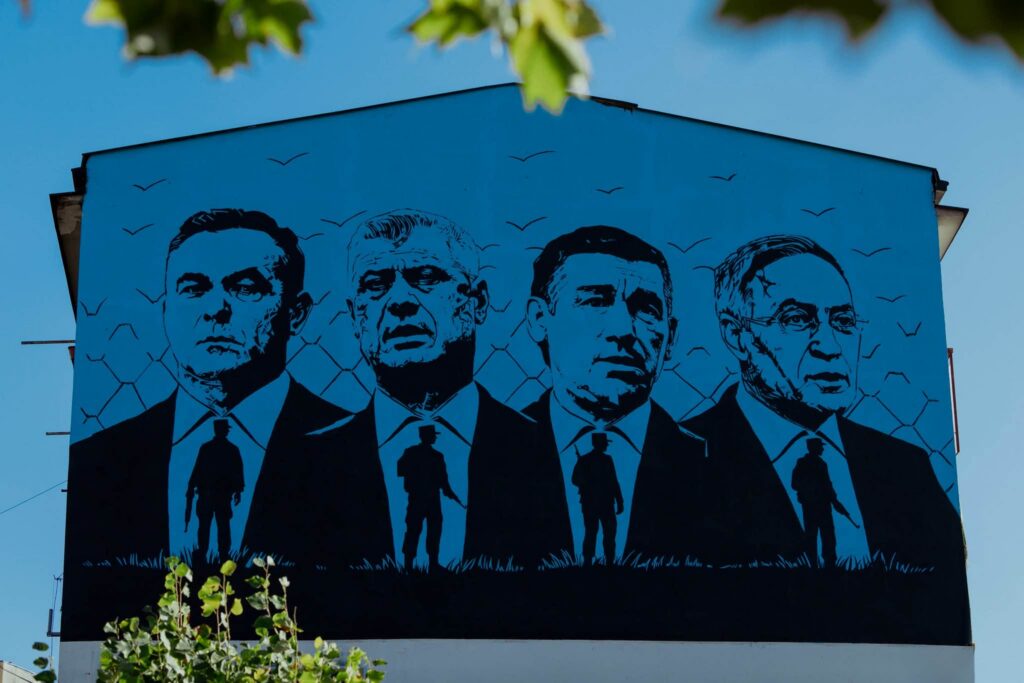
Prosecutor Jack Smith, an American who would later twice indicted Donald Trump on unrelated matters, obtained a 2020 indictment against Thaçi and three confederates: guerilla leaders Kadri Veseli, Rexhep Selimi and Jakup Krasniqi.
But in a curious twist the story told in the indictment is completely different to the story presented to Americans 15 years ago. None of the defendants are charged with organ trafficking. Instead, they face charges of war crimes and crimes against humanity.
All four plead not guilty.
The Hague court’s procedures have also come under criticism, including from a British human rights organization that has raised concerns about defendants’ rights, equality of arms and the handling of evidence. Serious as the charges are, the fairness of the proceedings deserves scrutiny.
Coverage Vanishes
American news media, however, appear to have lost the interest they once had in Marty’s allegations as the trial commenced. Thaçi was last mentioned in The New York Times and The Washington Post in 2023.
Thaçi last made The Wall Street Journal in 2020 when he resigned as Kosovo’s president. The Associated Press reported on the trial closing statements in February of this year, but only four American newspapers ran the AP story, the newspapers.com database shows.
The trial began in 2023, three years after the arrest of the four defendants. The judges heard testimony from hundreds of witnesses and examined more than 5,000 exhibits. The trial transcript runs to 29,000 pages.
The courtroom in The Hague also heard testimony from former American diplomats and military officials, including James Rubin, a former State Department spokesman; veteran diplomat Christopher Hill; and General Wesley Clark, NATO supreme commander during the 1999 bombing campaign against Yugoslavia.
In May, the Bar Human Rights Committee of England and Wales published a preliminary review of the trial, raising concerns about the rights of the accused, equality of arms, problems with evidence and other issues.
Street demonstrations
Opposition to the court has also spilled into European streets with demonstrations in Kosovo, North Macedonia and other places, a story ignored in America.
The Kosovo Specialist Chambers disputed aspects of the review and defended its procedures.
Regardless of what one may think about these issues, a war crimes trial in a case that involved American military intervention deserves continuing journalistic examination by major American news organizations.
That doesn’t mean covering the trial every day, but it does mean occasional updates on the status of this war crimes prosecution.
Now the trial is coming to an end. The Hague court is expected to deliver its verdict on Sept. 16.
The United States played a pivotal role in Kosovo’s history. It led NATO’s intervention, worked directly with KLA representatives, and became independent Kosovo’s most important ally.
American news media told their audiences about the allegations. They should also tell how it is going and what the judges find.
“FREEDOM OF THE PRESS IS NOT JUST IMPORTANT TO DEMOCRACY, IT IS DEMOCRACY.” – Walter Cronkite. CLICK HERE to donate in support of our free and independent voice.
