


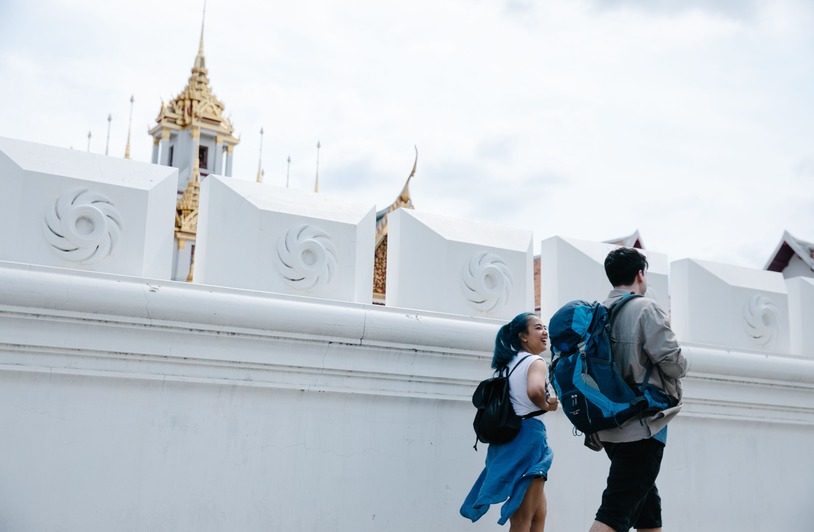
Thailand solo travel works so well because the country gives you control without compromise. You can move easily between cities, mountains, beaches, and islands, then dial the trip up toward hostel energy or down toward quiet guesthouse days whenever your battery needs it.
This 2026-updated guide skips generic tourism talk and focuses on the realities that matter when you are traveling alone: entry prep, money, safety, transport, destination choice, budget planning, and the small daily habits that make a solo trip feel smooth instead of stressful.
Essential Solo Travel Planning
Visa Rules and Entry Documents
For most Western passport holders, Thailand’s visa exemption scheme means you can receive an entry stamp on arrival without pre-applying for a tourist visa. However, “no visa needed” does not mean “no prep needed.”
Here is your screenshot-ready checklist before you head to the airport:
- Passport validity check: U.S. and Canadian citizens should treat six months of validity beyond your date of reentry as a safe baseline check. Confirm this before booking any nonrefundable flights or hotels.
- Complete the TDAC: As of May 1, 2025, all travelers must complete the Thailand Digital Arrival Card (TDAC) within 72 hours prior to arrival. Save the confirmation as a screenshot or PDF offline. Do not rely on re-finding the email at immigration.
- Know your entry stamp expectations: Under visa exemption, you will typically receive a stamp valid for a set number of days. Check the current allowance for your nationality before departure.
- Proof of onward travel: Have a return or onward ticket ready to show if asked. Even a flexible booking confirmation works in a pinch.
- Print or save a hotel confirmation for your first night, since immigration officers occasionally ask for an address.
- If plans change mid-trip: decide early whether you will pursue an extension at a local immigration office or do a last-minute border run. The former is cleaner and more plannable; the latter is riskier and more time-sensitive.
Arrival day micro-workflow for solo travelers:
- Before landing: Download your TDAC confirmation, hotel booking, and onward ticket to your phone’s offline storage or photo gallery, not just your email inbox.
- At immigration: Keep these documents in a single accessible folder or printed packet. Avoid wasting time scrolling for signal you might not have. To avoid that signal gap entirely, install an eSIM for Thailand before departure while still on home Wi-Fi — your connection goes live the moment you land, so ride-hailing, maps, and messaging all work before you leave the terminal.
- First 24 hours: Confirm your accommodation’s exact address and save a local emergency contact or your hotel’s phone number in case your only device dies.
Travel Insurance and Health Basics
Travel insurance is not optional in Thailand. It is the difference between a manageable mishap and a financial disaster, especially when you are the only one handling the paperwork, transport, and decision-making.
Use this quick decision tree based on your travel style:
- Budget backpacker: Prioritize solid medical coverage and medical evacuation above all else. Skip add-ons like electronics coverage if your gear is minimal or already insured elsewhere.
- Mid-range traveler: Add trip interruption coverage alongside medical and evacuation, especially if you have multiple prepaid bookings that a missed flight or illness could unravel.
- Higher-comfort traveler: Round out your policy with electronics coverage for cameras and laptops, plus higher trip interruption limits, since you likely have more at stake financially per disrupted segment.
Common denial pitfall: Many policies exclude claims related to “adventure activities” like scooter riding or diving unless you explicitly add a rider. Check this before purchase, since scooters are practically default transportation in Thailand.
Health kit + pharmacy basics:
Bring from home:
- A small supply of any prescription medication, with extra in case of delays;
- A basic antihistamine for unexpected reactions;
- Blister care essentials if you will be walking or hiking frequently.
Buy locally:
- Oral rehydration salts, which are cheap and widely available at pharmacies;
- Sunscreen;
- Mosquito repellent.
One practical habit makes a real difference: photograph your prescriptions and insurance policy number before you leave. Clinic intake during a solo emergency is far easier when you are not fumbling through paperwork.
Cash, Cards, and Local Payments
Splitting your money sources is one of the simplest solo-travel safeguards. A strong setup looks like this: carry a primary debit or credit card on your body, keep a backup card separate, and stash emergency cash in a third location.
The goal is simple: no single theft or loss event should zero you out.
Where cash is still king: night markets, small ferries and long-tail boat add-ons, rural guesthouses, tuk-tuk fares, and tipping. These transactions rarely support cards and often move too fast for anything but bills.
Where card is usually fine: malls, convenience store chains, mid-range and upscale hotels, and larger restaurants in tourist zones.
Handling payment friction solo:
- ATM retains your card: Note the machine’s bank and location immediately, contact the bank’s local number if posted, and use your backup card while sorting it out.
- Terminal is “down”: Ask if there is a mobile payment option before assuming you need cash on hand.
- Vendor requests different payment: Politely confirm the amount in THB first, then decide whether your backup card or cash stash covers it. Never let unfamiliarity pressure you into an unclear exchange rate.
Packing for Cities, Temples, and Islands
Thailand rewards efficient packing. You are not packing for one environment, but for several: humid cities, temple visits, ferry transfers, beach days, and sudden rain.
| Category | Cities | Temples | Islands |
| Footwear | Comfortable walking shoes | Easy slip-on/off shoes | Sandals + water shoes |
| Clothing coverage | Casual, breathable layers | Shoulders/knees covered; lightweight layer | Swimwear + light cover-up |
| Rain protection | Compact umbrella or rain shell | Lightweight rain shell | Quick-dry poncho or pack cover |
| Sun protection | Light hat, sunscreen | Sunscreen applied before covering up | Wide-brim hat, reef-safe sunscreen |
| Day bag | Anti-theft daypack | Small bag for shoes/offerings | Waterproof dry bag |
| Swim/snorkel | Not applicable | Not applicable | Snorkel gear or rental confirmation |
| Electronics | Phone, eSIM-enabled for data | Phone, silenced | Waterproof phone case |
Temple etiquette essentials: a lightweight scarf or sarong doubles as both a shoulder cover and knee cover. Slip-on shoes save time at entrances where footwear removal is expected, and a small bag keeps your shoes from getting lost or dirtied while you are inside.
Monsoon and heat management: Thailand’s wet season runs from July to October, so prioritize quick-dry fabrics over cotton if traveling in these months. Waterproof your phone and passport with a ziplock or dry pouch, and choose footwear that dries within a few hours rather than overnight. Soggy shoes are a recurring solo-traveler annoyance that is easy to avoid with a little planning.
Safety and Confidence
Solo travel in Thailand rewards preparation more than paranoia. Most trips go smoothly, but the travelers who feel most confident are the ones who have already rehearsed their responses to predictable moments: late-night transport, new acquaintances, nightlife decisions, and health calls in unfamiliar places.
Situational Awareness and Nightlife
Nightlife is where solo travelers face the highest concentration of low-stakes-but-real decisions. Venue changes, late rides, new groups, and low phone battery can all stack up fast.
Arriving at a venue alone
- Best default: Do a quick lap before settling in. Note exits, check how crowded and staffed it is, and pick a seat with a clear sightline to the door.
- Red flag: Bouncers or staff pushing you toward a back room, upstairs area, or “VIP” section within minutes of arrival.
- Exit move: “I’m meeting someone outside, be right back.” Then simply leave or reroute to a different venue nearby.
Accepting an invitation to change locations
- Best default: Ask where, confirm it with a quick map check, and text the location to a friend or family member before you move.
- Red flag: Vague answers about the new spot, or pressure to leave immediately without time to check your phone.
- Exit move: “My friend just landed and needs me to check in.” Order your own ride to your own destination, not the group’s.
Getting separated from new friends
- Best default: Agree on a meeting point and rough time window before the group splits up.
- Red flag: Someone insists on keeping your phone, drink, or bag “for safekeeping.”
- Exit move: Head to a well-lit, staffed location and call your accommodation rather than wandering to search.
Leaving late at night
- Best default: Order your ride from inside the venue or a lit doorway, not from the street.
- Red flag: A driver who wants to negotiate the destination or route after you have already gotten in.
- Exit move: State the pinned address again, out loud, and mention someone is tracking your trip. No confrontation needed, just a clear signal.
Ride-home readiness checklist:
- Phone battery above 30% before heading out, plus a backup charging option.
- Accommodation address pinned and saved offline in your maps app.
- One-sentence rule: if “one more stop” would drop your battery, budget, or judgment below your safety margin, the plan to get home wins.
Two practical safety nets are worth knowing before you go out. Thailand’s tourist police handle everything from lost passports to disputes and are generally more responsive to visitors than regular police stations. Save their number alongside your emergency contacts, since nightlife districts are also where petty theft —bag snatching, unattended-phone theft, distraction thefts—clusters most.
Solo Travel in Thailand for Women
Boundary-setting does not require conflict. Short, calm scripts handle most situations without escalating them.
Script bank for common situations:
- Persistent attention: “I’m enjoying my night solo, but thanks.”
- Unwanted photos: “Please delete that, I didn’t agree to a photo.”
- Being followed out of a venue: “I’m heading back inside, I forgot something.”
- Pressure to share accommodation or transport: “My ride’s already arranged, but thanks for offering.”
Day-to-night clothing and bag choices that reduce friction:
- Favor closed, zippered bags worn across the body over open-top totes.
- Keep your phone and primary cash in a front pocket or inner zip compartment you can feel against your body.
- A light cover-up layer does double duty: temple-appropriate during the day, easy to add in the evening.
Most interactions are neutral to friendly. However, a tourist scam aimed at solo women often starts with unsolicited “help,” such as finding a taxi, carrying a bag, or “escorting” you somewhere. Politely declining early keeps things simple.
Solo Travel in Thailand for Men
Most friction solo male travelers run into is not danger. It is misread signals that escalate a small misunderstanding into a tense moment.
Misread signals prevention:
- Avoid unsolicited touch with staff or vendors.
- Keep your volume level when a price or order seems off.
- Do not persist after someone has clearly said no or ended a conversation.
- Use open palms and a smile when clarifying a misunderstanding.
- Give the other person an easy way to save face.
Conflict avoidance and face-saving exits:
- Pay the disputed amount, walk away, and address it later via a review or the tourist police.
- Use a neutral exit line: “No problem, I’ll figure it out.”
- If a crowd gathers or voices rise, treat that as your cue to leave immediately.
In Thailand, calmness is practical. Winning an argument rarely improves the trip; leaving early often does.
Health, Water, and Food Safety
Water decision guide:
- Tap water: skip for drinking, but fine for showering.
- Filtered or boiled water: safe for drinking and teeth brushing.
- Bottled water: the default safe choice everywhere.
- Ice: safest when factory-made, usually in small pellet or tube shapes at reputable restaurants.
Street food stall selection signals:
- High turnover with a constant stream of local customers.
- Visible cooking heat from flame, grill, or hot oil.
- Separate tools for raw and cooked items.
- Vendors who handle money and food with some separation.
First sign of stomach illness, solo: hydrate with oral rehydration salts before reaching for anything else. Plan a low-effort rest day rather than pushing through a full itinerary. If symptoms include high fever, persistent vomiting, or blood, treat that as your threshold to seek clinic care.
Solo-traveler dehydration and heat protocol:
- Start the day with water plus electrolytes before you are thirsty.
- Pause at midday if you feel headache, dizziness, or unusually low energy.
- If you stop sweating normally, feel confused or unusually irritable, or your urine is notably dark, stop sightseeing, get shade or air conditioning, and rehydrate.
Best Destinations for Solo Travelers
Thailand’s real strength is not one perfect city or island. It is the way each base offers a different solo-travel setting: social, quiet, structured, loose, easy, or deliberately slow.
Bangkok
Best for: First-timers and hostel dormitory backpackers who want maximum stimulation and quick solo wins.
Solo friction score: Low. The BTS/MRT network is color-coded, English-signed, and genuinely useful, so you are rarely dependent on anyone else’s help to get around.
Where to base yourself: Sukhumvit corridor for BTS access, or Banglamphu/Khao San if you want backpacker density and guesthouse options close together.
Easy wins in 48 hours:
- Wat Pho and Wat Arun;
- Chinatown’s Yaowarat night market;
- A Chao Phraya Express boat ride at golden hour.
Watch-outs for solo travelers:
- Tuk-tuk drivers near major temples steering you toward “special deal” gem shops.
- Traffic-heavy street crossings outside the BTS network taking longer than Google Maps suggests.
Bangkok is built for a self-directed solo day. Plan a temple cluster in the morning, let the afternoon loosen into neighborhood wandering or cafe time, then close with a market where solo dining blends right in. On lower-energy days, the Chao Phraya Express is the elegant simplicity option: low effort, zero small talk, and still a memorable view of the city.
Social on-ramp menu:
- Non-party options: group food tour, Thai cooking class, or Bangkok coworking/cafe culture.
- Nightlife-adjacent options: rooftop bar with an early-exit plan, or live-music venue with communal seating.
Chiang Mai
Best for: Solo travelers who want a guesthouse-based reset with slower backpacking energy.
Solo friction score: Low-to-medium. The Old City is compact and walkable, but mountain day trips usually mean joining a shared transfer or renting a scooter.
Where to base yourself: Inside the Old City walls for temple density and guesthouse clusters, or Nimman for a cafe-and-coworking rhythm.
Easy wins in 48 hours:
- Wat Phra Singh;
- Sunday Walking Street or Chiang Mai Gate food stalls;
- Sunrise trip to Doi Suthep via shared transfer.
Watch-outs for solo travelers:
- Burning season, roughly February to April, brings noticeably poor air quality.
- Shared transfers to Pai or nearby national parks fill up fast in high season.
Chiang Mai rewards a simple routine: morning cafe, midday temple or errand, evening market. It is less intense than Bangkok because the core area is smaller and calmer, which helps solo travelers avoid the feeling that they always need to do more.
Transportation choice note: Getting here from Bangkok is a real solo-comfort decision. An overnight train or bus takes about 12 hours—cheap, and it saves a night of accommodation, but you will arrive groggy. A domestic flight, by contrast, takes about 40 minutes and often costs under $50, landing you with enough energy to explore the same afternoon. If your solo trip already runs on tight energy management, the flight is usually the better trade.
Phuket and Koh Samui
Best for: Solo travelers ready for their first island base, provided they are comfortable with more transfer complexity.
Solo friction score: Medium. Beach areas are spread out, so you rely more on taxis, scooters, or hotel shuttles than on foot navigation.
Where to base yourself: Patong in Phuket or Chaweng in Koh Samui for density and nightlife. Kata, Karon, Bophut, or Maenam if you want the social volume lower.
If you want social + tours: Base in Patong or Chaweng. Group day trips, diving courses, and pub-crawl-style nights are easiest to book here.
If you want comfort + beach downtime: Base in Kata Noi or Bophut’s Fisherman’s Village. Expect slower beach days and smaller guesthouse-style stays.
Easy wins in 48 hours:
- Big Buddha in Phuket or Wat Plai Laem in Koh Samui;
- Bangla Road food stalls or Chaweng walking street;
- A group snorkeling boat trip.
Watch-outs for solo travelers:
- Jet ski rental scams, especially inflated “damage” claims. Photograph the vehicle before and after use.
- Rough-water flags during monsoon swells. Check conditions before any solo swim.
Solo logistics gotcha: Phuket’s airport-to-beach transfer can run 45 minutes to over an hour depending on where you are staying. Koh Samui may add a ferry connection through Surat Thani if arriving overland. Book the first transfer or ferry slot in advance and give yourself a wider window than you would for a city hop.
Koh Kood, Koh Mak, and Quieter Islands
Best for: Solo travelers who already did a busier base and now want a genuine quiet reset.
Solo friction score: High. There is no BTS-style backup plan here. You depend on pre-booked boats, limited late-night food options, and smaller-scale infrastructure.
Where to base yourself: Pick one small beach village cluster and stay put. Base-hopping between quiet islands is rarely worth the transfer overhead on a short trip.
Easy wins in 48 hours:
- A local shrine or small temple visit;
- Beachside food stalls;
- Snorkeling just offshore.
Watch-outs for solo travelers:
- Food stalls and small restaurants often close early.
- Cash is often the only accepted payment outside larger resorts.
Who should not pick this first: If you rely on spontaneous social connections, late-night food, or last-minute plan changes, these islands may frustrate you.
Minimum viable stay length: Three to five nights is where the transfer effort starts feeling worth it.
Bring or arrange before you arrive:
- Enough cash for your full stay;
- Realistic data expectations;
- Arrival timing that matches the last shared transfer or ferry;
- Pre-booked accommodation.
Seasonality choice: Rainy-season swells can make crossings rougher or cause cancellations, and some smaller guesthouses scale back service or close entirely. If you are chasing this quiet island reset during wetter months, build in flexible dates rather than a tight point-to-point itinerary.
Transportation and Navigation
Thailand’s transport network is one of the country’s strongest solo-travel advantages. It is dense, affordable, and manageable without a travel companion. The trick is matching the right mode to the right moment.
Grab, Taxis, and Tuk-Tuks
Solo-first decision ladder:
- Late-night ride home: Default to Grab or a metered taxi.
- Short hop through heavy traffic: Use a tuk-tuk or motorbike taxi for genuinely short distances.
- Carrying heavy bags: Choose Grab or a taxi stand, never a tuk-tuk.
- Sudden rain: Grab first, metered taxi second, tuk-tuk last.
- Short local errands: Use a songthaew if one is running your direction.
- Unclear destination: Use Grab so the destination is locked in before you get in.
Price clarity micro-playbook:
- Confirm the fare basis before getting in. For metered taxis, ask “meter, please?” For tuk-tuks, agree on the full price out loud.
- If the driver refuses the meter, ask for a fixed price instead.
- Leave without escalating: “No problem, I’ll grab another one.”
Navigation fail-safe routine:
- Pin the destination before you leave.
- Screenshot the place name in Thai script when available.
- Verify the route direction in the first thirty seconds of the ride.
Trains, Buses, and Domestic Flights
| Criterion | Sleeper Train | Bus | Domestic Flight |
| Comfort/sleep quality | Best for genuine sleep on longer routes | Moderate | N/A because duration is short |
| Arrival energy | Moderate | Lower | Highest |
| Booking complexity | Moderate | Low | Moderate |
| Luggage handling | Easy | Variable | Easiest for carry-on-only trips |
| Disruption sensitivity | Low | Higher | Higher |
Concrete decision example: if you land late and must make a connecting transfer the next morning, avoid the overnight bus. A sleeper train or early domestic flight protects that connection more reliably.
Station and terminal solo routine:
- Arrive with buffer time: 30–45 minutes for buses, more for trains and domestic flights.
- Keep your ticket and ID in the same accessible pocket.
- If signage gets confusing, show your ticket or destination to uniformed staff instead of trying to explain verbally.
Baggage strategy: a single soft-sided backpack clears bus aisles and overhead racks more easily than a rigid rolling suitcase. Keep your passport, phone, and cash on your body, and watch your bag during loading and unloading, where mix-ups most often happen.
Ferries and Island Transfers
Island travel is rarely one leg. It is a chain: ferry, pier, local ride, accommodation. Planning it as one chain makes the day far smoother.
Choose a departure that lands during daylight hours. Build in buffer time between each leg so one delay does not collapse the whole plan.
Morning-of-crossing checklist:
- Small bills for pier fees, luggage porters, or songthaew rides;
- Water and snacks;
- Dry bag or zip bag for phone and passport;
- Motion-sickness medication taken before boarding.
Choose a shared transfer if:
- You are arriving late in the day;
- Your route involves multiple legs;
- You are heading to an unfamiliar pier.
Go DIY if:
- Your schedule is flexible;
- Your accommodation is close to the pier;
- You are comfortable arranging transport on arrival.
Bangkok Skytrain and Subway
Get a stored-value transit card at any station machine or counter as soon as you arrive. It saves you from buying single tickets at every stop and keeps your Bangkok days moving cleanly.
Think in lines and interchanges rather than individual stations. Identify which line your accommodation sits on, which line your day’s main destination sits on, and where those two lines cross.
Solo-friendly routing heuristics:
- Prefer rail over road during rush hour or rain.
- Choose your station exit deliberately.
- If your destination sits far from the nearest station, ride rail as far as it efficiently takes you, then finish with Grab, taxi, or tuk-tuk.
Thailand Solo Travel Budget Scenarios
Every figure below covers the core trip skeleton: lodging, food and drink, local transport, activities, and a buffer. It does not include international flights, visa or insurance costs, or big-ticket splurges like a liveaboard dive trip or multi-day trek package.
The biggest budget variable is destination mix. Island transfers can quietly raise the cost of a trip faster than almost anything else.
Under $50 per Day
- Lodging: $8–15 for a hostel dormitory bed or basic guesthouse room.
- Food & drink: $8–12 with street-food-heavy meals.
- Local transport: $3–6 using songthaews, occasional Grab, and walking.
- Activities: $5–10 for one paid attraction or tour every few days.
- Buffer: $5–7 for unplanned rides, snacks, and small fees.
Typical day: street-stall breakfast, a free or low-cost temple visit, night-market meals, and one paid activity when the budget allows.
Tradeoffs and failure points:
- Private rooms and AC go first.
- Frequent taxis and impulse island-hopping are not sustainable.
- Arriving late with no booking often means taking the first room offered, which can push costs up.
Price volatility note: Costs swing with booking lead time, season, and location. Book a day or two ahead where possible and keep a small buffer ready.
What $500 Can Cover
Assuming a 7-day trip , $500 works out to roughly $71/day. That moves you from strict backpacking into a more comfortable, still budget-driven trip.
| Bucket | Total | Per-day equivalent | Comfort outcome |
| Lodging | $140 | $20/day | Private guesthouse room instead of a hostel dormitory bed |
| Food & drink | $105 | $15/day | Mix of street food and casual restaurant meals |
| Local transport | $70 | $10/day | Grab rides when convenient |
| Activities | $105 | $15/day | 2–3 paid tours or attractions |
| Buffer | $80 | ~$11/day | Covers one transfer-day spike or missed booking |
Two itinerary shapes, same budget:
- City + cultural north focus: More social touchpoints, easier last-minute changes, and cost pressure from rail or flight legs.
- One island base, fewer moves: Simpler rhythm, built-in recovery days, and cost pressure from the first transfer.
Price volatility note: This math holds only with reasonable lead time. Wait until the last minute in a popular season and the same $500 buys noticeably less.
What $1,000 Can Cover
At $1,000, you are choosing between two comfort tiers.
- Tier 1 — Longer duration, moderate comfort: Stretch the budget across 12–14 days with guesthouse-level lodging, street food, casual meals, more paid activities, and flexible transport.
- Tier 2 — Shorter duration, higher comfort: Compress the budget into 6–7 days with private rooms, more restaurant meals, and less budget-driven route planning.
Decision tree: If you care most about time in the country, choose Tier 1. If you care most about ease and reduced daily decision fatigue, choose Tier 2.
Solo splurge menu:
- Private room on transfer nights — better sleep before an early departure.
- One guided day tour — built-in social contact and zero planning effort.
- Airport transfer on arrival — removes a stressful first decision.
- Domestic flight instead of an overnight bus — preserves energy and time.
- A short recovery stay in a quieter location — gives your trip a mental reset.
Price volatility note: Both tiers assume moderate booking lead time and a manageable destination mix. Peak season or short notice will reduce buying power, so keep the buffer flexible.
Fast Ways to Stay on Budget When Traveling Solo
- Lodging: Lock in your first two nights before arrival.
- Food & drink: Default to street food for at least one meal a day.
- Local transport: Batch errands into one Grab trip when possible.
- Activities: Pick one paid highlight per day and let everything else be free.
- Buffer: Keep a fixed daily buffer untouched until needed.
- Booking lead time: Book transfers and popular-season stays a few days ahead.
Itineraries and Solo Experiences
A strong solo itinerary is not about seeing everything. It is about giving yourself structure without trapping every day in a rigid plan.
Use three rules:
- No more than one major intercity transfer every 3–4 days.
- The night before or after a major transfer, default to a private room and earlier night.
- Build each day around a Morning anchor , Afternoon flex , and Evening option .
7-Day Thailand Itinerary
Best for: First-time solo travelers who want one steady base.
Pace: Moderate.
If you only choose one base, make it Bangkok. The transit network and density of solo-friendly activities make it the lowest-friction seven-day base in the country.
Swap option: Choose Phuket instead of Bangkok if you want beach time over city energy.
- Day 1 — Transfer day: Morning anchor: land and clear immigration. Afternoon flex: settle in. Evening option: quiet dinner near your accommodation.
- Day 2: Morning anchor: temple cluster. Afternoon flex: cafe or market wandering. Evening option: group food tour.
- Day 3: Morning anchor: cooking class or museum. Afternoon flex: rest or laundry. Evening option: rooftop view and early night.
- Day 4 — Side-trip day: Morning anchor: shared day tour. Afternoon flex: continue the tour or return early. Evening option: shared meal with people from the tour.
- Day 5: Morning anchor: market visit. Afternoon flex: neighborhood cafe hop. Evening option: early dinner.
- Day 6: Morning anchor: one bucket-list activity. Afternoon flex: shopping or park. Evening option: farewell-style group activity.
- Day 7 — Transfer day: Morning anchor: last coffee and errands. Afternoon flex: airport buffer.
Solo social on-ramp: Book one group activity in the first 2–3 days. It creates early familiarity without locking your whole trip into group travel.
10-Day Thailand Itinerary
Choose Route A for culture and cafes. Choose Route B for beaches and tours.
Route A — City + North
- Day 1 — Transfer day: Land, settle in, short walk, early night.
- Days 2–4: Temples, markets, cooking class, cafe culture, alternating social and quiet evenings.
- Day 5 — Transfer day: Travel to the northern base. Book a private room for tonight.
- Days 6–9: Old City temples, mountain day trip, cafe/coworking afternoons, alternating group activities with quiet evenings.
- Day 10 — Transfer day: Final market visit and airport buffer.
Route B — City + Island
- Day 1 — Transfer day: Same as Route A.
- Days 2–4: City rhythm with alternating social and quiet evenings.
- Day 5 — Transfer day: Travel to the island base. Book the ferry or transfer connection in advance.
- Days 6–9: Group snorkeling trip, beach downtime, temple half-day, and balanced evenings.
- Day 10 — Transfer day: Airport buffer and departure.
Solo social on-ramp: Book one group tour or class in the first base so you have social momentum before the transfer day resets your environment.
15-Day Thailand Itinerary
Best for: Solo travelers who want depth over speed.
Pace: Slow.
Use a 3-3-3 rule: at least three nights per base, and no more than three bases total unless the last is a very low-friction add-on.
- Days 1–4 — Base 1, city: Arrival, temples, markets, cooking class, cafe afternoons, and balanced evenings.
- Day 5 — Transfer day: Travel to Base 2. Private room tonight, no exceptions.
- Days 6–9 — Base 2, north: Old City temples, mountain day trip, cafe/coworking rhythm, and slower evenings.
Festival-aware planning note: If any part of your trip lands during Songkran (April 13–15) , treat these days differently. Water festivities, packed streets, and spiked accommodation demand can upend a normal day plan. Book lodging for this window earlier than usual, and keep daytime activities flexible rather than fixed, since transport and opening hours shift around the celebrations. - Day 10 — Transfer day: Travel to Base 3, ideally an island. Book the ferry or flight connection ahead of time.
- Days 11–14 — Base 3, island: Beach downtime, group snorkeling or island-hopping, quiet reset day, and alternating social/quiet evenings.
- Day 15 — Transfer day: Final beach walk or market stop, airport buffer, departure.
Do-not-overbook note: If the trip starts feeling rushed, cut the extra island hop before cutting a base entirely. A slower version of three places beats a frantic version of four.
Cooking Classes, Temples, Markets, and Cafes
If you want to meet people:
- Small-group cooking classes;
- Communal food tours;
- Group day tours;
- Shared market-visit tours.
Timing tip: Evening cooking classes tend to run longer and feel more social than rushed morning sessions.
If you want calm:
- Early-morning temple visits;
- Slow cafe sessions with a book or journal;
- Quiet neighborhood markets;
- Riverside or garden temple grounds.
Timing tip: Visit major temples right at opening time. The crowd difference between opening and mid-morning is dramatic.
If you have low energy:
- One cafe with good wifi and no agenda;
- A single-temple visit rather than a cluster;
- A covered market with shade and seating;
- A quiet afternoon market.
If it is raining:
- Indoor cooking classes;
- Covered market halls;
- Cafe-hopping under awnings;
- Temple halls with covered walkways.
Solo-friendly etiquette and friction reducers:
- Remove shoes before stepping onto elevated temple platforms.
- Carry a small bag for footwear.
- Move with the flow through narrow market aisles.
- Order a second item if lingering in a cafe for a longer session.
- Arrive slightly early to cooking class and choose a station near the instructor.
How to customize any itinerary in 5 minutes:
- Choose your bases: one for 7 days, two for 10 days, up to three for 15 days.
- Place transfer days first, spacing them at least 3–4 days apart.
- Pick one anchor activity per remaining day.
- Add one social slot every 2–3 days.
Real-World Solo Travel Perspectives
Guidebooks tell you what is possible in Thailand. Reddit threads, forums, and traveler debriefs show what commonly happens when you are on the ground alone: the first-night nerves, the Bangkok sensory rush, the quiet-island mood dip, and the daily decision fatigue no one mentions until mid-trip.
Reddit Insights
Solo travel threads about Thailand repeat the same patterns often enough to be useful.
What surprises people:
- First-night anxiety spikes hard. Jet lag, a new room, and no familiar routine can hit at once.
- Bangkok overstimulation arrives fast. Heat, traffic, signage, and vendor interaction compound quickly.
- Social whiplash happens between hostels and quiet islands. The drop in ambient contact can feel like isolation.
- Mood dips get misread as loneliness. Sometimes it is heat fatigue or dehydration.
- Solo meals feel harder than solo sightseeing. Eating alone highlights the absence of company more than walking around does.
- Decision fatigue creeps in. Constant small choices drain energy even when the day looks physically light.
What works:
- For first-night anxiety: book a private room, take one low-stakes walk, and sleep early.
- For Bangkok overstimulation: use one morning anchor and a quiet afternoon retreat.
- For social whiplash: schedule one low-stakes social opener on arrival at a new base.
- For heat-driven mood dips: hydrate before diagnosing the feeling as homesickness.
- For solo-meal friction: use the dining playbook below.
- For decision fatigue: cap each day at one anchor plan.
Treat these as common reports, not universal truth. Your trip will have its own rhythm, but these patterns are worth planning around.
Common First-Time Mistakes
- Overplanning every single day → Causes decision fatigue.
Better default: one anchor activity, one flex block, one early-night buffer. - Choosing the wrong base for your desired social level → Causes loneliness or burnout.
Better default: start with one social-hub base, then shift quieter later. - Skipping heat, sleep, and hydration basics → Turns physical fatigue into travel doubt.
Better default: water, electrolytes, shade, and honest sleep checks. - Avoiding group activities out of pride → Allows isolation to compound.
Better default: schedule one low-commitment group activity within 48 hours. - Assuming islands are automatically relaxing → Transfer stress undercuts the reset.
Better default: arrive in daylight and book the first night near the pier or town center. - Retreating to your room for every meal → Creates a withdrawal spiral.
Better default: use one solo-friendly dining option per day. - Not researching group tour options in advance → Misses easy social structure early.
Better default: book one Thailand group tour, class, or day trip before day three. - Comparing your pace to highlight reels → Adds pressure you do not need.
Better default: set your own social-to-quiet ratio and protect it.
Eating Alone in Thailand
Eating solo is often harder than sightseeing solo. Fortunately, Thailand has plenty of formats where eating alone feels entirely normal.
Fast, normal-feeling options:
- Food courts;
- Street food stalls with counter seating;
- Markets with communal benches;
- Small noodle or rice shops;
- Takeaway with a park bench or riverside walk;
- Night market food stalls;
- Convenience-store-adjacent seating areas.
How to order without stress:
- “One, please,” plus a point at the item.
- “Not spicy” or “a little spicy.”
- “To go” or “here.”
- “How much?”
- If language fails, point at a dish, show a photo, or hold up fingers for quantity or spice level.
Comfort upgrades:
- Choose counter seating facing the street or kitchen.
- Eat slightly early or slightly late to avoid peak crowds.
- Pair the meal with a small purpose: journaling, planning tomorrow, or reviewing photos.
Meeting People in Thailand
Not every solo traveler wants the same social intensity. Match your tactics to the environment instead of forcing hostel-party energy onto a quiet guesthouse island.
Hostel-forward tactics:
- Choose a dorm bed if meeting people fast is the priority.
- Join common-area activities like cards or shared cooking.
- Sign up for one hostel-organized activity in your first two nights.
Not-a-hostel tactics:
- Day tours create structured conversation.
- Cooking classes give you two to three hours with the same small group.
- Coworking spaces and cafes offer repeat-exposure socializing.
- Language exchanges and dive courses work because the shared task gives everyone something to talk about.
One of the most reliable structured options is an organized Thailand group tour . It removes the planning burden and places you in a small, pre-formed social group. Many listed tours cap group size at 24 travelers, which keeps things sociable without feeling like a massive tour-bus crowd. As a reference point, a 6-day itinerary might start from around USD $1,185, while a shorter 4-day option can run from roughly USD $550—though these figures are examples only and vary by operator, season, and booking date ( Facebook group post ). If you want mostly independent travel with a few days of built-in structure, slotting one in early is a powerful compromise.
On-the-move tactics:
- Opener: “First time on this route, or do you know it already?”
- Exit: “I’m going to try to nap before we land.”
Social energy management:
- Alternate one social night with one quiet night.
- Do not change your route just to keep pace with a group you met yesterday.
- Protect your mornings for yourself, no matter how social the night before was.
FAQ
Is Thailand safe for solo travelers?
Generally, yes, if you manage risk through controllable daily habits. Base yourself somewhere with easy transport access, keep your phone charged, let someone know your rough plan, and sort your ride-home plan before you need it.
Is Thailand good for first-time solo travelers?
Yes, provided you pick a base that lets you adjust your social exposure. Thailand’s mix of easy logistics, group activities, quiet stays, and strong transport options makes it forgiving for a first solo trip.
Start with one base for your first 3–4 nights and pre-book your first night’s accommodation.
How much does solo travel in Thailand cost?
Thailand solo travel can range from tight-budget backpacking to a more comfortable mid-range trip. Your base selection, transfer frequency, and choice between private rooms and dorms affect the total more than any fixed national price tag.
Where should I go in Thailand as a solo traveler?
Choose based on how social you want the trip to feel and how much transfer complexity you are willing to handle. Bangkok is the easiest first base, Chiang Mai is excellent for a slower reset, Phuket and Koh Samui work well for first island stays, and Koh Kood or Koh Mak suit travelers who want quiet after they already have momentum.
CLICK HERE TO DONATE IN SUPPORT OF DCREPORT’S NONPROFIT MISSION
