


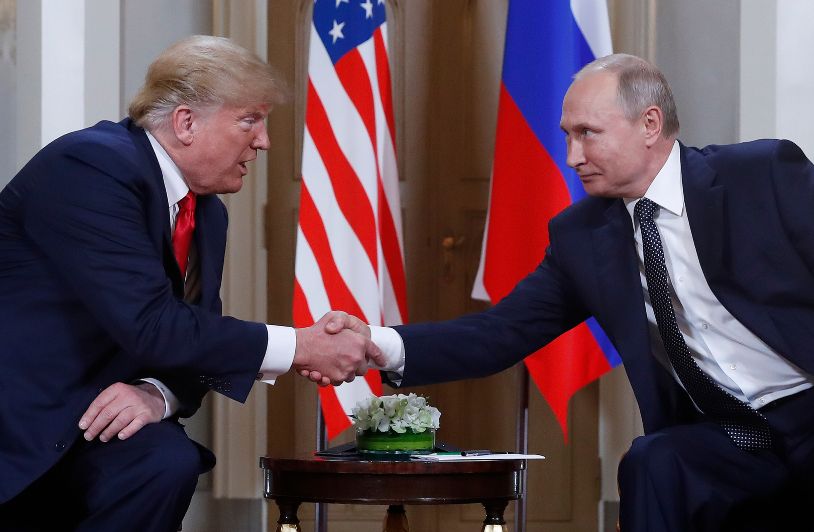
Donald Trump’s sudden deal for purchase of Russian diesel oil is a shocking rejection of U.S. law extending sanctions against those doing business with Iran, a handshake with those providing targeting information harming Americans, and a diplomatic slap against Ukraine and its allies in the continuing war against Russia.
The “deal” with Russia’s Vladimir Putin is a cynical, desperate attempt to trumpet a would-be reduction in soaring diesel before the November election. The deal proposes delivery of 300,000 tons of diesel “immediately,” to be followed by 500,000 tons in a month, and a million tons sometime thereafter.
But even a cursory look at the numbers involved show that even at best, the move, however diplomatically dangerous, will not work as intended. Gas prices globally have surged as the war in Iran has upended the energy sector. The national average for a gallon of diesel in the U.S. remains above $6.
In his announcement, Trump simply asserted that more Russian oil supply would lower costs to farmers, truckers and ranchers three weeks before the U.S. elections. Trump did not acknowledge that he was overturning the sanctions that his own administration had just imposed on Russia and any other country doing oil business with Iran.
But in the war with Iran, it is the very same Russia that is providing Iran with information to pinpoint locations of U.S. troops in the Middle East.
Trump’s Russian Diesel Deal Raises Sanctions and National Security Concerns
It is another Trump transaction that seems to benefit his ever-present warmth for the autocratic Putin. Trump lurches from deal to deal with no apparent strategy or long-term international goal.
In this case, Trump is ignoring his own pronounced need to clamp down on world trade with Iran, since Russia is a close ally with Iran and does plenty of oil and other business with that nation. Any Trump strategy to move from military strikes with unclear goals in hopes of forcing Iran to abandon its nuclear weapons aspirations or to fully reopen the Strait of Hormuz to free international trade seems doomed by a gratuitous move to win back short-term votes for Republicans in November.
The deal drew immediate condemnation from Ukrainian President Volodymyr Zelenskyy and from Democrats who have criticized Trump’s handling of gas prices and foreign policy. Reaction was more muted among Republicans.
Zelenskyy sees the deal as boosting Russian economic ability to sustain its four-year invasion of Ukraine. No matter to Trump, who simply called over the weekend for Zelenskyy to resign as president of Ukraine, as if that were either appropriate or practical. On Sunday, Trump asserted there was a negotiated ceasefire over energy targets between Ukraine and Russia, though the fact that Ukraine did not even know about it suggested that Trump invented it out of whole cloth.
As it happens, Ukrainian drone attacks on Russian refineries have been increasingly successful at disrupting the country’s fuel supplies in recent months and have emerged as among its most effective pressure tactics against the Kremlin. Russia has not been exporting diesel to conserve it for its war effort, as lines at fuel stations stretch for blocks in many Russian cities. Diesel output is reported down about 30 percent.
It is not even clear that Russia can live up to the amounts specified in the deal.
But it is beyond understanding how Trump would shake hands for diesel deliveries from the same Russians who are providing missile targeting information to the Iranians. How a diesel deal will contribute to bringing Iran to its economic knees, as Team Trump has been preaching, is totally beyond understanding.
Will Russian Diesel Imports Actually Lower U.S. Fuel Prices?
As The Washington Post and other outlets note, the volumes involved are a small slice of daily U.S. diesel production and consumption. The actual immediate price impact was likely to be muted, analysts say.
Clayton Seigle, an energy strategist and expert at the Center for Strategic and International Studies told the Associated Press that the price impact for the U.S. will be minimal.
The U.S. uses about 3.6 million to 4.1 million barrels of diesel a day. Transportation alone accounts for 2.9 million barrels a day. The U.S. exports roughly 1.5 million barrels of diesel per day while producing around 5.3 million barrels of distillate fuel per day.
Do the math. The 300,000 tons will cover about 1.5 days of U.S. usage. Analysts estimate the initial tranches could represent a modest 5% to 6% temporary bump in supply.
Russia already is selling its diesel to someone. Even if the designated amounts are redirected to the U.S., it means global prices will remain high – which translate into U.S. consumer prices that are passed on through tariffs and trade.
We should recognize Trump’s deal as the inconsequential, pandering election scheme that it really is, and ask the more important question about why Trump would help the same Russia who helps target our troops in the Middle East.
Frequently Asked Questions About Trump’s Russian Diesel Deal
What is Trump’s Russian diesel deal?
President Donald Trump announced an agreement to purchase diesel fuel from Russia, beginning with 300,000 metric tons, followed by another 500,000 tons and potentially one million additional tons. The administration says the imports will help lower U.S. fuel prices.
Will Russian diesel imports lower fuel prices in the United States?
Energy analysts question whether the agreement will significantly reduce diesel prices. The initial shipment represents only a small fraction of American diesel consumption, and global energy market conditions remain a major driver of domestic prices.
Why is Trump’s Russian diesel deal controversial?
The agreement raises concerns about U.S. sanctions policy, Russia’s continuing invasion of Ukraine and reported Russian intelligence assistance to Iran. Critics argue that purchasing Russian fuel could undermine American foreign policy objectives while providing limited economic benefits.
How could the diesel deal affect Ukraine?
Additional Russian energy revenue could strengthen Moscow’s ability to finance its war against Ukraine. Ukrainian President Volodymyr Zelenskyy has criticized the agreement, which comes as Ukrainian drone strikes have disrupted Russian refinery operations.
How much diesel does the United States consume each day?
The United States consumes approximately 3.6 million to 4.1 million barrels of diesel daily, according to the figures cited in the article. The proposed Russian shipments would therefore represent a relatively small addition to overall U.S. supplies.
“FREEDOM OF THE PRESS IS NOT JUST IMPORTANT TO DEMOCRACY, IT IS DEMOCRACY.” – Walter Cronkite. CLICK HERE to donate in support of our free and independent voice.
