


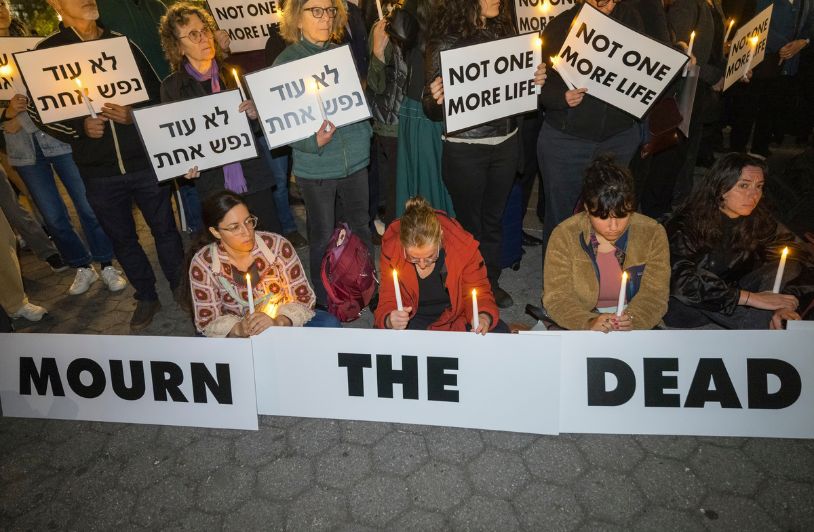
Three Years After October 7, Israel Faces Growing Isolation and Unanswered Questions
As with all somber events, the Oct. 7, 2023 massacre and hostage-taking in Israel by Hamas passed Wednesday amid all the grief, horror and resulting Gazan devastation that has followed in these three years.
The added element this year is the increasing sense that the continuing Israeli retaliations against Palestinians in Gaza, in the West Bank, across Southern Lebanon, against Iran and in Syria are leaving the Israelis a global pariah even among those nations that would be expected to be supportive.
The 250 hostages forcibly taken from Israel are all back or dead. More than 70,000 Palestinians in Gaza are dead, tunnels under hospitals destroyed, and yet, Hamas apparently still has access to weapons and new generations of fighters.
Israeli Prime Minister Benjamin Netanyahu has allowed nationalistic and religious leaders of the right to set a constant pace of land-grabbing and dominance in the region that has produced neither peace nor total victory, however that might be described. Amid rising reports that Netanyahu chose to ignore warnings of a Hamas attack in the days leading to Oct. 7, the prime minister faces a hostile election at the end of October.
Political leaders around the world debate whether to call Israeli government actions “genocide” or some less-loaded term for military occupation and wanton destructions. Documentaries and reports from Gaza all report devastation as far as the eye can see, and the Donald Trump-inspired Board of Peace for Gaza has proved hapless at bringing anything resembling about a demilitarized return to conditions that can lead to rebuilding.
Worse, the ripples of state-sponsored and protected efforts by Jewish settlers in the West Bank to bulldoze and harass Palestinians from villages they have called home for generations over Biblical-era claims to land are generating religious and ethnic hatreds in the U.S. and across Europe.
Unanswered Questions Remain
What seems remarkable is Netanyahu’s Trump-like resistance to any independent review of the circumstances leading to Oct. 7, especially amid reports that leaders in the United Arab Emirates and Egypt personally warned Netanyahu of the pending Hamas attack.
Unexplored are Netanyahu’s decisions to pull protecting Israeli Defense Forces from the Gazan border to buttress anti-Palestinian settler attacks in the West Bank; Netanyahu’s policies of paying Hamas leadership to keep Hamas from joining forces with the Palestinian Liberation Organization in the West Bank; Netanyahu-ordered roundups or capture of tens of thousands of Palestinians held without charges, as well as the hours-long delays in response on Oct. 7.
Equally unexplained are the deeds by Hamas, Hezbollah, Houthis and Iranians in insisting that only a world that erases Israel, a Jewish homeland that the world decided was needed after the Holocaust, will find peace. Anything short of that goal apparently justifies hiding weapons among a civilian population, under hospitals and schools, cynically withholding enough food and water for civilian populations to flourish.
Netanyahu is seeking reelection amid a record of personal criminal liability that has put him at odds with the country’s Supreme Court. Israeli politics, never easy to parse, revolve around personalities and ever-changing coalitions that over decades have pushed policies more to the right and to the ultra-religious.
Meanwhile, the stupidity of antisemitism and anti-Islamic fervor spreads with individuals or small cabals around the world deciding to play out antagonisms over Middle East conflicts in attacks against Jews or Muslims. As recently as last week, the foiled attempt to crash a Flydubai jet filled with Israelis may have involved a terrorist political statement, but it was going to kill more than 100 Jews. Attacks on synagogues, mosques, people walking on European or U.S. streets are not diplomatic discussions, they are violent assaults.
The key issue in Michigan’s U.S. Senate race is whether enough Democratic supporters of Abdul el-Sayed will forgo voting over his insistence on using the “genocide” label for U.S. support of Israeli action in Gaza.
The never-ending retributions for Oct. 7 continue to play out daily around the world, at times even against the wishes of American backers. Only the Netanyahu coalition sees a path of continuous conflict as positive.
Frequently Asked Questions About October 7 and the Gaza Conflict
What happened on October 7, 2023?
On October 7, 2023, Hamas-led militants attacked communities and military sites in southern Israel, killing approximately 1,200 people and taking about 250 hostages. The attack triggered Israel’s prolonged military campaign in Gaza and a wider regional conflict.
Why is Benjamin Netanyahu facing questions about the October 7 attack?
Netanyahu has faced scrutiny over intelligence warnings before the attack, Israeli military preparedness, the government’s policies toward Hamas and the delayed response to the assault. Questions remain about political accountability and the need for an independent investigation.
Why has Israel faced growing international criticism over Gaza?
Israel’s military operations in Gaza, extensive civilian casualties, widespread destruction, restrictions affecting humanitarian assistance and policies toward Palestinians in the West Bank have generated international criticism and accusations of violations of international law.
How has the October 7 attack affected tensions beyond the Middle East?
The attack and subsequent wars have intensified political disagreements internationally, contributed to demonstrations and diplomatic disputes, and coincided with heightened concerns about antisemitism, anti-Muslim hatred and politically motivated violence.
“FREEDOM OF THE PRESS IS NOT JUST IMPORTANT TO DEMOCRACY, IT IS DEMOCRACY.” – Walter Cronkite. CLICK HERE to donate in support of our free and independent voice.
