


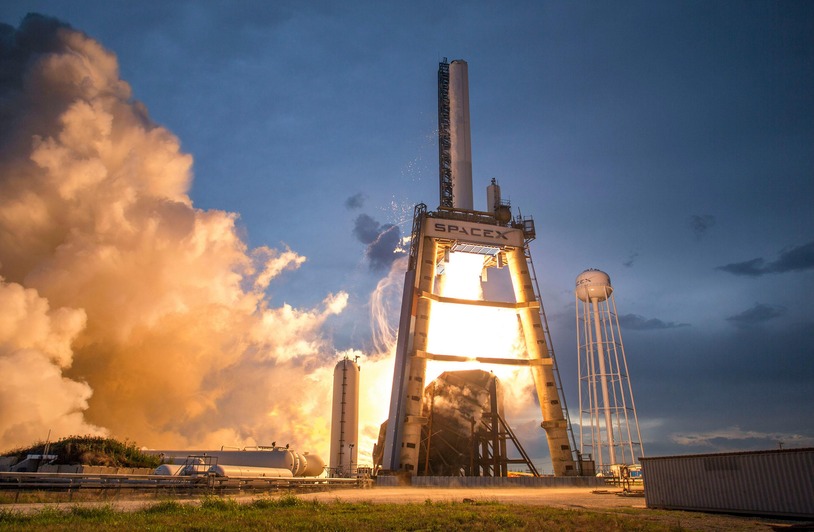
The standard story goes like this. American taxpayers fund NASA. NASA hands contracts to private companies. Private companies innovate faster than the government could on its own. Everyone wins. It is a tidy narrative. It is also missing the most important details about where the money actually ends up and who gets to call the shots once the wire transfers clear.
The Scale of the Transfer
Start with the numbers, because the numbers are the story.
SpaceX alone has received more than $15 billion in NASA contracts over the past decade. The Department of Defense has added billions more for launch services, classified payload missions, and Starshield, a military variant of the Starlink satellite constellation. The Federal Communications Commission at one point approved Starlink for nearly a billion dollars in rural broadband subsidies before reversing course under public pressure. Add in tax abatements at launch sites in Texas and Florida, free use of federally maintained infrastructure, and the value of regulatory accommodations, and the public investment in one company climbs higher still.
These are not loans. They are payments and benefits that have helped transform a private company into one of the most valuable enterprises on the planet. The growing speculation around the spacex ipo tells you what investors already know. Public contracts built a private fortune.
The question worth asking is not whether SpaceX delivered on those contracts. By most measures, it did. The question is who actually benefits from this arrangement once the contract is signed, and who carries the risk when something goes wrong.
A Familiar Pattern Wearing a New Uniform
Defense contractors have run this playbook for decades. Lockheed Martin, Boeing, Northrop Grumman, and Raytheon have spent generations turning government dependence into private wealth while convincing the public that the relationship runs the other way around. DCReport has documented how defense contractors milk the Pentagon , a quiet practice that costs taxpayers hundreds of billions over the life of programs like the F-35.
The new generation of private space companies has adapted that playbook. The branding is different. The faces are younger. The press coverage is friendlier. But the financial mechanics are recognisable to anyone who has watched defense spending for the past forty years.
Government contracts private space companies receive come with several familiar features. Cost-plus structures that protect the contractor from losses. Reimbursement for research the company keeps as proprietary. Limited public access to financial data because the company itself is private. And a revolving door between NASA, the Pentagon, and the executive suites of the companies receiving the money.
The Workers Who Built It
There is also the matter of who, exactly, made the technology work.
The Falcon 9 is often described as a triumph of private engineering. Much of the underlying knowledge came out of decades of NASA research, paid for by taxpayers and made available to SpaceX engineers through technology transfer agreements, hired former NASA employees, and open scientific literature. The same is true for the heat shielding work behind Dragon, the engine technology behind Raptor, and the orbital mechanics that make reusable rockets possible.
This is not a knock on SpaceX engineers, who solved real problems in real time. It is a recognition that the foundation was paid for by the public before the first SpaceX rocket left the ground. When private space executives talk about disrupting a “stagnant” NASA, they are taking credit for a body of work they inherited.
Where the Money Concentrates
Look at how the dollars move once they leave the federal treasury.
A portion goes to launch crews, technicians, machinists, and engineers. Real workers doing real work for real wages. That part of the equation deserves credit. But a much larger portion flows into corporate equity, where it concentrates dramatically. Elon Musk’s net worth has grown roughly in line with the value of SpaceX, which has grown roughly in line with its federal contract pipeline. The wealth created by public money does not stay public.
Compare this to how a publicly funded NASA program distributed money in earlier eras. Apollo employed roughly 400,000 people directly and indirectly. The benefits flowed out across the workforce, the supply chain, and the broader economy. The current model concentrates wealth at the top of a much smaller corporate structure, with shareholders and founders capturing the upside.
This is not an argument against private space contracts. It is an argument for being honest about who the contracts actually enrich.
The Accountability Gap
There is a structural problem with handing public functions to private companies. The accountability gap.
When NASA ran the Space Shuttle program, the failure of Challenger triggered a presidential commission, congressional hearings, and a transparent public reckoning with what went wrong. When a SpaceX rocket fails, the company decides what to share, when, and with whom. Internal investigations are not subject to FOIA. Engineering decisions are protected by trade secret law. Even fatal incidents at SpaceX facilities have been slower to surface than they would have been inside a government agency.
The Federal Aviation Administration has struggled to maintain oversight of commercial launches, particularly at Boca Chica in Texas, where Starship test flights have caused environmental damage and prompted lawsuits from local communities. Musk has publicly criticised the FAA for its review timelines and has called for “comprehensive deregulation” of commercial space activity. His political endorsements during the 2024 election cycle, covered in Musk’s Trump endorsement implications , came with explicit policy expectations attached.
Private companies have a legitimate right to argue for the regulations they prefer. The public has a legitimate right to ask what happens to safety oversight when one of the largest recipients of federal contracts also has the political leverage to shape the rules that govern him.
Who Is Not at the Table
Worth listing the parties who are not represented when these contracts get negotiated.
The taxpayers who fund them have no direct seat. Congress provides authorisation but rarely scrutinises specific awards. Local communities living near launch sites, who absorb the noise, environmental impact, and occasional debris from failed launches, are not consulted in any meaningful way. Workers at the contractors, who do the technical work that makes the contracts possible, have no role in negotiating the terms. The scientific community, which provided the foundational research, has no claim to the commercial upside.
The parties at the table are NASA procurement officers, Defense Department acquisition staff, and the executive teams at the contracting companies. The shareholders sit just behind them. The political donors sit slightly further behind, but close enough to be heard.
What a Better Bargain Could Look Like
None of this requires ending commercial space contracts. Private competition has lowered launch costs and accelerated innovation. Those are real gains. The question is whether the public is getting fair value in exchange for what it puts in.
A more honest bargain might include several things the current system avoids. Equity stakes for the government when public contracts create durable private valuation. Mandatory disclosure of financial data once federal contracts exceed a certain threshold, even for privately held companies. Clawback provisions when contractors break safety regulations or environmental commitments. Worker protections that apply across the entire contractor workforce, not just the corporate office. And political activity disclosures that match the scale of the public dependency.
These are not radical ideas. Variants of them exist in countries that fund private aerospace work through different structures. They are, however, ideas that would meet aggressive opposition from the companies currently benefiting most from the existing arrangement.
The Bottom Line
When the next major private space company files for its public offering, expect the headlines to focus on valuation, founders, and market potential. Expect less coverage of how much taxpayer money went into building the company, what oversight gaps allowed it to grow, and which workers and communities are not sharing in the upside they helped create.
That is the missing part of the story. It is also the only part that determines whether the public-private space bargain is working for the public or just working past it.
CLICK HERE TO DONATE IN SUPPORT OF DCREPORT’S NONPROFIT MISSION
