



With One Day’s Notice, the Trump Administration Stripped Nearly $937,000 in Annual Funding From Children’s Aid, Cutting Young People in New York City off From Trusted Adults and Programs Built for Under-Resourced Communities.
On June 26, Children’s Aid was preparing to continue summer sexual health and youth development programming in schools, foster care settings and community organizations across New York City.
By the end of the day, the federal funding behind that work was gone.
The Trump administration terminated Teen Pregnancy Prevention Program grants nationwide with immediate effect, stripping Children’s Aid of $936,700 a year with two years still remaining on its grant.
Children’s Aid has worked in under-resourced New York communities for more than 170 years. Its health and wellness division operates two community clinics and six school-based health centers and provides medical, dental, behavioral health, nutrition, family planning and health care management services.
Children’s Aid also provided programming at the Administration for Children’s Services Children’s Center, where children may stay while waiting for placement in the foster care system.
The organization had no time to prepare its staff, community partners or the approximately 1,200 young people it served annually.
Several nonprofit groups and local governments have filed a lawsuit challenging the administration’s termination of Teen Pregnancy Prevention Program grants and its changes to the program’s evidence-based framework. Separately, 79 members of the Democratic Women’s Caucus and the broader House Democratic Caucus sent HHS Secretary Robert F. Kennedy Jr. a letter demanding that the canceled grants be restored.
In the meantime, Children’s Aid is grappling with what comes next.
The funding cut reaches across the predominantly Black and Latino communities in the Bronx, Harlem and Brooklyn, as well as Staten Island, where Children’s Aid brought medically accurate information and trusted adults directly to young people. Nine staff members were affected, including six full-time and three part-time employees.
“We received notification on June 26 that effective June 26 our funding would be terminated,” said Rhonda Braxton, vice president for health and wellness at Children’s Aid. “There was no advance notification, and there was no runway to really end the program.”
Across New York City, the administration’s decision eliminated $4.3 million in annual funding from three grantee organizations and disrupted services reaching more than 19,000 young people.
At Children’s Aid, the loss extends beyond one program.
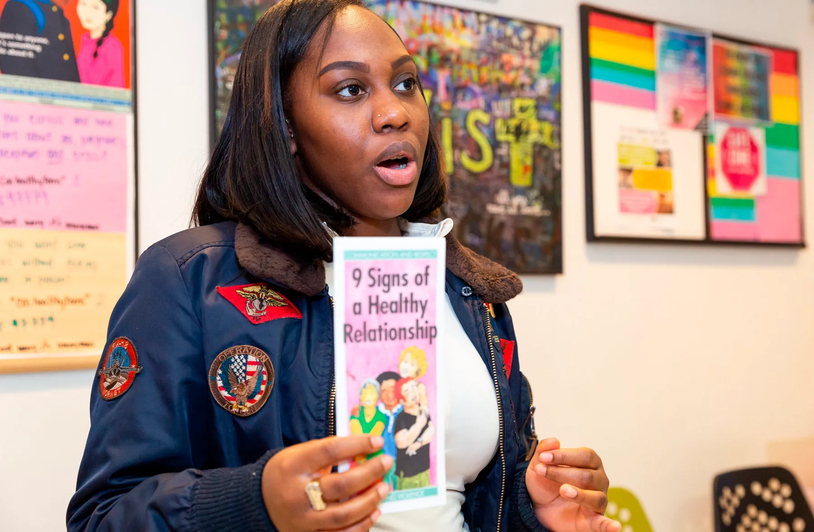
It threatens work in schools and community spaces, specialized programming for foster youth and the organization’s Just Ask Me peer education initiative. The grant supported a network of adults and youth leaders who taught consent, healthy relationships, communication, medical advocacy and informed decision-making.
The government did not simply remove money from a budget. It cut through years of relationships built in communities where young people already face the greatest barriers to care. The administration canceled 53 grants nationwide as part of a broader overhaul of the federal Teen Pregnancy Prevention Program. Its new funding criteria direct organizations to teach abstinence as the only certain method of preventing pregnancy and place increased emphasis on marriage, fertility and preparing young people for parenthood.
The standards make little reference to preventing sexually transmitted infections and offer virtually no recognition of lesbian, gay, bisexual or transgender young people.
The administration has defended the new direction as an effort to steer federal dollars toward abstinence-focused education. That approach reflects a broader conservative argument that comprehensive sexual health programs treat teen sexual activity as unavoidable and diminish parents’ role in guiding their children.
When 19th News requested comment, the U.S. Department of Health and Human Services did not respond to the initial query.
But leaders at Children’s Aid do not describe their work as encouraging teenagers to have sex.
They described teaching young people how to recognize an unhealthy relationship. How to communicate. How to give or withhold consent. How to talk to a doctor. How to resist pressure from a friend or partner. How to make decisions that protect the future they want.
The organization had received federal teen pregnancy prevention funding since 2015. Through the grant, staff delivered evidence-based sexual health and youth development programs during the school day, after school and through community organizations.
Pascale Saintonge Austin, director of family planning and pregnancy prevention programs at Children’s Aid, said foster youth face distinct challenges that cannot be addressed by distributing generic health information.
“We won’t be able to provide such a specific curriculum to them anymore that was tailored and made for them,” Saintonge Austin said.
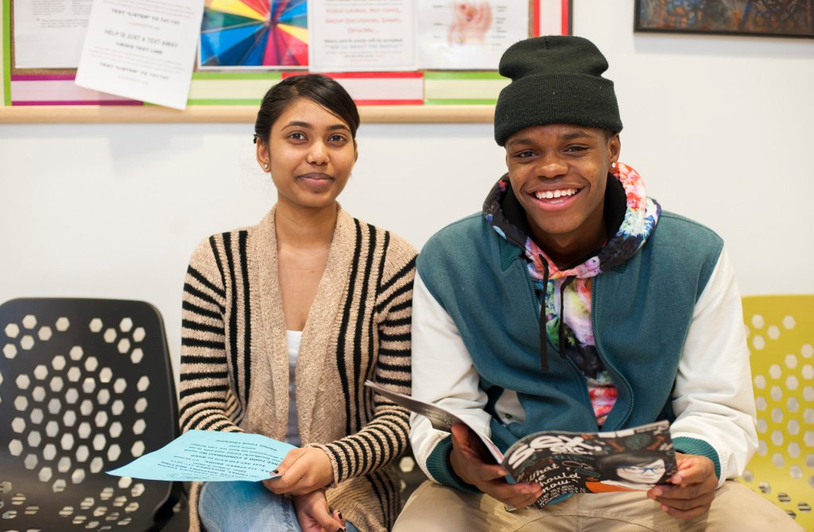
The organization’s Just Ask Me peer health education program is also at risk. Known as JAM, the initiative trains high school students to co-facilitate programs, organize events, advocate for adolescent health and dispel misinformation among their peers.
The young people applied for the positions and were hired based on federal funding that the government withdrew without notice. Children’s Aid must now determine whether it can retain all of them beyond the end of summer.
“They love this work. They’re involved in this work,” Saintonge Austin said. “We will have to make some decisions toward the end of August or beginning of September about whether or not we can even keep all of the peers without some kind of intervention.”
Programs like the ones run by Children’s Aid have made a difference, federal lawmakers say, and Democratic members of Congress are demanding that Health and Human Services Secretary Robert F. Kennedy Jr. explain the terminations and restore the funding.
Rep. Judy Chu of California said in a statement to The 19th that the Teen Pregnancy Prevention Program has provided medically accurate, evidence-based information for more than 15 years and has helped young people prevent sexually transmitted infections, unintended pregnancies and unhealthy relationships.
“There is simply no justification for abruptly terminating $68 million from programs with a proven record of improving young people’s health,” Chu said. “The Trump administration’s decision is reckless, indefensible and directly undermines the purpose for which Congress provided these funds. That’s why my Democratic Women’s Caucus colleagues and I are demanding answers from Secretary Kennedy about why these grants were terminated and calling for this critical funding to be restored.”
Another lawmaker, Rep. Kelly Morrison of Minnesota, an OBGYN, described the decision as both a physician and lawmaker.
“The administration has unilaterally taken away helpful and potentially life-saving resources from the young people that need them,” Morrison said in a statement to The 19th. “Canceling research-backed, evidence-based programs that prevent STIs, decrease teen pregnancy and save lives is a dangerous policy decision.”
The administration’s criteria place marriage and future parenthood at the center of adolescent sexual health.
But for Saintonge Austin, that framing fails to account for the actual questions young people bring into Children’s Aid classrooms.
Those questions are often about loneliness, acceptance, pressure, confidence and the struggle to establish boundaries. They come from teenagers trying to understand how to care for themselves while growing up in a world that does not always provide them with safe or reliable guidance.
Federal policy may define the program by the pregnancies it seeks to prevent. The young people inside it experience something broader: a place where they can speak honestly, learn whom to trust and develop the skills to enter adulthood with greater control over their lives.
“A lot of times people equate teen pregnancy prevention with sex,” Saintonge Austin said. “I always say it’s never that. It’s about, ‘I want my friend to like me. I want to know how to have a healthy relationship. I don’t know how to say no, or I don’t know how to negotiate.’ It goes beyond the physical act. It’s really about how to navigate a world, become a healthy adult and make decisions in a way where you can reach the goals that you want.”
The need for that work feels urgent in New York City, where the birthrate for teenagers not only remains above the national average, but has begun inching back up after a long decline.
“Congress specifically funded TPPP because evidence-based prevention programs work, and the Administration owes Congress and the American people an explanation for disregarding that clear directive,” said Chu. “We should be strengthening these proven programs, not jeopardizing young people’s access to the accurate health information and resources they need to thrive.”
Nationwide, the birthrate has fallen over the past 15 years, to 11.7 births per 1,000 girls ages 15 to 19 last year, according to federal data. That’s a drop of more than 65 percent since 2010, when the rate was 34.3 births per 1,000 teenage girls.
Researchers have attributed the long decline to several factors, including fewer teenagers having sex and increased contraception use among those who are sexually active. Federal prevention programs have also been credited with helping young people delay sexual activity and make informed health decisions.
New York City was part of that trend for a long time. However, it has begun moving in the opposite direction.
In 2023, three out of every four pregnancies among New York City teenagers were unintended, according to the city health department.
Those pregnancies were also concentrated in communities with the fewest resources. The teen pregnancy rate in neighborhoods with very high poverty was 3.6 times the rate in the city’s lowest-poverty communities, according to New York City’s Taskforce on Racial Inclusion and Equity, and many of these teenagers are Black and Latinx. They continue to face the effects of systemic racism, historic disinvestment and reduced access to health care and other resources that support healthy lives.
Saintonge Austin said the recent rise demonstrates what can happen when young people lose consistent access to sexual health education.
During the COVID-19 pandemic, much of Children’s Aid’s school-based programming was interrupted. New York City high school students did not broadly return to buildings until spring 2021, and schools facing enormous academic losses had to make difficult choices about which subjects and services to prioritize.
At the same time, teenagers were spending more time online, where accurate information competed with rumors and misinformation spreading across social media.
“It shows what happens when there’s this sort of disruption in mass education around comprehensive sexual health education,” Saintonge Austin said. “We were really getting back into the flow of it being integrated into their education and their spaces again, and now the funding was pulled.”
The disruption is occurring again, this time by federal design.
Braxton said Children’s Aid has tried to place affected employees in other vacant positions within the organization when possible. It has contacted school and community partners, notified elected officials and begun searching for other funding.
But replacing nearly $1 million each year is not a realistic short-term solution.
“We have very generous donors,” Braxton said. “We have not been able to fill that huge gap as of yet.”
The organization is also trying to preserve relationships built over years with young people who learned they could approach Children’s Aid staff members without judgment and receive medically accurate answers.
“Our concern is the loss of trusted relationships for our young people,” Braxton said, “and our inability to provide these much-needed, evidence-based, medically accurate services in an era where there’s a lot of disinformation and mistrust.”
Correction: An earlier version of this article misidentified the party filing a legal challenge to the Trump administration’s termination of Teen Pregnancy Prevention Program grants. The plaintiffs are several nonprofit groups and local governments.
This article was originally published by The 19th on August 6, 2026.
“FREEDOM OF THE PRESS IS NOT JUST IMPORTANT TO DEMOCRACY, IT IS DEMOCRACY.” – Walter Cronkite. CLICK HERE to donate in support of our free and independent voice.
