


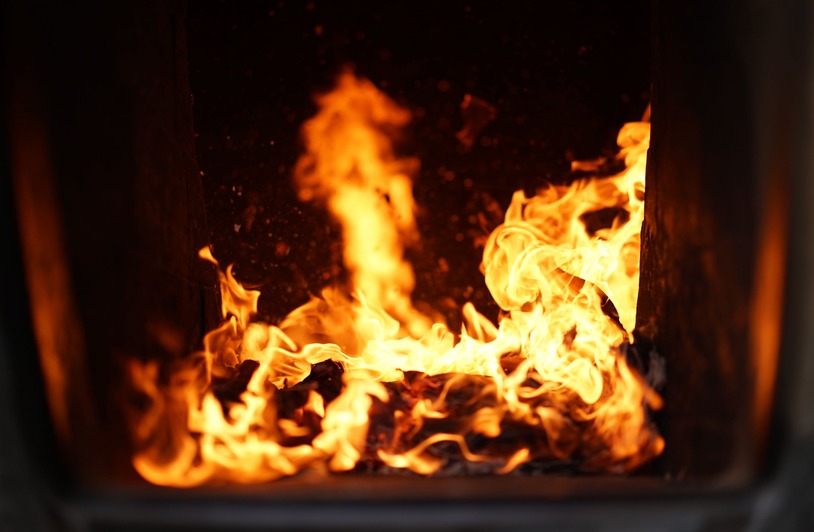
Heating oil customers are heading into one of the costliest winters in years. The National Energy Assistance Directors Association expects households that heat with oil to pay roughly 50% more than last winter, about $878 extra, which pushes the seasonal bill past $2,600. The Energy Information Administration is more cautious and projects a 21% rise in household spending on oil. Even that lower estimate is far above what gas and electric customers face.
Numbers like these change the math on old equipment. For a household running a furnace or boiler that has already seen twenty winters, the question is shifting from how to cover this season’s oil bill to whether a heating system replacement now costs less than several more years of expensive fuel and patch-up repairs.
The answer depends on the house, on the equipment in the basement and, more and more, on rules written in Washington. Here is how to think it through before the cold sets in.
Why Oil-Heated Homes Feel This Winter Harder
Heating oil is a regional fuel. About 3% of U.S. households rely on it as their main heat source, compared with roughly 45% on natural gas and 43% on electricity. More than 80% of the country’s heating oil is burned in the Northeast, where some towns never got gas pipelines. Pennsylvania sits high on that list: 13.5% of its households were heated with fuel oil in 2023, against 3.7% nationally, according to the EIA.
Those homes absorb price swings directly. An Axios analysis found retail heating oil rose from around $2.50 a gallon a year ago to about $4.63 this fall, with forecasts of $6 by deep winter. Most of the pressure traces back to global supply, including the wars in the Middle East and between Russia and Ukraine.
Relief is uneven. Massachusetts declared an energy emergency that unlocked nearly $150 million in aid, while Rhode Island and Maine directed money mainly toward electricity bills. The federal Low Income Home Energy Assistance Program is still running. State administrators now operate it without dedicated federal staff, since that team at the Department of Health and Human Services was let go in April 2025.
Start with the System You Already Have
A high oil price is a good reason to look at your equipment, and the equipment decides what comes next. A ten-year-old oil furnace in good condition is usually worth maintaining. A unit near the 20-year mark with a thick repair file calls for a different conversation.
Technicians tend to weigh four things. Age comes first, because older oil burners generally turn less of each gallon into usable heat than current models do. Repair history is second: two or three service calls in one season form a pattern. Safety outranks both. A cracked heat exchanger, repeated soot puffbacks, or a carbon monoxide alarm move replacement from optional to urgent. Oil homes add a fourth item: the tank. An aging steel tank, especially a buried one, can turn a routine furnace swap into a much larger project.
Many contractors also use a quick rule of thumb. Multiply the system’s age by the quoted repair cost, and if the result tops $5,000, replacement usually deserves a serious look. It opens the discussion and settles nothing on its own.
Replacement Options for an Oil-Heated Home
Homeowners moving past an aging oil system generally have three paths. Which one fits depends on what is already in the house and what runs under the street.
A New High-Efficiency Oil Furnace or Boiler
This is the simplest move. It keeps the existing tank, the venting, and the ducts or radiators, and it disrupts the house the least. A modern unit burns less fuel for the same heat. The trade-off is plain this year, because the home stays tied to oil prices.
Converting to Natural Gas
If a gas main already runs along the street, conversion ends the exposure to oil, and the EIA expects gas heating bills to fall about 9% this winter. The project involves the gas utility for a service line and meter, a new furnace or boiler, venting changes, and a plan for the old tank. Where no main exists, this path is closed.
A Cold-Climate Heat Pump or a Dual-Fuel Setup
Heat pumps designed for cold climates keep producing heat at low outdoor temperatures, and the EIA projects electricity bills to rise only about 4%. Some households pair a heat pump with their existing furnace or boiler as backup for the coldest stretches. Homes with radiators and no ductwork can use ductless units.
|
Option |
Best fit for |
What to check first |
Main trade-off |
|
New high-efficiency oil furnace or boiler |
Homes with a sound tank and no gas service |
Tank age and condition, venting |
Bills still follow oil prices |
|
Conversion to natural gas |
Streets with an existing gas main |
Utility service line, venting, tank plan |
Larger project scope |
|
Cold-climate heat pump or dual-fuel |
Well-insulated homes or homes with usable ducts |
Electrical panel capacity, insulation |
Federal rebates no longer cover switching from oil |
What Has Changed in Incentives Since Last Winter
The financial support behind many heating decisions a year ago has largely been rewritten. The federal Energy Efficient Home Improvement Credit covered 30% of qualifying costs, with up to $2,000 a year for heat pumps. It ended for equipment installed after December 31, 2025, though projects finished in 2025 can still be claimed on that year’s return.
Point-of-sale rebates funded by the Inflation Reduction Act changed too. Under Department of Energy guidance issued May 29, 2026, which states had to adopt by September 1, federal home energy rebates no longer pay for switching from oil, propane or natural gas to an electric heat pump. Rebates now apply to upgrading existing electric equipment, and insulation or air sealing may be required first. They are also available only where a state has launched its program. Pennsylvania homeowners should confirm the current status of Penn Energy Savers directly with the state Department of Environmental Protection.
What remains are utility efficiency programs, local offerings, and contractor financing. Terms vary by area and change often.
Timing – Why a Planned Replacement Beats an Emergency One
Replacing a system that still runs buys a household time, which a January breakdown never offers. That time pays for more than one written estimate, proper sizing of the new equipment, and a slot on an installer’s calendar before the rush.
Oil customers should watch two extra details. If a switch to gas or a heat pump looks likely, avoid topping off the tank right before the project, since whatever is left may have to be pumped out before removal. Review any prepaid or budget-plan contract with your oil dealer before signing for new equipment, because cancellation terms differ between companies.
Questions to Ask Before Signing a Replacement Contract
Whatever path a household picks, the contract deserves the same scrutiny as the equipment. These questions help separate a careful contractor from a hurried one.
- Did you calculate the heating load of the house, or match the size of the old unit?
- Is the estimate written and itemized for equipment, labor, permits, and disposal?
- What happens to the oil tank, and is removal or closure included?
- Who pulls the permits?
- What warranty covers the equipment, and what covers the installation?
- Will your own crew do the work, or a subcontractor?
- Who handles paperwork for any rebate or utility program?
Local contractors in oil-heavy parts of the Northeast field these questions every fall. Region Home Services , a family-run HVAC company in Bucks County, Pennsylvania, replaces oil furnaces along with gas furnaces, boilers and heat pumps. It sends its own crews and hands the homeowner a written estimate before any work starts, which makes it easier to compare all three paths on paper.
The answers carry extra weight this winter. Oil prices are moving week to week and incentive rules changed mid-year. Households that make the call in October, while the old system still runs, keep a full heating season to plan around.
CLICK HERE TO DONATE IN SUPPORT OF DCREPORT’S NONPROFIT MISSION
