


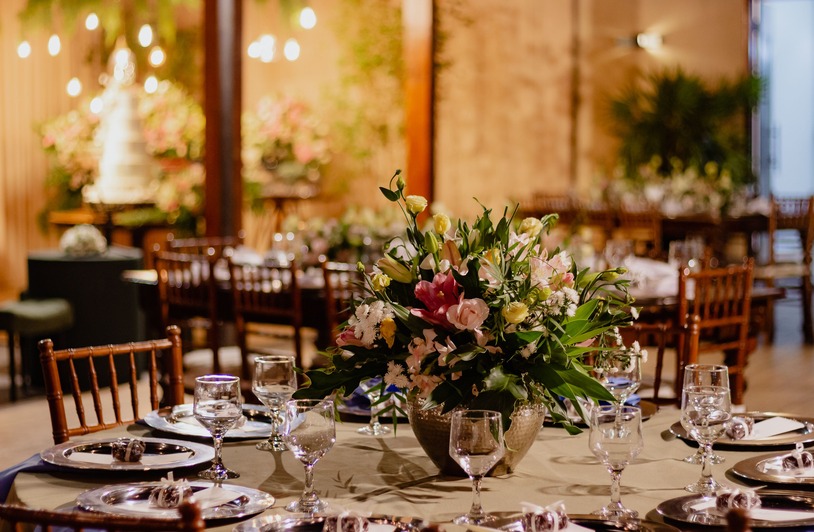
The average turkey dinner sits on the table for about 45 minutes before the first plate gets cleared, and every one of those minutes is a smell contest. Gravy, sage, candle smoke, three kinds of pie, and whatever is in the vase. I learned this the hard way the year my aunt brought a bouquet of lilies and nobody could taste the chestnut stuffing.
Here is the short answer: unscented blooms win on a Thanksgiving table because the meal is already doing the talking. Your flowers have one job, and that job is visual. Scent is not a bonus on this particular Thursday. It is interference.
This is where thanksgiving flower arrangements get interesting, because the season’s best-looking options happen to be the quiet ones. Mums, dahlias, croton leaves, hypericum berries, and dried wheat all show up in fall palettes without ever raising their voice.
What Actually Happens When Scented Flowers Meet a Holiday Meal
Your nose is a terrible multitasker. Aromas compete for the same attention, and the loudest one wins. A single stem of stock or hyacinth at close range can flatten the butter-and-herb notes in mashed potatoes, and it will absolutely bury a good Pinot.
Then there is the guest problem. Plenty of people at your table are scent-sensitive and will never mention it. Perfume, plug-ins, and strong florals can trigger headaches or turn appetite off entirely, and a person who is quietly uncomfortable at your table is not going to send you a memo about it.
Worse, scent can drift toward the food. Flowers and produce travel through the same distribution channels, and the U.S. Department of Agriculture has long warned that ethylene gas from ripening produce and some plant material speeds spoilage in nearby fruits and vegetables. Your centerpiece sits inches from the squash and the fruit bowl. Do you want a flower that’s quietly gassing your pie pumpkins? I don’t.
The Quiet Table Rule: A Three-Layer Test for Any Centerpiece
I keep one test for holiday flowers and it has saved me from more ugly bouquets than any Pinterest board. I call it the Quiet Table Rule, and it runs in three layers, each one quieter than the last.
Layer one: the eye
From across the room, the arrangement should read as a single mass of color, not a traffic jam. If you can’t tell where the orange stops and the burgundy starts from the doorway, you’re on track. Tight, low arrangements in a footed bowl do this better than tall vases, because nobody at the table has to lean around a stalk.
Layer two: the nose
Lean in. You should get almost nothing, maybe a faint green or woody note from stems and foliage. If you can smell it from six inches, it will be louder at two feet, and at two feet it’s sitting next to your sister’s plate.
Layer three: the conversation
This is the one people skip. After the flowers go down, can you still smell the bird coming out of the oven? If the centerpiece has changed the room, it has failed. Pull it, replace it with something simpler, and don’t apologize.
My strong opinion: go with a low, wide bowl every single time. Tall arrangements photograph beautifully and ruin the second half of dinner because you can’t see the person across from you.
Which Blooms Belong on a Thanksgiving Table
You want fall color with a closed mouth. Here’s the shortlist I keep coming back to.
- Chrysanthemums, especially bronze and russet cushion types, which carry almost no fragrance and survive a warm room
- Dahlias in deep plum and burnt orange, though check the variety because some carry a faint spice
- Sunflowers, cheerful and scentless, if you want a brighter table
- Croton and eucalyptus foliage for structure, with the caveat that eucalyptus reads as medicinal to some noses
- Filler texture: hypericum berries, seeded wheat, pinecones, small gourds
Skip lilies, hyacinths, stock, freesia, and tuberose. All gorgeous, all loud, all wrong for this specific dinner. Also skip strongly scented candles nearby. A single cinnamon candle does more damage than a bouquet of lilies, and nobody suspects the candle.
A Setup Routine You Can Run in Fifteen Minutes
This is the practical part. Do these in order and you’ll avoid the messy scramble at four o’clock.
- Clear a space on a sideboard or porch for the centerpiece to sit between courses, because you’ll want the sightline during the main event.
- Choose a low container, ideally under eight inches tall, wider than it is high.
- Fill it with unscented stems in three color groups, keeping the darkest tones near the bottom.
- Test it with the Quiet Table Rule before the guests arrive, and not after the gravy is on.
- Set the arrangement down five minutes before you call everyone to the table so the room settles.
One more thing worth knowing: indoor air in a closed-up November house holds onto what you bring in. The Environmental Protection Agency has studied indoor air quality for decades and consistently finds that indoor concentrations of many pollutants run higher than outdoors. A scentless centerpiece is one less thing in the air while you’re running the oven for hours.
Scaling the Same Idea Across Every Format
You don’t need a florist for every table. The Quiet Table Rule works on a five dollar grocery bouquet and on a catered centerpiece, and the test stays identical whether you’re doing a single vase or a long runner of small arrangements.
For a long table, use three to five small matching bowls spaced evenly. For a buffet, put the flowers at the far end so people aren’t reaching over them with gravy boats. For a kids’ table, go plastic and skip the berries, because toddlers treat hypericum as a snack.
A quick decision table
|
Situation |
Go with |
Avoid |
|
Formal seated dinner |
Low bronze mums, wide bowl |
Lilies, tall vases |
|
Buffet-style serving |
One end-of-table arrangement |
Center runner blocking reach |
|
Scent-sensitive guests |
Sunflowers, foliage, gourds |
Stock, freesia, candles |
|
Kids’ table |
Plastic gourds, paper leaves |
Small berries, glass vessels |
I would pick a bronze mum and croton arrangement for a family dinner and a plum dahlia runner for a Friendsgiving. Both live on the quiet side, and both look expensive without trying.
The Compost Question Nobody Asks
Here’s where sourcing sneaks up on you. Fresh flowers are agricultural products that travel through cold chains, and they arrive with a footprint that most hosts never think about. That’s not a reason to skip the flowers. It is a reason to buy from a local grower when you can and to compost stems and foliage rather than bagging them.
The National Aeronautics and Space Administration has documented plant behavior in closed environments for years, and one recurring finding is that living plant material interacts with the air around it in ways we rarely account for in ordinary rooms. It’s a small point. It also makes the case for treating your centerpiece as a living thing with a lifespan, not décor you forget by Friday.
A Thanksgiving table is a small ecosystem, and you are the one who decides what gets to live on it.
What to Do Before the Doorbell Rings
Unscented blooms are not a compromise. They are the correct choice for a meal built around taste and smell. Go low, go wide, go quiet, and let the food be the loudest thing in the room. Test your arrangement before the first guest arrives, and if you can smell it, swap it.
What’s going on your table this year, and would it pass the Quiet Table Rule?
Photo: Marina Ribeiro Decorações via Pexels
CLICK HERE TO DONATE IN SUPPORT OF DCREPORT’S NONPROFIT MISSION
