



Eight Years Ago, There Were Only Two. After a Concerted Push To Recruit and Elect Them, There Will Be 15 Come January.
In 2018, just two states, Oregon and Rhode Island, were led by Democratic women governors. Two years ago, eight women governors were Democrats. By January, there will be 15 — meaning 2 in 5 Americans will soon live in a state led by a Democratic woman chief executive.
The blue tsunami that led Democrats to flip both chambers of Congress two weeks ago also swept through state capitals. Democrats are on track to flip six governorships, meaning 30 states will have a Democratic governor next year, and half will be women. Three states, Arkansas, New Hampshire and Tennessee, will have Republican women governors.
“I think that there was a vote for trusting women and women as governor, women as stewards of the economy, women as the person to be trusted to take care of people in their states,” Gov. Maura Healey of Massachusetts said in an interview.
The exponential growth in Democratic women governors over the past decade was no coincidence. Increasing the number of women in office has long been a goal of Meghan Meehan-Draper, the executive director of the Democratic Governors Association (DGA), who has joked that when she started at the organization in 2015, more governors were named John than there were women.
In 2018, the DGA launched a Women Governors Fund focused on supporting and fundraising for women candidates. Healey, the fund’s current chair, said it’s helped the DGA invest $120 million in races with Democratic women candidates over the past eight years.
“I think it shows a tremendous ROI on the investments that have been made in women candidates,” she said in an interview.
Two new women, Govs. Mikie Sherrill of New Jersey and Abigail Spanberger of Virginia, won office last year. And several of the nine newly elected Democratic women governors this year made history.
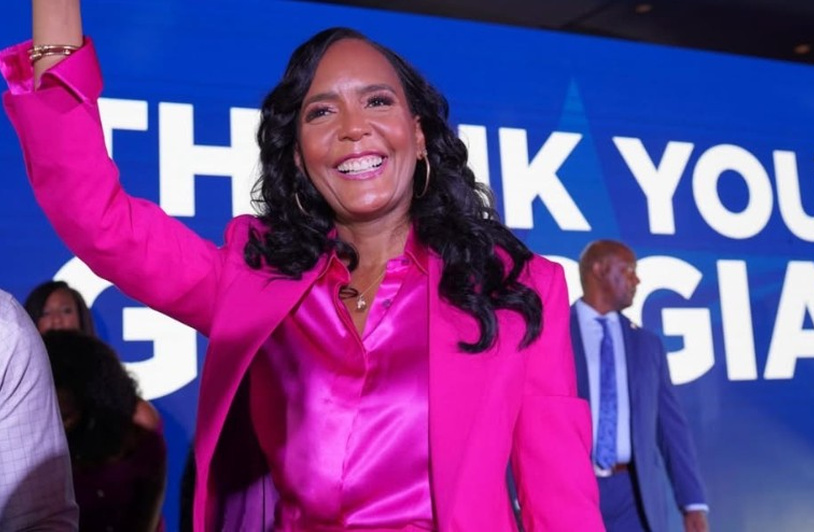
In Georgia, Keisha Lance-Bottoms became the first Black woman elected governor anywhere in the United States. In Texas, Gina Hinojosa helped break a 30-year statewide losing streak for Democrats and became the state’s first Latina governor. In neighboring New Mexico, Deb Haaland will be the first Native American woman governor in the country. Govs-elect Amy Acton and Amy Klobuchar will be the first women elected to lead Ohio and Minnesota, respectively. (Meehan-Draper has pointed out now there will be more governors named Amy than governors named John).
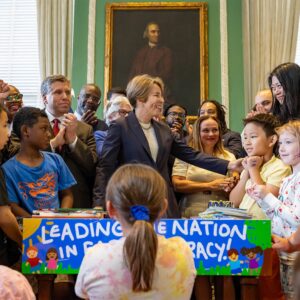
Most of those women didn’t run on their identities or their history-making potential. But in an election where frustration about the economy and high costs of living dominated voters’ concerns, Healey argued that women showed they’re adept at managing not only their household budgets but also their state budgets amid sweeping cuts to the federal workforce and programs from the Trump administration.
“I think that what we showed is that Democrats can win everywhere when we run candidates who are focused on delivering real results for people, who are focused on the things that matter most to people,” Healey said.
And in four states where Democratic women governors retired due to term limits — Kansas, Maine, Michigan and New Mexico — all will be succeeded by other Democratic women. One of the last gubernatorial races to be called was in Kansas, where Democrat Cindy Holscher narrowly defeated Republican Ty Masterson to keep the governor’s mansion in Democratic hands.
“It’s a real credit to those sitting governors, the four of them, for the work that they did, and that resulted in their populations being very comfortable with electing a woman governor,” Healey argued.
For years, several Democratic women governors have been in a group chat, formed during the COVID-19 pandemic, where they share support and advice. That group chat is now set to get a lot bigger — and Healey said that she and other women chief executives are in touch about how to best support their new colleagues to take on the challenge of governing.
“It’s one thing to get elected, and then it’s another thing to actually take office and do the job,” Healey said. “Having that continuity of this strong sisterhood of women governors, past and present, to support is really, really great, and it’s going to matter.”
This article was previously published by The 19th on November 17, 2026.
Frequently Asked Questions
How many Democratic women governors will there be in the United States?
By January, 15 states will have Democratic women governors, up from just two states in 2018.
What percentage of Americans will live in states led by Democratic women governors?
Approximately 2 in 5 Americans will live in a state with a Democratic woman serving as governor.
How many states will have Democratic governors?
According to the article, 30 states will have Democratic governors, and women will lead half of those states.
How many Republican women governors will there be?
Three states, Arkansas, New Hampshire and Tennessee, will have Republican women governors.
Who is the first Black woman elected governor in the United States?
According to the article, Keisha Lance Bottoms of Georgia became the first Black woman elected governor in U.S. history.
Which newly elected women governors made history?
The article highlights several historic victories, including Keisha Lance Bottoms in Georgia, Gina Hinojosa in Texas, Deb Haaland in New Mexico, Amy Acton in Ohio and Amy Klobuchar in Minnesota.
What is the Democratic Governors Association’s Women Governors Fund?
The Democratic Governors Association launched the Women Governors Fund in 2018 to support and raise money for Democratic women running for governor. According to Gov. Maura Healey, the DGA has invested $120 million in races featuring Democratic women candidates over the past eight years.
Which states will replace term-limited Democratic women governors with other Democratic women?
According to the article, Kansas, Maine, Michigan and New Mexico will each replace a term-limited Democratic woman governor with another Democratic woman.
“FREEDOM OF THE PRESS IS NOT JUST IMPORTANT TO DEMOCRACY, IT IS DEMOCRACY.” – Walter Cronkite. CLICK HERE to donate in support of our free and independent voice.
