


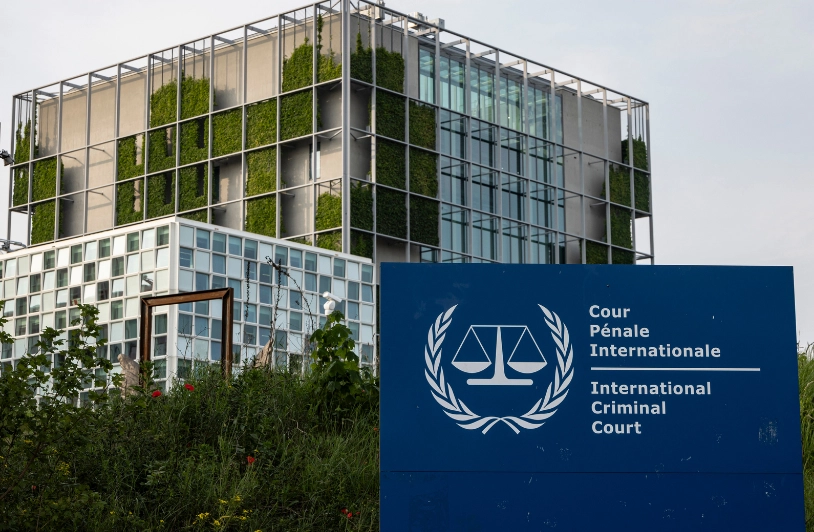
Twenty-five years after a fictional White House confronted the question of American accountability, the prosecution of Kosovo’s wartime leaders exposes a double standard that Democrats and Republicans have helped preserve.
Four former leaders of the Kosovo Liberation Army were convicted of war crimes by a court in The Hague on September 16. The prosecution was led by an American, before a court established under pressure from Washington.
The verdict marked an extraordinary turn in the history of a country whose independence was made possible largely by American intervention.
Yet for more than two decades, Washington has resisted allowing its own citizens to fall under the jurisdiction of the International Criminal Court.
In 1999, NATO aircraft bombed Serbian military targets as Kosovo Albanians faced mass expulsions and atrocities. The Kosovo Liberation Army, an insurgency that had fought Serbian forces, was widely regarded by its supporters as NATO’s partner on the ground.
After the war ended in June 1999, the United States pressed Kosovo to establish a court to examine war crimes by all parties. American lawyers prosecuted the cases, and American taxpayer money has helped finance the special court’s operations.
Resistance to America being subject to this and other war crimes tribunals has been bipartisan.
Contradiction
The contradiction goes to the heart of America’s relationship with international law: a country that helped establish the modern rules of warfare has repeatedly insisted that the international institutions enforcing those rules must not have the same authority over Americans.
Long before Kosovo’s wartime leaders appeared in The Hague, this dilemma was explored in an unlikely place: American prime-time television.
In November 2001, an episode of The West Wing titled “War Crimes” brought the question into the office of Leo McGarry, the fictional White House chief of staff to a liberal president, a genius college professor with a Nobel Prize in economics played by Martin Sheen.
In the episode, McGarry supports the creation of a permanent international criminal court. His old friend, Air Force Gen. Alan Adamley (Gerald McRaney), objects.
“National sovereignty is at stake,” Gen. Adamley tells him.
McGarry invokes the American role in establishing the Nuremberg and Tokyo war crimes tribunals to hold war criminals accountable. McGarry also questions why the United States should champion international justice while refusing to submit itself to the same system.
Then Adamley opens a military file.
Shocked to Learn
During the Vietnam War, McGarry was a U.S. Air Force pilot. He flew a bombing mission against what he believed was a military target. Adamley reveals that the target was a civilian dam. Eleven civilians died.
McGarry is stunned.
Adamley makes clear the consequences for McGarry: “You could be charged and tried for a war crime.”
The exchange exposes the distance between defending international justice as an ideal and accepting its consequences when one’s own conduct comes under scrutiny.
What was a fictional argument in 2001 would soon become a real congressional battle.
The United States had helped lay the foundations of modern international humanitarian law long before the International Criminal Court was created in 2002.
General Order 100
In April 1863, President Abraham Lincoln issued General Orders No. 100, known as the Lieber Code, setting out rules for Union soldiers during the Civil War and since.
The military code was drafted by Francis Lieber, a Columbia University professor of law.
The Lieber Code addressed the treatment of prisoners, civilians and enemy combatants and helped shape the development of the laws of war for the past 163 years.
The best-known provision ended the ancient military practice of giving “no quarter” to enemy troops even if they surrender. Lincoln’s General Order 100 banned slaughtering those who offer to surrender, are captive, or are inconvenient civilians.
After World War II, American leadership was central to the prosecution of Nazi officials at Nuremberg and Japanese officers in Tokyo.
But the creation of a permanent international criminal court presented a different proposition. This time, the institution might exercise jurisdiction over Americans.
Clinton signs
President Bill Clinton signed the Rome Statute, which established the International Criminal Court, on Dec. 31, 2000. He nevertheless recommended that the treaty not be submitted to the Senate for ratification until American concerns had been resolved.
President George W. Bush went further. In 2002, his administration notified the United Nations that the United States did not intend to become a party.
Congress acted on its own to ensure Americans would not be subject to the International Criminal Court.
The American Service members’ Protection Act, enacted in 2002, restricted cooperation with the court. It authorized the president to use any necessary means to secure the release of certain American and allied personnel detained by or on behalf of the new international court.
The provision became so notorious that critics nicknamed the legislation the “Hague Invasion Act.” While the U.S. has never invaded The Netherlands, a NATO ally, this law explicitly authorizes American presidents to use “all means necessary and appropriate to bring about the release of any U.S. or allied personnel being detained or imprisoned by, on behalf of, or at the request of the International Criminal Court.”
The Senate approved the relevant amendment by a vote of 75 to 19, with support from prominent Democrats, including Hillary Clinton and John Kerry.
Successive administrations have differed considerably in their treatment of the court. Barack Obama pursued selective cooperation. Donald Trump sanctioned court officials. Joe Biden reversed those sanctions and supported some of the court’s investigations. Trump, in his second term, imposed new sanctions.
Bipartisan Opposition
But no Democratic or Republican administration has brought the United States or any American citizen into the court.
The reasoning has remained familiar: American sovereignty, constitutional protections, the possibility of politically motivated prosecutions and the insistence that American institutions should hold American personnel accountable.
Now consider what happened in Kosovo.
In 2015, the Kosovo Assembly amended the country’s Constitution and passed legislation establishing the Kosovo Specialist Chambers and Specialist Prosecutor’s Office. This court, largely designed by Americans, was promoted by Washington to address war crimes, especially Serbian crimes against Kosovars.
The decision was not made in a diplomatic vacuum.
According to the Congressional Research Service, newly independent Kosovo adopted the legislation under pressure from the United States and the European Union.
For a young country heavily dependent on American diplomatic and security support, such pressure carried exceptional weight.
The State Department welcomed the legislation, describing the establishment of the court as necessary for Kosovo’s progress toward Euro-Atlantic integration.
After the court was created, Washington continued defending its existence. When Kosovo lawmakers attempted to repeal the legislation in 2017, American officials and their allies warned of “severe negative consequences.”
Clear Message
The message was unmistakable: Kosovo was expected to accept a judicial arrangement that its most powerful supporter considered essential.
The court is formally part of Kosovo’s judicial system, although it operates in The Hague with international judges, prosecutors and staff. It is distinct from the International Criminal Court, with its own jurisdiction and legal foundations. Think of it as a parallel specialized criminal court for Kosovo.
Yet its creation illustrates a remarkable imbalance of political power.
Kosovo was pressed to establish an internationally staffed institution to prosecute crimes allegedly committed by members of the very insurgency that had fought alongside NATO’s intervention against Serbian repression.
The United States, meanwhile, has spent decades refusing membership in the permanent international criminal court and protecting its personnel from its jurisdiction.
The American role in Kosovo’s court extends beyond diplomacy.
Its first three chief prosecutors have all been Americans.
David Schwendiman, a former American federal prosecutor, served as the first Specialist Prosecutor. Jack Smith, another American, succeeded him and later became internationally known for prosecuting Donald Trump. Kimberly West, a former federal prosecutor from Massachusetts, took over in 2023 and led the office when the September verdict against the four Kosovo officials was delivered.
Court Financing
The European Union funds this court, with additional contributions from other countries, notably the United States.
Thus, American diplomatic pressure helped create the court, American prosecutors have directed its investigations and prosecutions, and American financial contributions have supported the institution.
The defendants were not obscure wartime figures. They included men who later occupied the highest offices of a new state that Washington had championed.
Hashim Thaçi served as Kosovo’s prime minister and president. Kadri Veseli and Jakup Krasniqi both served as Speaker of Parliament. Rexhep Selimi was a major Kosovo political figure.
They were found guilty of arbitrarily detaining 385 people, cruel treatment of 49, torture of 303 detainees, and murdering 96 people.
All four insisted that they are innocent. Their prison sentences ranged from 13 to 25 years.
Their prosecution presents an especially uncomfortable historical image: the leaders of a guerrilla movement that fought during NATO’s intervention in the war were judged in The Hague through a process that Washington had strongly supported.
Splitting Hairs
None of this requires confusing the Kosovo Specialist Chambers with the International Criminal Court. The institutions are legally different.
The legal distinctions between the courts cannot explain away the central political question: why Washington so vigorously supports internationalized criminal proceedings in one setting while resisting external jurisdiction over Americans in another.
That question has become newly relevant as American officials speak more aggressively about the conduct of war.
In March 2026, Defense Secretary Pete Hegseth publicly declared, “No quarter, no mercy for our enemies.”
The prohibition against declaring that no quarter will be given is a longstanding rule of warfare. It is reflected in modern international humanitarian law and in the legal tradition to which the United States itself contributed.
Hegseth has no power to overturn General Order 100. Any American soldier who listens to Hegseth rather than following General Order 100 runs the risk of court-martial and, potentially, death by firing squad.
Hegseth’s assertion underscores the importance of whether legal standards are enforced independently of the nationality or power of those accused of violating them and can be ignored by senior leaders.
The issue is not whether international justice should exist. It is who must submit to it.
For the United States, Washington’s determination to preserve its freedom of action has repeatedly shaped the answer.
The West Wing Episode
In The West Wing, Leo McGarry begins his argument believing in an international system that can hold the powerful accountable. When the possibility of his being prosecuted reaches his own past, the abstract principle suddenly becomes personal.
That is the test America has struggled to confront.
In 1863, Lincoln’s government helped codify the laws of war. At Nuremberg, American prosecutors helped establish that even powerful leaders could answer for international crimes. In 2002, Congress enacted extraordinary protections against international criminal jurisdiction over Americans. In 2015, Washington helped pressure Kosovo into establishing a court that would prosecute some of its most consequential wartime leaders.
The thread connecting these events is not a rejection of international justice. It is a persistent American insistence on deciding when, where and against whom international justice should operate.
The United States helped put Kosovo’s former leaders before judges in The Hague.
It has never shown the same willingness to let an international criminal court judge its own.
Frequently Asked Questions About U.S. War Crimes Accountability
Why doesn’t the United States recognize the International Criminal Court?
The United States has not ratified the Rome Statute establishing the International Criminal Court. American leaders from both political parties have raised concerns about national sovereignty, constitutional protections and politically motivated prosecutions. The United States has also enacted legislation restricting cooperation with the court.
What is the difference between the Kosovo Specialist Chambers and the International Criminal Court?
The Kosovo Specialist Chambers is a specialized court established under Kosovo law to prosecute certain crimes connected to the Kosovo conflict. Although located in The Hague and staffed internationally, it is legally distinct from the International Criminal Court, which prosecutes genocide, crimes against humanity, war crimes and the crime of aggression within its jurisdiction.
Did the United States help establish Kosovo’s war crimes tribunal?
Yes. The United States and European Union pressured Kosovo to establish the Kosovo Specialist Chambers in 2015. American officials supported its creation, American prosecutors have led its investigations, and U.S. funding has contributed to its operations.
What is the Hague Invasion Act?
The Hague Invasion Act is the informal name for the American Servicemembers’ Protection Act of 2002. The legislation restricts certain forms of cooperation with the International Criminal Court and authorizes the president to use necessary and appropriate means to secure the release of certain American and allied personnel detained by or on behalf of the court.
Can American military personnel be prosecuted for war crimes?
Yes. American military personnel can face prosecution under U.S. military and federal law for conduct constituting war crimes. Under certain jurisdictional conditions, Americans may also face prosecution before international courts, even though the United States is not a party to the Rome Statute.
“FREEDOM OF THE PRESS IS NOT JUST IMPORTANT TO DEMOCRACY, IT IS DEMOCRACY.” – Walter Cronkite. CLICK HERE to donate in support of our free and independent voice.
