


The Rise and Fall of Ms., the Marital-Neutral Honorific
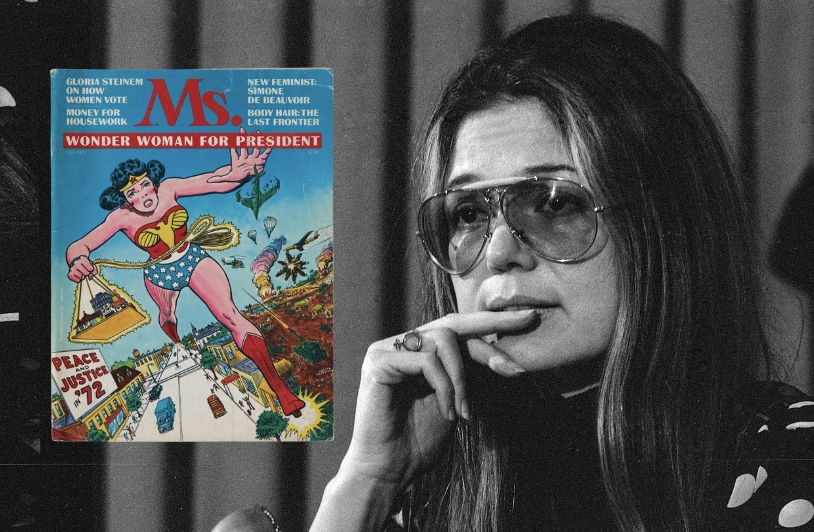
The great feminist icon Gloria Steinem died this week at 92. Sadly, one of her favorite terms, Ms., is headed in the same direction.
More than half a century ago, American women who wanted to be whomever and whatever they chose worked smartly for years to expand beyond the honorifics “Miss” for unmarried women and “Mrs.” for the married.
Steinem and her hardy band of feminists, who grated at being measured by marital status, promoted “Ms.” as a marital-neutral alternative on an honorific par with “Mr.”
In the late 1960s, the second-wave feminists recruited a few of us newsroom males as allies in adopting the new honorific as well as gender-neutral titles such as police officer and firefighter. But the resistance was strong, including from many women, over a term coined in 1901.
Treating women as adults—without regard to marital status—was such a threatening idea that it wasn’t until June 20, 1986, that The New York Times adopted Ms. as an authorized honorific for second references to women. Reporters were instructed to ask women their preferred honorific.
Steinem soon stopped by the Times newsroom with flowers, expressing joy that “I’m no longer Miss Steinem of Ms. Magazine.”
But now the honorific Ms. is dying.
Student Choices
I address my students by honorific and last name. In 2009, when I started teaching third-year law and graduate business students at Syracuse University, every woman chose Ms. over Miss or Mrs. Over the next few years, several women who identified themselves as married also chose Ms.
After the pandemic, I noticed a shift. A majority of women preferred Miss.
At Rochester Institute of Technology, where I’ve been a professor of practice for more than two years, not one woman has chosen Steinem’s favorite honorific.
Indeed, two female students and one male student in my prelaw and criminal justice classes said they’d never heard of “Ms.”
“What’s that?” one asked.
After confirming their grandmothers were still alive, I recommended that these three students ask them about the cultural struggle to adopt this marital-neutral honorific, whether they favored it or opposed it.
Asking Faculty
Last week I emailed a variety of professors at universities across the country, asking them to ask women students whether they would choose Miss, Ms., or Mrs.
Among those who got back to me, none reported any student interest in Ms. These peers teach a wide variety of subjects, including business, chemistry, law, engineering, math, and physics.
Ms. became the title of a magazine that first appeared in January 1972. Steinem was among the founders. I was among the 300,000 lucky Americans who bought the first issue, which sold out in eight days.
Eyes Wide Open
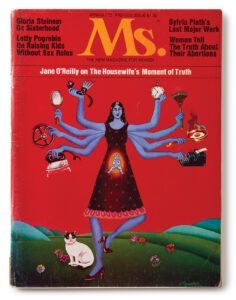
That first issue of Ms. fascinated me. I subscribed and devoured each issue for a few years.
Ms. Magazine opened my eyes to conduct that had seemed normal to me and was reinforced by almost everyone around me but was, or could be, demeaning or offensive.
One was the use of a hoary word, distaff, which at age 19 or 20 I thought added a touch of flair to my news articles. A woman reporter friend persuaded me it was, lightly, misogynistic.
I thought a lot about what Ms. Magazine taught me, especially concerning the giant multi-billion-dollar industries devoted to telling women and girls there is something wrong with their appearance and that this cream, makeup, or hair color will make them feel better about themselves.
The Beauty Business
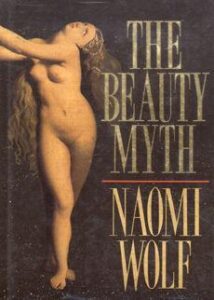 I even imagined writing a book on this, with a foreword by Gloria Steinem, but Naomi Wolf beat me to it in 1990. Wolf did a much better job than I could have in The Beauty Myth: How Images of Beauty Are Used Against Women.
ChatGPT begs to differ with what my minimal reporting so far has found about the title’s plummeting popularity. Curious whether the chatbot might notice a trend across its massive trove of data, I asked it to summarize the state of “Ms.”
“The honorific title ‘Ms.’ is steadily growing in popularity and has solidefied its place as the standard default for addressing adult women,” ChatGPT told me, misspelling solidified.
Why the Change?
File that under AI delusions.
A database search of The New York Times online archive shows that in 2000, “Ms.” appeared 44,563 times. Usage fell last year to 9,699 times.
My search of California newspapers at newspapers.com showed the honorific appeared 50,799 times in 2000, but just 2,019 times last year.
I wish I could tell you why “Ms.” has fallen out of favor and what it means for American culture going forward. Alas, I’m no Gloria Steinem.
“FREEDOM OF THE PRESS IS NOT JUST IMPORTANT TO DEMOCRACY, IT IS DEMOCRACY.” – Walter Cronkite. CLICK HERE to donate in support of our free and independent voice.
