


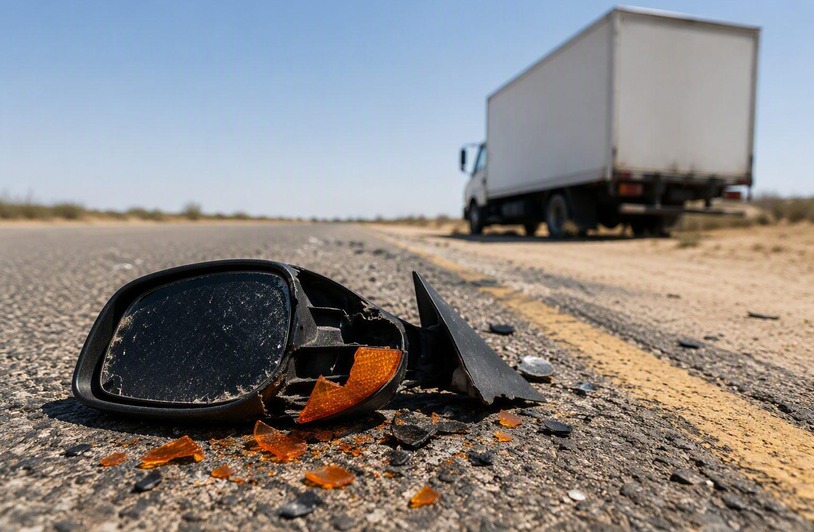
Can UPS be held liable for a delivery truck crash? In Texas, quite possibly, when an employee causes a collision while performing assigned work. Even a strong claim gets harder to document once evidence disappears and deadlines pass. Much of that damage happens quietly in the week after the wreck, while a truck goes in for repair or a witness changes phone numbers.
When a delivery driver causes a wreck while on duty, the company behind the truck often shares the legal blame. Holding UPS accountable after a Dallas crash really comes down to proving two things: that the driver was actively working at the time, and that the company failed in its own duties. Establishing corporate liability takes solid proof—from dispatch logs and driving records to internal safety files.
What follows are seven avoidable mistakes, each followed by a corrective step. None of this establishes fault. This is general information about Texas claims, not legal advice about your situation, and the goal is narrower than a prediction: keeping the record accurate while the facts are still available.
|
Mistake |
Why it creates difficulty |
Immediate corrective action |
|
Missing scene photographs |
Temporary conditions may disappear |
Photograph safely or identify other image sources |
|
Losing witness details |
Independent accounts become difficult to locate |
Record names and reliable contact information |
|
Delaying medical evaluation |
The timing and progression of symptoms become less clear |
Seek appropriate care and describe symptoms accurately |
|
Repairing or discarding property |
Physical evidence may no longer be available for inspection |
Document and preserve it before any change |
|
Making unsupported statements |
Speculation can conflict with later evidence |
Give concise, factual information |
|
Focusing only on the driver |
Employer records and other responsible parties may be overlooked |
Investigate work status and company conduct |
|
Missing the filing period |
A viable lawsuit may become time-barred |
Pin down the applicable deadline promptly |
Mistake 1: Failing to Photograph the Scene Safely
Scene conditions change fast. A wet lane dries. Debris gets swept aside. Your safety and any instruction from police or paramedics come first, and no image is worth standing in a live traffic lane on a Dallas arterial.
What useful photographs can document
Begin with the final resting position of each vehicle before anything moves, if it is safe to do so. Then work outward. Photograph the visible damage on both vehicles. Capture the traffic control facing your direction of travel and any skid or debris pattern on the pavement. Get the commercial markings and plate number in the same frame when possible.
Wide shots can show lane geometry, sightlines, storefronts, and light poles that may hold camera footage worth requesting later. Phones may record time and location data with each file, depending on the device settings.
Photographs preserve visible conditions. They do not necessarily explain why the crash happened.
What to do when photographs were not taken
Many people leave a scene with nothing on their phone. Some of that evidence may still be recoverable. Request any images the investigating agency collected, and write down the crash report number. Save dashcam files before the device overwrites them. Ask nearby businesses if their exterior cameras still hold footage from the relevant period, keeping in mind that a private business is not necessarily required to release footage on request.
Key evidence to retain after a collision with a UPS vehicle includes scene photos, bystander contact details, police report reference numbers, treatment records, vehicle repair bills, pictures of property damage, and correspondence with insurance adjusters.
Texas Transportation Code Chapter 550 , including Sections 550.021, 550.023, and 550.026, addresses duties to stop, provide identifying information, and render reasonable assistance after certain collisions. Those provisions do not create a duty to take photographs .
|
Corrective move |
What it gains |
Where it falls short |
|
Photograph the scene only when it is safe, then seek other image sources promptly |
Preserves visible conditions and may identify vehicles, roadway features, and potential cameras |
|
Mistake 2: Losing Witness Names or Contact Details
An independent witness may be able to describe what the vehicles cannot: which light was green, or whether a turn signal was on. An account from someone uninvolved in the collision provides another perspective on what occurred.
A name written on the back of a receipt is of little use without a working phone number or email address. Get the person’s full name and the contact method they actually check. Add one line about what the witness reports seeing. Do not rehearse the witness or suggest an answer, because that can undermine the reliability of the account.
If the information is already gone, begin with the crash report, since investigating officers may list witnesses whose details were not shared at the scene. Then review your photographs for identifiable bystanders and check whether a nearby residence or business was positioned to record the intersection.
|
Corrective move |
What it gains |
Where it falls short |
|
Record reliable contact details and the subject of the witness’s observations |
Makes follow-up possible and preserves the identity of a potentially independent observer |
|
Mistake 3: Delaying Medical Evaluation or Describing Symptoms Inaccurately
Why timing matters
Some injuries are apparent at the scene. Others surface later as a stiff neck or a headache that will not clear. Contemporaneous records capture what you reported and what a clinician observed on a specific date.
A gap in treatment does not by itself resolve the question of causation. Cost, scheduling, and gradual symptom progression may explain a delay, but a longer gap can make the medical history harder to document.
Accuracy beats exaggeration
Describe the onset and severity of symptoms accurately. Overstating a symptom can create a contradiction if later findings do not support it; understating one can leave an incomplete record. If asked about a prior injury, answer honestly. A preexisting condition does not necessarily exclude a new injury, but concealing it can create an avoidable credibility dispute.
Follow-through should line up with medical guidance
Missed appointments and unfilled referrals can leave gaps in the treatment history that are difficult to explain later. That is not a reason to undergo care you do not need. Follow your clinician’s plan, report changes accurately, and keep copies of medical and billing records.
|
Corrective move |
What it gains |
Where it falls short |
|
Obtain appropriate medical evaluation and give an accurate symptom history |
Creates dated medical documentation and distinguishes reported symptoms from clinical findings |
|
Mistake 4: Repairing, Altering, or Discarding Damaged Property Too Soon
Physical objects may contain information a claim file cannot recreate. A crumpled bumper can show the direction and force of an impact. So can a child safety seat that absorbed a load, or a phone mount that broke during the collision. Not every item needs to be stored indefinitely, though.
Preserve before changing
Photograph the item from several angles before altering it. Keep repair estimates and receipts, then determine whether an inspection is needed before completing repairs or discarding the item. Necessary safety repairs should not be delayed merely to preserve a claim.
Texas spoliation law is narrower than some general internet advice suggests. In Brookshire Brothers, Ltd. v. Aldridge, 438 S.W.3d 9 (Tex. 2014), the Texas Supreme Court addressed the duty to preserve relevant evidence and the prejudice caused by its loss. Discarding a damaged item does not automatically trigger sanctions or end a case, but it may create a dispute over what the missing evidence would have shown.
|
Corrective move |
What it gains |
Where it falls short |
|
Document damaged property and allow a reasonable inspection opportunity before alteration |
Preserves physical details and reduces disputes about the item’s post-crash condition |
|
Mistake 5: Giving Unsupported or Overconfident Statements
Keep communications factual
Cooperating is different from guessing. You can provide identifying information and describe what you observed without estimating the truck’s speed or making an unsupported claim about fault. Nobody expects you to diagnose your own injury at the roadside.
Before agreeing to a recorded statement, find out who is asking and which party that person represents. That does not excuse withholding information you are legally or contractually required to provide.
Comparative responsibility makes wording significant
Under Texas law governing commercial trucking cases, lawsuits against a freight company can follow a specific two-phase process. If a business admits its driver was working on the clock during a crash, direct claims against the company—such as faulty hiring, poor supervision, or inadequate training—may be limited or handled separately. Whether a plaintiff can pursue these secondary claims depends on how the case is structured and the strength of the evidence.
|
Corrective move |
What it gains |
Where it falls short |
|
Give concise factual information and avoid guessing about fault, speed, or medical outcomes |
Reduces contradictions and keeps the account tied to personal observations |
|
Mistake 6: Assuming Only the Driver Matters
Who Holds Financial Liability in a Dallas UPS Truck Accident?
Liability may reach the driver and, in some cases, UPS or another business connected to the delivery operation. The outcome hinges on the driver’s employment status, the scope of that employment, and what the evidence shows about each party’s conduct. Ownership and control of the vehicle may matter just as much.
Many injured motorists ask: can you sue UPS directly after a Dallas delivery truck crash? The short answer is yes—provided an employee caused the collision while performing assigned duties. However, available claims remain strictly fact-specific and can shift if the driver worked for an independent contractor or acted outside the course and scope of employment.
A familiar logo does not establish every relationship in the delivery chain. A route may involve an employee or a contracted service provider, sometimes using a leased vehicle under an arrangement invisible from the road. Vehicle registration and insurance information are starting points, not final conclusions.
Can employer liability apply in a UPS crash?
Yes. Under the Texas doctrine commonly known as respondeat superior, an employer may be responsible for an employee’s negligent driving when the employee was acting within the course and scope of employment.
Texas law reshapes how commercial vehicle lawsuits move forward through the court system. If a company acknowledges that its driver was on duty during the collision, secondary claims targeting the business itself—like poor hiring, lack of supervision, or bad training—are handled differently. Whether those separate claims survive depends on how the case is pleaded and the physical evidence available.
Company records can answer what the scene cannot
Dispatch records and route assignments can help establish whether a driver was working at the time. Driver qualification materials, vehicle maintenance records, electronic vehicle data, and internal route communications may hold information unavailable at the scene.
The company usually controls these records. Preserving and obtaining them often takes an early written preservation request, followed by formal discovery if a lawsuit is filed.
Texas Transportation Code Section 522.072 prohibits an employer from knowingly permitting a person to operate a commercial motor vehicle while that person is disqualified or subject to an out-of-service order. Whether that provision applies to a particular delivery vehicle depends on the vehicle and license classifications, so not every parcel van is necessarily governed by commercial driver’s license requirements.
What happens if a UPS driver crashes?
After a UPS driver crashes, the immediate response may include emergency assistance, exchanging identifying information, and a police investigation when Texas reporting requirements apply. The later liability inquiry can examine the driver’s conduct, work assignment, employer relationship, and each party’s share of responsibility.
A collision involving another delivery company follows the same general fact-finding process. What changes is the identity of the business connected to the vehicle and the evidence needed to establish that relationship.
How many accidents does UPS have a year?
The public federal carrier record has no fixed annual UPS crash number. The FMCSA Company Snapshot for UPS, under USDOT number 21800, reports crash information over a rolling 24-month period. The total shifts as incidents enter and leave that reporting window, so review the current date range before treating half of the rolling total as a verified annual figure.
|
Corrective move |
What it gains |
Where it falls short |
|
Investigate the driver’s work status and preserve relevant company evidence |
May identify an employer or another responsible entity and reveal records unavailable at the scene |
|
Mistake 7: Assuming the Filing Period Will Be Extended Automatically
Texas generally uses a two-year limitations period
Texas Civil Practice and Remedies Code Section 16.003 generally requires a personal injury lawsuit to be filed no later than two years after the claim accrues. That is a filing deadline, not a schedule for preserving evidence. Waiting to investigate can leave witnesses with faded memories and vehicles repaired long before the filing date arrives.
Exceptions should never be assumed
Deadline analysis can change with the defendant, claimant, and type of claim. A claimant’s age or legal disability may affect the calculation, and identifying the correct legal entity can take additional investigation. Talking with an adjuster does not by itself pause the limitations period, and continued negotiations do not necessarily extend the deadline.
|
Corrective move |
What it gains |
Where it falls short |
|
Pin down the applicable filing and notice deadlines early |
Reduces the risk of relying on the wrong date and leaves time to identify the proper defendant |
|
Preserve Facts Before They Disappear
These mistakes point to three practical habits. Keep accurate records as close to the collision as possible. Determine who was responsible for the vehicle; the logo doesn’t tell the whole story. Pin down which deadline applies before relying on an assumed date.
Gather any remaining evidence and store it securely. Then get deadline guidance based on the actual defendant and claim type.
CLICK HERE TO DONATE IN SUPPORT OF DCREPORT’S NONPROFIT MISSION
