


Trump’s Taxpayer-Funded Ads Raise Legal Questions Ahead of the Midterms
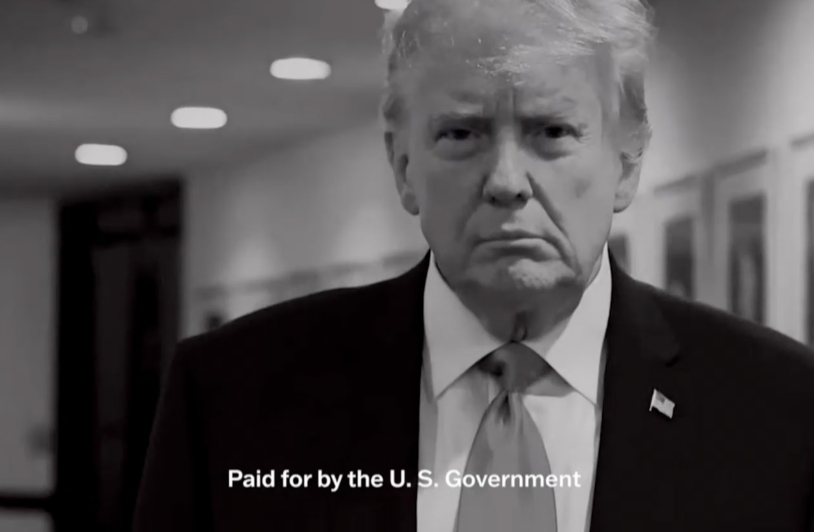
By now, we all probably have seen ciips from of these three Donald Trump television campaign ads “paid for by the U.S. government.”
And while we’ve seen some bipartisan criticism for Trump blatantly violating federal campaign law, what we haven’t seen is anyone acting to stop him.
Indeed, Trump insists that the ads – at least one of which is mostly video imagery from his own 2024 presidential campaign, thundering against “warmongers” and “communists” – are a benign prod to Americans to vote in the Nov. 3 congressional elections.
Using public tax dollars for a campaign commercial is flatly illegal. Moreover, doing so intentionally is government propaganda, the preferred tool of authoritarian regimes that know they can act with impunity. And apparently, they are just getting started, with $2.5 million worth so far, but plans to spend up to $100 million.
But obviously, a Justice Department remade to protect Trump and aggressively prosecute his political foes is not going to bring charges against the White House or even request a legal injunction to stop them. Where are the state attorneys general to demand that courts pull the ads as illegal interference? For that matter, why do the networks allow the sale of commercial time to what clearly are illegal campaign ads?
Why is the Senate passing a bill about straightening a messy system about paying college athletes but ignoring a blatant campaign violation that even Republicans like Sen. John Kennedy of Louisiana say is outrageous.
Backed by a largely compliant Supreme Court, Trump has cracked the code on doing whatever he wants in the name of the presidency – despite the tradition that campaigns have been regarded as beyond government behavior. We have Attorney General Todd Blanche and Defense/War Secretary Pete Hegseth openly campaigning – with Hegseth broadly suggesting to military troops to vote Republican – in violation of separate Hatch Act prohibitions.
Apparent Target: Voter Turnout
The Trump push — however late, however desperate – to get Republicans to pretend that he is on the ballot and vote anew for Republican candidates who will not question his presidency is aimed at voter turnout, of course. Turnout is pivotal, even in elections where manipulation seems part of the accepted game.
Apparently, the thinking is that incessant talk of “blue wave” outcomes based on polling that has systematically shown Trump’s backing to be falling and “generic” support for Democratic opponents rising will prove overconfident miscalculation if huge numbers of Trump supporters show up on Election Day.
It is true that national polls don’t accurately predict local elections, particularly in a period of voter anger over high prices and concerns about the war with Iran, tariffs, international isolation, the excesses of the Trump mass deportation policies, and the runaway “corruption” and self-adulation projects from Trump.
Still, it does not answer why, If Trump is sitting on hundreds of millions in Republican contributions, he insists on using millions of our tax money for these ads to promote himself?
The plain fact is that polling is the best tool available to collect people’s transient political ideas, but is no gauge of how many people will turn out to vote – particularly in states where Trump-friendly election officials are closing selective voting precincts and the White House is engaging in wild schemes to limit who can vote, how they can vote and when. Democrats and defending lawyers are working overtime to block each new voter limitation. Poll results are best used as a comparative snapshot rather than a scientific image of the current state of play.
More importantly, serious students of voter behavior, including the influential Cook Political Report, see plenty of evidence in sufficient numbers of local elections that match the national unhappiness with Team Trump. Together with an enthused Democratic voter base and an angered Independents’ reaction, Trump may have reason to rally his would-be supporters.
Trump’s latest ploy – using our tax money to promote himself – seems ludicrously desperate. He wants his base, his backers to “pretend” he is on the ballot, but then defends the use of taxpayer money to pay for them by his absence on the ballot. It’s a reminder to watch what politicians do rather than what they say.
The very presence of these illegal taxpayer-paid ads should be raising questions about the anti-democratic principles driving Trump’s presidency.
Frequently Asked Questions About Trump’s Taxpayer-Funded Ads
Are Trump’s television ads being paid for with taxpayer money?
Yes. The ads state that they are paid for by the U.S. government, and reporting has traced funding for the campaign to the Department of Homeland Security. AP News
How much is the government spending on the ads?
More than $2.5 million had reportedly been spent on airtime by late September, while DHS allocated $20 million in taxpayer funds for the advertising campaign. Axios
Are the taxpayer-funded Trump ads illegal?
That is disputed. Critics and legal experts have raised potential violations of federal restrictions on government propaganda and political activity, and Public Citizen has filed complaints seeking investigations. The White House says the advertisements are lawful public-service announcements rather than campaign ads. Public Citizen
Have Republicans criticized the ads?
Yes. Republican lawmakers including Senate Majority Leader John Thune and Sen. John Kennedy have criticized using taxpayer money for the advertisements.
“FREEDOM OF THE PRESS IS NOT JUST IMPORTANT TO DEMOCRACY, IT IS DEMOCRACY.” – Walter Cronkite. CLICK HERE to donate in support of our free and independent voice.
