


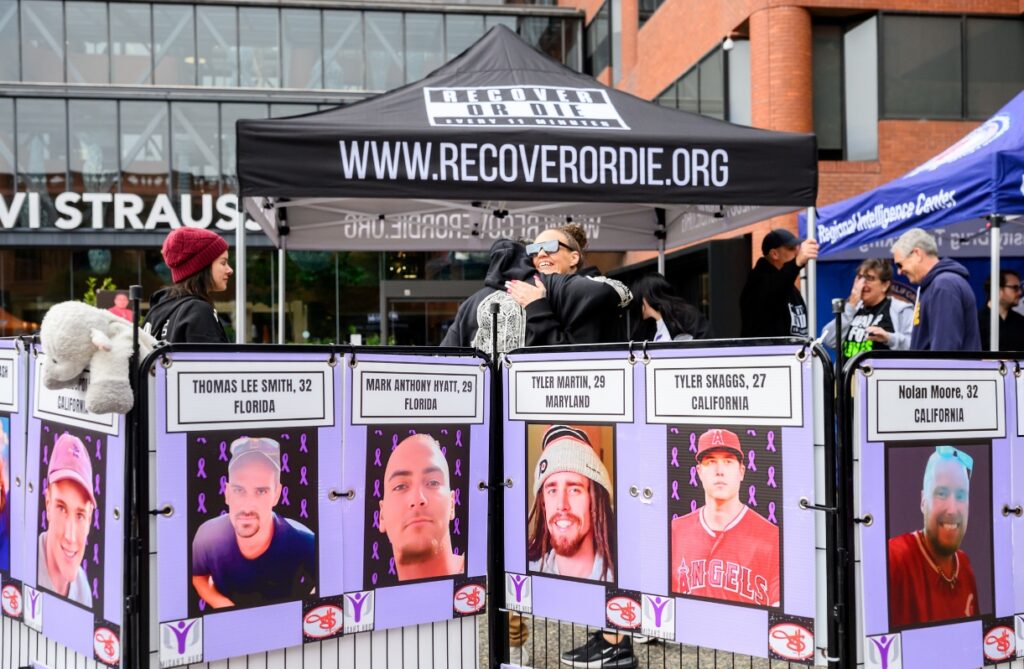
As federal agents are shifted toward immigration enforcement, fentanyl investigations, narcotics arrests and weapons seizures have fallen.
We are seeing more evidence that the Trump administration’s priority for mass deportations is undercutting other long-term law enforcement efforts.
Even as migrant detainment and deportations continue to soar, there are reports that fentanyl-related arrests are down and narcotics and gun seizures have fallen nationwide.
More than 45,000 people were detained by Immigration and Customs Enforcement last month, the highest number since Donald Trump retook office, according to data the Deportation Data Project released this week.
In total, since Trump’s inauguration last year, ICE has detained over 610,000 people — more than the population of Atlanta, Baltimore, Milwaukee or the entire state of Wyoming, said The Marshall Project, which covers crime and punishment matters. Last year, more than 270,000 people spent at least a week detained, surpassing any other year since 2012, the earliest in the Deportation Data Project’s archive. Still the totals are less than Trump’s goal of deporting 1 million people per year.
Naturally, most attention has been on the tactics used by border patrol agents, who now have spread out to airports to grab passengers on their lists. That has included people who have work permits or other documents or who are checking in as required with applications for permanent resident status, asylum or other programs. The Trump policy is to detain almost all unauthorized immigrants, regardless of their individual circumstances, and to keep them detained as long as it takes for their cases to move through immigration court — often months, or even years. Some 57 migrants have died while in ICE custody and border agents have been involved in the shooting deaths of citizen protesters in Minneapolis and injuries elsewhere.
The public backlash showing in political polling reflects unhappiness with moving away from targeting migrants with criminal backgrounds into overstayed visas or, in the case of Haitians, Afghans and selected other groups, the lifting of Temporary Protective Status as granted by past administrations.
But there is another price here reflected in what enforcement activities have been left to wither as more agents are drafted for deportation duties.
Fentanyl, Drugs and Guns
Recent reports by Homeland Security’s own Office of Inspector General confirm that siphoning agents for deportation have led to a steep drop in fentanyl seizures, as well as fewer investigations and arrests for narcotics and guns.
Huffington Post examined the Homeland Security Investigations (HSI) data to show that fentanyl seizures fell 39% between fiscal years 2024 and 2025, while the number of fentanyl investigations fell by 24%. The number of hours the agency spent on fentanyl dropped by nearly a third.
HSI normally investigates transnational criminal networks, including drug and weapons smugglers, human traffickers and terrorist groups, but has been largely reassigned to deportation duty. The inspector general, which serves as official internal watchdog for Homeland Security, said the reason for the drop in fentanyl cases was clear: “As ICE shifted priorities toward immigration enforcement, HSI’s level of effort on fentanyl declined.”
That has triggered Democrats, including Sen. Elizabeth Warren, D-Mass., to renew criticism anew. “Trump’s DHS took a step back from seizing Fentanyl so that ICE could terrorize our streets,” Warren said about the HSI statistics.
Trump has described fentanyl as a “weapon of mass destruction” that’s “flooding into our country,” and used those descriptors to justify attacks on small boats in the Caribbean. To date, more than 225 individuals have been killed, but the Drug Enforcement Administration has reported that drug trade – those boats were carrying cocaine or marijuana – in the U.S. has not dipped or diluted. At the same time, Trump has claimed that flooding a city with agents or National Guardsmen is dropping crime in Washington or Minneapolis, when figures do not support that finding for serious, violent crime.
An earlier analysis of HSI data by The New York Times showed that Homeland Security is making fewer arrests for drug crimes and seized fewer weapons than they did the previous fiscal year. Officials said the numbers reflected a shift in priorities.
In those documents, narcotics arrests fell by 11 percent, agents opened 15 percent fewer new investigations into narcotics crimes and the number of weapons seized fell dramatically, declining from nearly 41,400 to fewer than 11,200 — a 73 percent drop.
Homeland Security was given huge budget increases last year and this year to supplement an army of border agents. For a time, we saw roundups and raids concentrated in Los Angeles, Chicago and Minneapolis, with spillover into violence involving civilians and protestors. Appointment of Markwayne Mullins, formerly a senator, came with promises to alter tactics while increasing the numbers of deportations of migrants with criminal pasts.
We have increased the detainment numbers but ignored the filters for violence.
Meanwhile, At Justice
At the Justice Department, which has routed scores of FBI agents away from crime-fighting to deportation issues, is using the immigration concerns to raise issues about supposed election fraud that Trump talks about but never shows through evidence. Homeland Security this week launched a “blitz” on scouring voter registration rolls for names that match its own records of sought-after noncitizens, though this is no guarantee of either a match, nor a record of actual voting.
In addition, Harmeet Dhillon, the head of the Justice Department’s civil rights division, has basically dismantled enforcement of civil rights issues to impose conservative change on liberal universities and institutions and to lead the monitoring of midterm elections.
It’s about using immigration scares to throw chaos into elections.
Deploying Justice employees to several Democratic states is now a certainty – though no one, especially Dhillon, has been forthcoming about what “fraud” they are seeking. The threat to deploy Homeland Security border agents to polling places or areas surrounding polling places is still more a threat than certainty. But Mullins now acknowledges that he will be prepared to deploy his paramilitary forces if they are needed.
Clearly, Trump wants a live threat to dampen voter turnout as Republicans face the prospect of losing the House and perhaps the Senate. Trump’s efforts have included redistricting in states to pick up more safe Republican districts, interfering with mail ballots and their delivery by the Postal Service, and endless repetition of election fraud falsehoods – including that there are vast numbers of non-citizens who are voting illegally.
One result of this connection has been an abandonment of civil rights cases across the federal government, in departments including education, housing, trade, Justice and the equal employment opportunity agency. There is no public accounting of exactly how many cases have been closed, but legal advocates describe a generational void in civil rights enforcement.
Despite Trump making immigration a top issue, the tactics of enforcement have made it a live campaign issue with poor marks for the government and concern about humanitarian fairness. What is not being polled are the other prices that the country is paying for mass deportation.
If you don’t look for it, you won’t find crime.
“FREEDOM OF THE PRESS IS NOT JUST IMPORTANT TO DEMOCRACY, IT IS DEMOCRACY.” – Walter Cronkite. CLICK HERE to donate in support of our free and independent voice.
