

Smithsonian Exhibit Honors a Woman From the Civil Rights Era. How Long Will It Survive?
The Trump administration has been busy scrubbing from public sites the identities and accomplishments of Black, Brown, Asian, indigenous, and female Americans while whitewashing our history of enslavement.
That makes it surprising that a new exhibit in our nation’s capital honors a woman who was crucial to the 1963 Civil Rights demonstration in Washington, where the reverend Martin Luther King, standing in front of the Lincoln Memorial, delivered his stirring “I have a dream” speech.
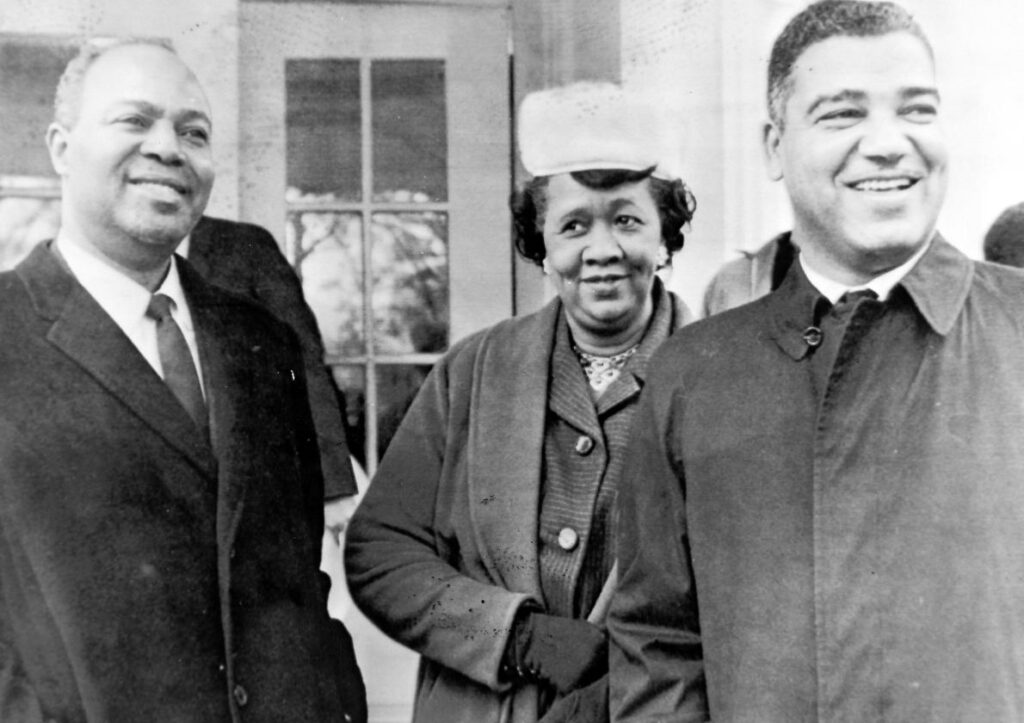
The woman being honored is Dorothy Height.
Height sat close to Dr. King during that peaceful protest 63 years ago. However, she did not speak. Indeed, only men spoke that day.
How long will this exhibit honoring a Black woman survive? Will it remain up through the end of the year, as announced on Aug. 10 by the Smithsonian American Women’s History Museum?
Height’s significance within the male-dominated civil rights movement was so crucial that she became known among supporters as the “godmother” of the movement.
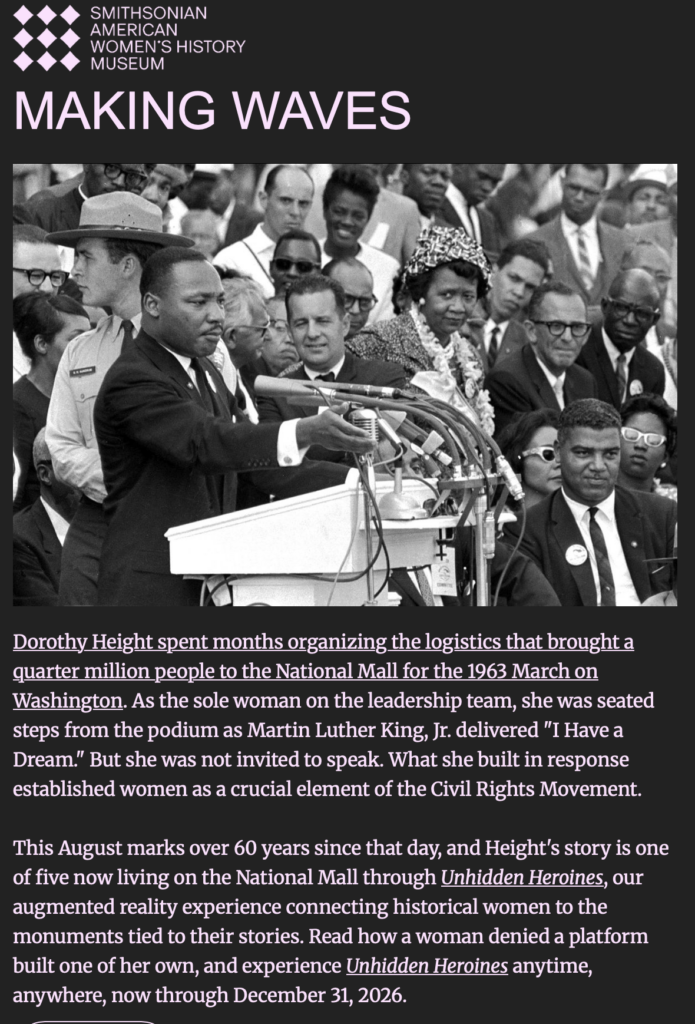
That Height sat silently illuminates a long-running conflict within the Civil Rights movement that was apparent in a 19th Century dispute between two famous Rochesterians, the suffrage leader Susan B. Anthony and the abolitionist leader Frederick Douglass.
In 1869, Douglass supported the proposed 15th Amendment, which extended voting rights to Black men. Anthony (and her colleague Elizabeth Cady Stanton) opposed the amendment as written because it excluded women.
Like the little-known Bayard Rustin, Height was one of the handful of march organizers. There was palpable fear back then that the event would turn into a bloody mess because of threats of violence from segregationists, who operated openly and with the support of some of the most powerful senators and representatives.
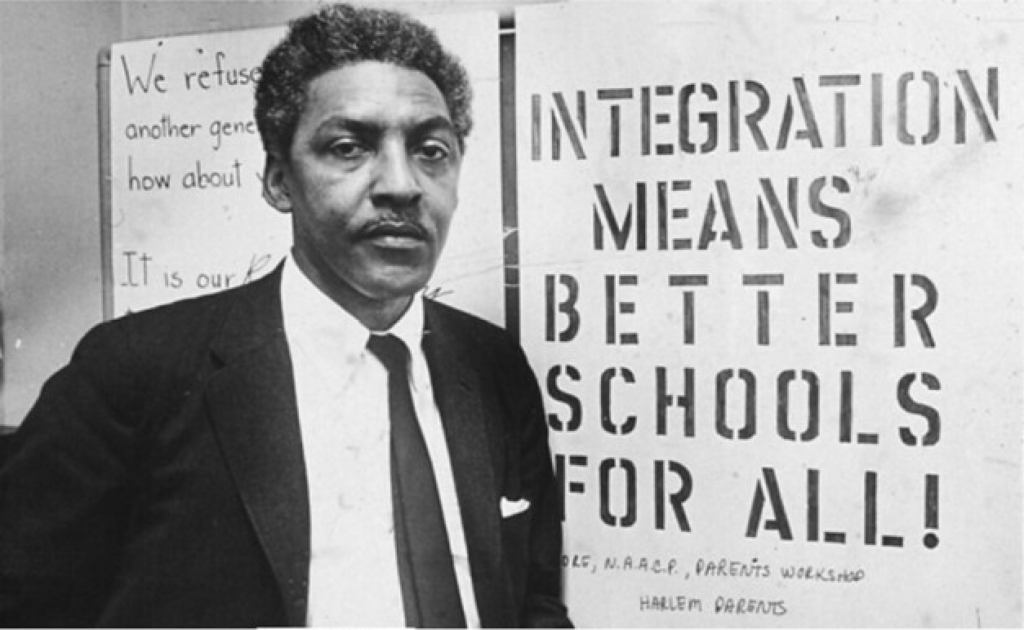
But the protest came off pretty much without a hitch because of the diligence of Height, Rustin, and a few others. (Rustin’s central role was kept largely in the closet because he was gay.)
We’ll let you know if the exhibit gets taken down early. If you are in or visit Washington, it would be smart to see it, especially if you bring children and young adults along.
We hope DCReport readers and those who watch our YouTube videos will alert us if they become aware of efforts to close or change this worthwhile exhibit about an unsung hero of American hopes and dreams.
“FREEDOM OF THE PRESS IS NOT JUST IMPORTANT TO DEMOCRACY, IT IS DEMOCRACY.” – Walter Cronkite. CLICK HERE to donate in support of our free and independent voice.
