


What the Democrats Can Do to Lower Prices Starting in January
Tuesday’s vote made things pretty clear:
We don’t want Donald Trump’s illegal and unconstitutional Iran war. No one wants their family members and friends going to the other side of the world, risking injury and death to kill people we have no real grievance with.
That view is largely a bipartisan consensus, at least among voters, if not among their representatives in Congress.
As is also pretty clear, the war is very much front and center in the affordability issue.
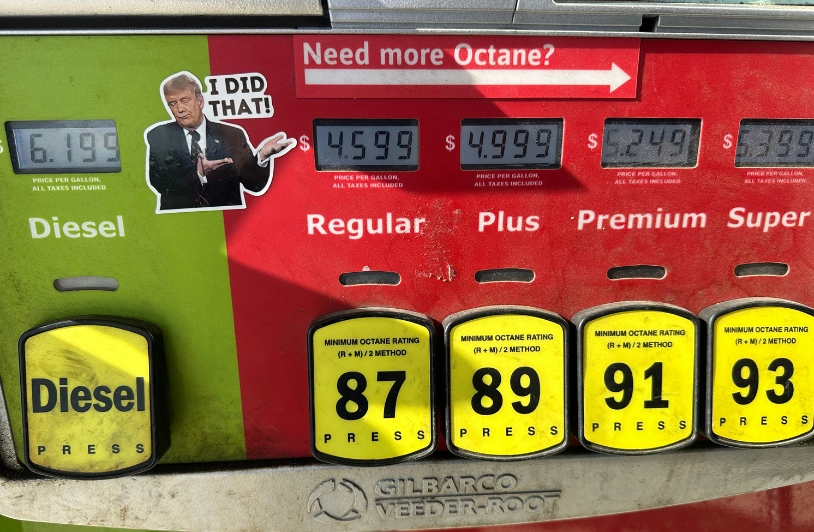
Gas prices jumped as much as $1.50 a gallon in the months after the war began and are still more than $1 a gallon above pre-war levels.
Diesel prices rose almost $3 a gallon at their peak and are currently more than $2.50 a gallon above their pre-war level. Truckers bear this cost directly, but it will largely be passed on as higher prices for food and just about everything else.
Fertilizers and Food Prices
We are also likely to see a hit to food prices next year due to fertilizer shortages. Much of the world’s fertilizer comes from the Persian Gulf region. The blockades have meant that considerably less fertilizer than normal has been exported to the rest of the world. Then add in damage to fertilizer factories, as explained by Texas Agriculture Daily.
Ending the war won’t immediately reverse all the economic damage it has caused, but it would be a great start.
Also, because the war has jump-started the green transition across the globe (China’s exports of EVs and solar panels are soaring), we should expect to see worldwide demand for oil falling sharply in the not-distant future.
EVs and Tariffs
Two-thirds of the cars sold in China, by far the world’s largest car market, are now EVs. This means that oil prices will quite likely fall well below their pre-war level in the next few years.
The war is not the only policy Trump has pursued that raised inflation. Everyone but him now knows that we paid his tariffs.
Tariff inflation equaled roughly 0.8 percentage points in 2025 price increases.
Ending the tariffs should lower prices of the affected products, although here too the benefits may not be felt immediately. Businesses have been happy to take advantage of market power to boost profit margins on the way up. Without some aggressive oversight, they are likely to be slow to pass on the savings from lower tariffs to consumers.
Interest Rates
Higher inflation has also led the Fed to raise interest rates this year, reversing the downward course rates had been on prior to the election.
If Trump ended his war and was forced to reverse his tariffs, the Fed would likely turn around and again lower interest rates. This would mean lower interest rates on mortgages, car loans, and credit cards.
Of course, when the AI bubble bursts, that will also lower interest rates, but that is not as directly under the government’s control.
Beyond Reversing Trumpian Damage
Lower gas and fuel prices, along with the lower prices from eliminating tariffs, and lower interest rates, would be a great start on making people’s lives more affordable. But Congress can look to go further.
The cost of home insurance has hugely outpaced the overall rate of inflation, largely because of the impact of global warming.
While it is a major expense for homeowners, averaging more than $2,500 a year, it is not included in the Consumer Price Index (CPI) because it is viewed as an investment item, not a consumption good.
Congress can’t look to do much to stem global warming as long as we have a big global warming proponent in the White House, but it can try to reduce insurance costs.
Florida, a state run by that well-known communist Ron DeSantis, has several programs that assist homeowners in implementing measures to improve resiliency. Average savings run close to $1,000 a year in Florida. That would be a great model for the rest of the country, and we’re talking chicken feed in terms of the federal budget.
On the topic of insurance, Congress should try to restore the enhanced subsidies in the Affordable Care Act that the Republicans stripped out with their Big Bill in 2025. This could help to reverse the loss of health insurance coverage in the last two years.
The higher cost of health insurance also doesn’t show up in the CPI, but it is very real to the people paying it — or not paying it, in the event they can no longer afford insurance.
Lower Drug Prices and Universal Medicare
In a post-Trump world, we should be looking to a universal Medicare system, and a big part of making that affordable will be radically reducing the prices we pay for drugs and medical equipment.
This can ultimately be done by eliminating patent-supported drug research and relying instead on direct public funding.
In that case, all drugs could be sold as cheap generics from the day they are approved by the FDA.
This could easily save $500 billion a year on prescription drugs (almost $4,000 per household) and other pharmaceutical products, and maybe a couple hundred billion more on medical equipment.
Since it won’t be possible to go directly to a system of publicly financed research, the government can gradually increase public funding as it radically lowers the price that we pay for drugs. The industry’s usual argument against lower prices—that it will reduce research—becomes irrelevant in this context.
We don’t want them to do research supported by patent monopolies; we want them to rely on direct upfront funding of research.
Every card-carrying economist should support a switch like this.
Patent-monopoly prices for drugs and medical equipment are a recipe for corruption, which we see in these industries all the time. When companies can sell drugs for 100 times their costs of production, they have an enormous incentive to lie about their safety and effectiveness, which is almost a standard practice in these industries, as was the case with the opioid crisis.
This also creates the horrible situation where people have to beg their insurers to pay tens of thousands of dollars for a cancer drug needed to stay alive or, alternatively, to start a GoFundMe. This is incredibly absurd when we realize that a drug priced in the tens of thousands of dollars or even more would almost certainly sell for just a few hundred dollars in a free market.
Important Point to Remember
It’s rare that a drug is actually expensive to manufacture and distribute.
Anyhow, switching to universal Medicare will almost certainly have to wait for a new president.
Since Trump likes to boast about his “600 percent” reduction in drug prices, a Democratic Congress may be able to put a bit of truth into his absurd boast. Lowering drug prices in a big way is a great policy, whose benefits will be seen immediately. And if we want to have a universal Medicare program that is affordable to the country, it should be a big part of the story.
Frequently Asked Questions About the Iran War and Affordability
How has the Iran war affected inflation in the United States?
The Iran war has contributed to higher fuel costs, with gasoline and diesel prices rising substantially since the conflict began. Higher transportation expenses can increase the prices consumers pay for food and other goods. Fertilizer supply disruptions could also raise agricultural production costs and future food prices.
Could ending the Iran war lower gas prices?
Ending the Iran war could reduce geopolitical pressures on oil markets and help bring down gasoline and diesel prices. However, the effects would not necessarily be immediate because supply disruptions, infrastructure damage, and market conditions can continue influencing prices after fighting ends.
How do Trump’s tariffs affect consumer prices?
Tariffs increase the cost of imported goods, and businesses often pass those expenses on to consumers. The article cites research indicating that tariffs contributed approximately 0.8 percentage points to price increases in 2025. Removing tariffs could help lower costs, although companies might not immediately pass savings along.
What can Democrats do to make life more affordable?
Democrats could pursue policies to end the Iran war, reverse tariffs, reduce prescription drug prices, restore enhanced Affordable Care Act subsidies, and support programs that lower homeowners insurance expenses. Together, these measures could address several major sources of household financial pressure.
How could the government lower prescription drug prices?
One proposed approach would replace patent-supported pharmaceutical research with direct public funding. Under this system, newly approved drugs could be sold at competitive generic prices, potentially reducing medication costs substantially while maintaining investment in medical research.
“FREEDOM OF THE PRESS IS NOT JUST IMPORTANT TO DEMOCRACY, IT IS DEMOCRACY.” – Walter Cronkite. CLICK HERE to donate in support of our free and independent voice.
