


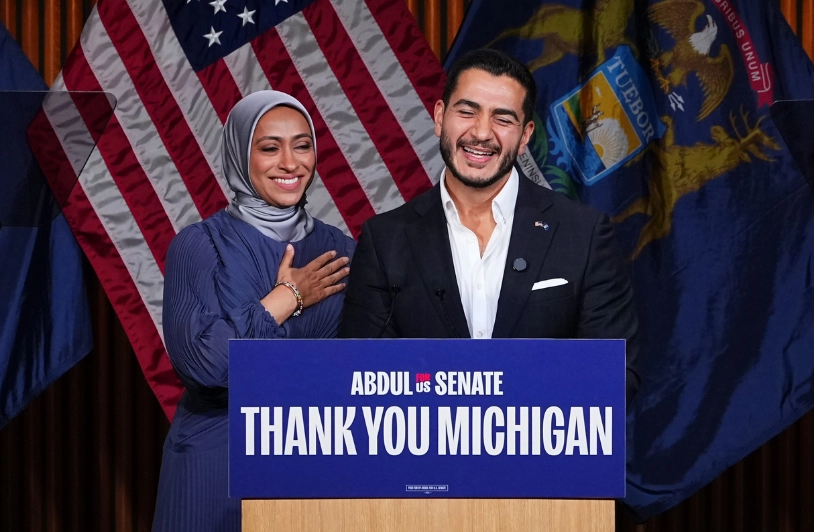
Despite all the talk, campaign money, advertising flood and hype, the emerging midterms election results showing a flip against the works of Donald Trump are both amazing and contentious.
That both the House and Senate would change party control was drawing an emotional response that spoke to much more than organized opposition to Trump policies. Taking the majority of the House alone will mean a reawakened Congress and a series of investigative hearings; control of the Senate will block Trump appointees and a reckoning for Trump decision-making.
The “blue wave” – a coalition of Democrats, disaffected Republicans, a majority of Independents and new voters — proved strong right from the earliest districts reported results, either scoring more victories needed for majority control and making even losses much tighter than should have been expected.
It seemed to provide a renewed moment of trust in a system of supposed checks and balances or at least a few minutes not dominated by Trump’s egotistical concerns about self-glorification.
For once, there was real tension and public engagement over just how sweeping the outcome, thanks to record voter turnout in state after state for Democrats and evidence of lower voter turnout for Republicans.
While there were no reported government interferences with balloting, there were more unprecedented pressures from Republicans to kill opposition voting and the onset of another next phase of anticipated resistance that, in the most severe case, could involve threats to launch prosecutions, particularly in Alaska despite lack of legal justification, or to send federal agents to seize uncounted ballots.
This election, widely seen and explosively sold as a “change” election, will take weeks to finalize and offered two contradictory big takeaways: It was a rejection of Trump, and yet we will have Trump as difficult to control but the big takeaway was acceptance that this was a democratic reaction to reassess this nation’s direction. We saw a lot of wildly close races in states that should not have been close, a perceived urgent desire to protect the right to vote, and teeming frustration with a government that ignores public sentiment over prices and war, and the continuing corrupting influence of big money and amoral aspirations to Win.
According to the latest Federal Election Commission (FEC) filings through mid-October, more than $9.5 billion had been spent on these midterms. Election PACSs made up $5.5 billion, and the top 40 donors gave $2.4 billion, according to the liberal-leaning think tank Brennan Center for Justice. How much childcare and health care would that money have underwritten?
It was Trump who wanted people to pretend he was on the ballot; it was an across-the-board rejection of his presidency. But this “change” election already was showing itself as a new chapter of Trump resistance toward restoration of a least a healthy dollop of humanitarianism for autocratic worship of a would-be king.
2026 Midterm Election Results: Voter Turnout Drives the Blue WaveElection
The outcomes showed that it is turnout, particularly in the Black community, not the constant mention of estimating polls that is the most volatile factor for candidates and parties. Turnout for Republicans were showing consistently lower margins, as much as 15 or 20 percentage points, even in traditionally red states, than in 2024, when Trump – who promised undelivered price cuts — actually was on the ballot. Except in Texas, early voting favored Democrats, Election Day voting favored Republicans.
The combination was making for competitive races – and even isolated Democratic House wins in places like Kentucky and Indiana. Florida Democrats were outpolling Republicans in several districts, including those redistricted for partisan gain, and in the state legislature.
In that light, the night’s strong Democratic results for Senate and Governor in Georgia, New Hampshire, Ohio and other states were not so surprising. More attention-grabbing were tight races in Florida, South Carolina, Kansas, Iowa – and, of course, in Michigan, which was interesting for many reasons beyond defending a Democratic Senate seat.
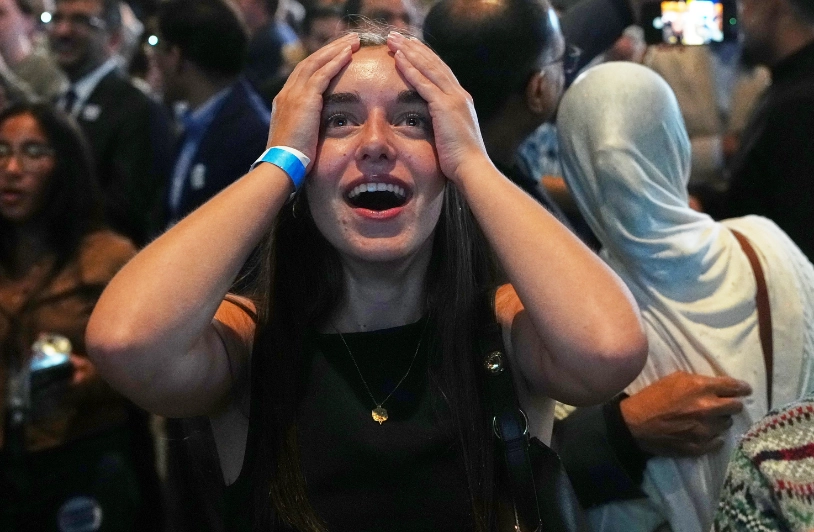
Democrats Make Major Gains in Senate and House Races
Democrats needed to flip four Senate seats for the majority. That happened in North Carolina , South Carolina, Texas, Ohio, Kansas, Iowa and Maine. The outcome in Alaska will take time to count and resolve. Democrats won for the first time in decades in some of these states, mostly based on common sense and humanism.
Trump’s repeated public disdain for voters’ most vocal sources of anger – costs, competence and corruption – fueled an opposition coalition that crossed party lines, age and education, rural and urban differences. Voters simply have had enough of a Trump administration that shows daily that it promotes Trump glorification and self-feathering over government service.
It was not a surprise that voters reflected personal concerns and pocketbooks. What was more telling was the degree to which exit polls reflecting voter attitudes had focused on maintaining democracy and showing disgust for Trump-normalized corruption in selling pardons, raising money from billionaire friends who benefit from government contracts and out-and-out grift by the Trump family. Numbers of voters saying corruption drove their vote hit 90% in exit polls, basically tied with high price dissatisfaction.
It was largely Trump’s chosen candidates who had the most difficult night. In key contests in Texas, Kansas, Iowa, South Carolina and Alaska, even the tightness of the races held its own message of repudiation,
Americans elected a Black woman and a native woman as governors, an openly gay male senator, an outspoken Muslim senator tagged by a racist Trump as a “jihadist,” and pointed the way to its first Black Speaker.
What the Democratic Blue Wave Means for Donald Trump
Of the many questions is whether a deafened and isolated Donald Trump can even recognize the raised tide of American voices in opposition to some of his key beliefs.
Trump told The New York Times he will accept the outcome of the election and work with Democrats. Nevertheless, his Justice Department has outstanding prosecutions it is pursuing over election issues.
That resistance will take practical form in continuing challenges on election counts and state certification of elections, lawsuits and prosecutions against state and local officials standing in the way of insistence that there was “cheating” in the vote and in a promise for a slew of vetoes and executive decisions to bypass a reconstituted Congress.
The election outcome will demand that this coalition of progressive Democrats and disheartened Republicans and independents enforce their will against an entrenched megalomaniac who already is showing his disdain for law, Congress, courts and the ever-growing list of political enemies.
Though anti-Trumpism could hardly speak louder, will the opposition be able to contain and limit a suddenly fading autocrat with his fingers on government controls over much that affects our daily lives?
Rather than any concessionary or humble message about following the will of Americans, Trump was quick in the last days to promise to become a veto machine and to press ahead with an unwanted war, global tariffs that are taxing Americans while raising consumer prices further and feathering the nest of his own family and wealthy friends.
Frequently Asked Questions About the 2026 Midterm Elections
What happened in the 2026 midterm elections?
The 2026 midterm elections produced major Democratic gains in congressional and statewide races, reflecting widespread voter dissatisfaction with President Donald Trump’s policies, economic performance and approach to governing.
Why did Democrats perform so well in the 2026 midterms?
The article identifies strong Democratic voter turnout, concerns about rising prices, opposition to Trump’s policies and dissatisfaction with government corruption as major factors contributing to Democratic victories.
How will the 2026 midterm election results affect Donald Trump?
A Democratic-controlled House can conduct investigations, hold oversight hearings and challenge the Trump administration’s legislative agenda. Democratic control of the Senate would also provide greater power to block presidential appointments and influence federal policy.
What role did voter turnout play in the 2026 elections?
Voter turnout emerged as a central factor, with strong participation among Democrats, independent voters and communities motivated by concerns about democracy, economic conditions and government accountability.
How much money was spent on the 2026 midterm elections?
According to the article’s cited Federal Election Commission figures, more than $9.5 billion had been spent on the 2026 midterm elections through mid-October, underscoring the growing influence of campaign financing in American politics.
“FREEDOM OF THE PRESS IS NOT JUST IMPORTANT TO DEMOCRACY, IT IS DEMOCRACY.” – Walter Cronkite. CLICK HERE to donate in support of our free and independent voice.
